


Shanghai, China — Zhejiang Leili Auto Parts Co., Ltd. (“LEILI”), a manufacturer of automotive windshield wiper systems and bus door locks since 1989, exhibited at bauma SHANGHAI 2024, held from 26 to 29 November 2024 at the Shanghai New International Expo Centre (SNIEC). The company showed construction vehicle wiper systems, wiper motors and linkage mechanisms at Booth W3.840.
Duty cycle is the only criterion here
A construction machinery fair measures things differently from a general automotive parts fair. Machine availability drives the construction schedule directly, which puts cab visibility reliability on roughly the same footing as the powertrain. Mine dust, continuous vibration, rain, snow and mud — fail under any one of those conditions and the failure is remembered at once, by the operator and by whoever signs the purchase orders.
bauma SHANGHAI is organised by Messe München with Messe München Shanghai, and is among the best-known construction machinery fairs internationally. The 2024 edition came after a four-year gap, and manufacturers turned up accordingly.
From China: XCMG, Zoomlion, SANY, Shandong Lingong (SDLG), Lonking and Shantui. Internationally: Caterpillar, Wirtgen, Bomag, Ammann and Manitou. Because both sides of the aisle sit near the top of the industry, conversations start at a technical level rather than arriving there — visitors tend to bring a specific machine model and a specific problem with it.
Scale followed. The fair covered 330,000 sqm, hosted 3,542 exhibitors from 32 countries, up 24% on the previous edition, of which around 700 were international brands, and recorded 281,488 professional visitors from 188 countries.
Outside China the top ten visitor source countries were Russia, India, Malaysia, South Korea, Thailand, Indonesia, Singapore, Kazakhstan, Brazil and Japan. That list reads close to a destination list for China’s construction machinery exports. The overlap between construction machinery and commercial vehicle customers is larger than most people expect, and it runs through fleet operators rather than product categories.
For a maker of construction vehicle wiper systems the relevance is narrower than the fair but sharper. Cab glass on a mining machine is cleaned by the same physical mechanism as a coach windshield, under conditions a coach never meets, and the part is judged by the operator at the start of every shift rather than during a service inspection. It is a product whose absence is noticed immediately.
Exhibition facts
Four days at the Shanghai New International Expo Centre (SNIEC), forums running alongside the floor.
- Official name: bauma SHANGHAI 2024 — Shanghai International Trade Fair for Construction Machinery, Building Material Machines, Mining Machines, Construction Vehicles and Equipment
- Dates: 26–29 November 2024
- Venue: Shanghai New International Expo Centre (SNIEC)
- Organisers: Messe München; Messe München Shanghai
- Scale: 330,000 sqm; 3,542 exhibitors from 32 countries (+24%), around 700 international brands; 281,488 professional visitors from 188 countries
- Overseas visitors: more than 20% of attendance
- Top overseas source countries: Russia, India, Malaysia, South Korea, Thailand, Indonesia, Singapore, Kazakhstan, Brazil, Japan
- LEILI stand: Booth W3.840
Two new theme areas were introduced this edition, covering new-energy technology and intelligent management. Hybrid, battery-electric and hydrogen machines took a visibly larger share of the floor, with battery makers and their suppliers exhibiting alongside the machine builders.
Sources: bauma CHINA official final report 2024 | official exhibition history data
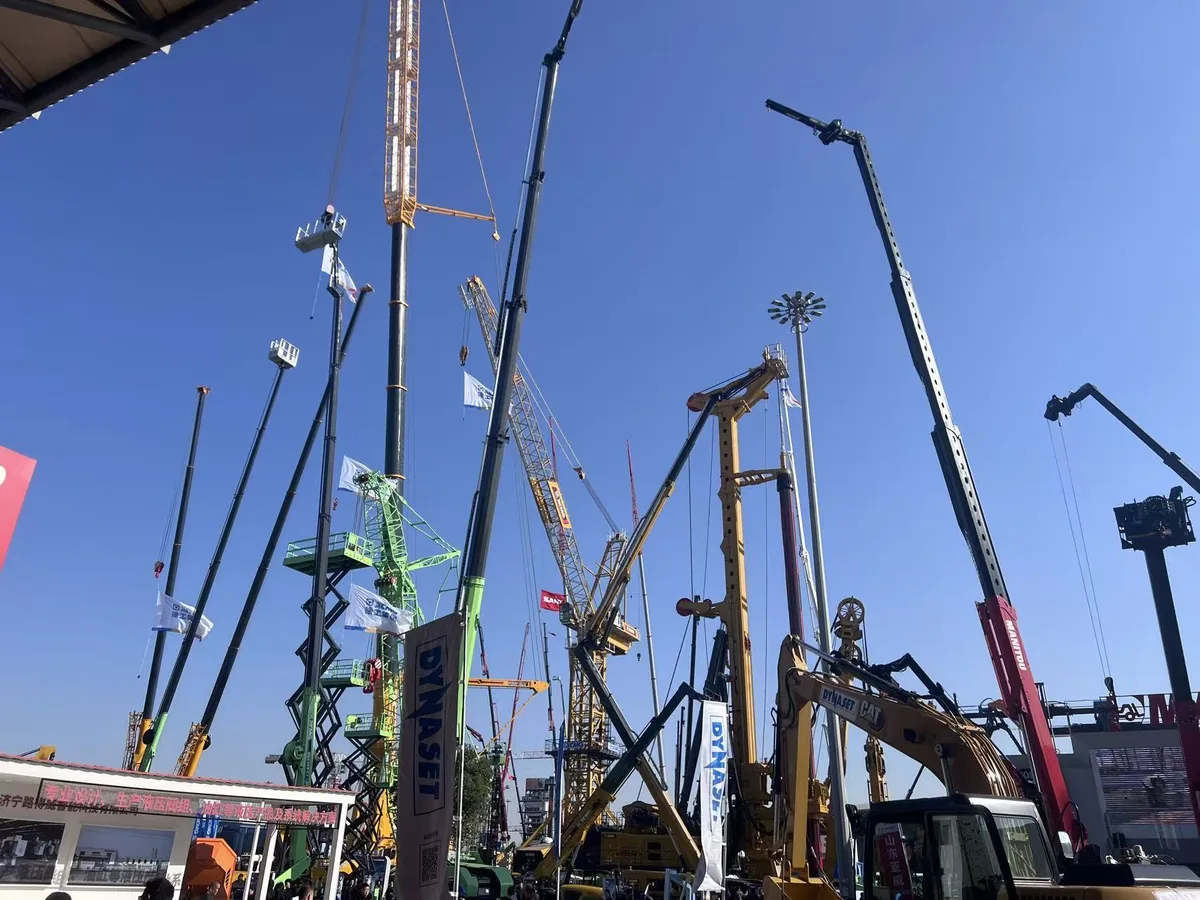
LEILI at Booth W3.840
The purpose of this stand was to put one narrow product line — cab visibility systems for construction vehicles — in front of machine manufacturers and attachment suppliers directly, rather than through somebody else’s catalogue.
Specified against duty cycle
Everything shown was annotated against the working conditions it has to survive, not only against its dimensions:
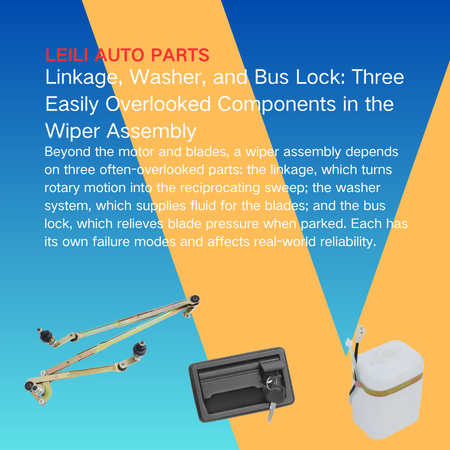
- Construction vehicle wiper assemblies: laid out for high output and long sweep angles
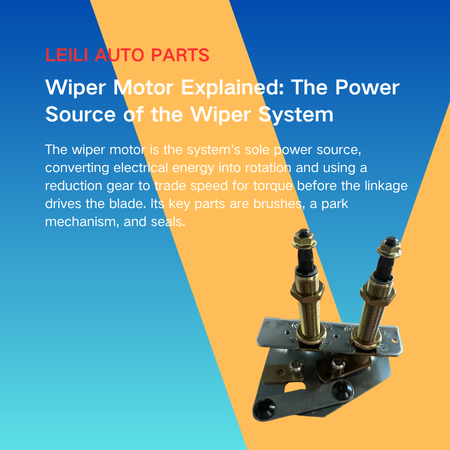
- Wiper motors rated for stop-start duty: 30 W–180 W, 12 V and 24 V, with the tolerance figures for frequent start-stop cycling and dust exposure marked on the display
- Long-stroke linkage mechanisms: centre distances from 400 mm to 2,000 mm, with a thicker shaft on the long-stroke configurations
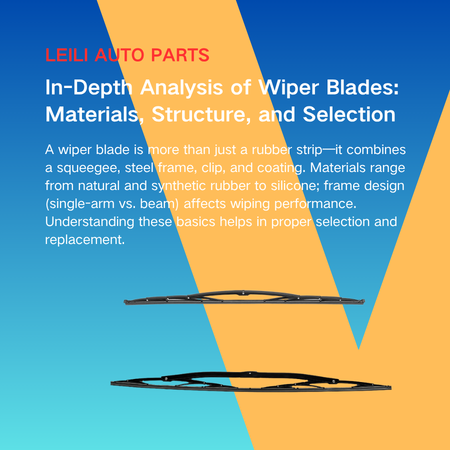
- Silt-resistant wiper blades: 400 mm to 1,000 mm, including a rubber specification for sandy and silt-laden water
- Washer systems and the wiper arm series
The habit of translating a duty-cycle requirement into a number is the useful part. “Works in dust” means nothing to an engineer; an ingress protection rating does. “Lasts a long time” means nothing either; vibration tolerance and continuous running hours do.
One requirement deserves stating plainly, because it is the one that separates this application from everything else LEILI makes: arm pressure distribution has to stay put after long-term vibration.
A linkage that holds its geometry on the bench and loses it after a season on a haul road is worse than one that never quite reached specification, because nobody is watching the moment it happens. The driver notices when the blade starts skipping, and by then the pressure figures are history.
Those three terms — ingress rating, vibration tolerance, running hours — carry more weight on this floor than any line in a brochure, because they are the three a maintenance manager will eventually be asked about. The questions do not stop at the glass, either: the same tolerance logic applies to the other motor-driven systems mounted around a cab.
LEILI holds ISO 9001 and IATF 16949 certification, and its products have application records across buses, trucks, construction vehicles, agricultural machinery and rail vehicles.
What visitors asked
The talking over four days stayed close to duty cycle rather than drifting to price.
One visible change was the way electrification was presented. It used to be a single electric machine standing alone; this time hybrid, battery-electric and hydrogen appeared as full product lines, with battery manufacturers on the floor next to the machine builders. The boundary of who supplies what to whom is being redrawn while everyone watches.
Requests from visitors have grown more specific alongside that. Beyond ingress protection and service life in dusty conditions, three more things entered the question list: energy consumption, maintenance interval, and how a fault announces itself. Predictability was valued above peak figures — an operator would rather know the service interval to the hour than hear how a part performs under ideal conditions.
That preference has consequences for how a stand should be prepared. Specifying a wiper system for pooled equipment means committing to figures that can be checked later against the machine’s own maintenance records, so every number put on the table has to be one the factory can defend in twelve months. The conversations at W3.840 were mostly about that kind of number.
Translating duty-cycle parameters into language the customer can act on was the most useful exercise of the four days. Ingress protection, vibration tolerance, continuous operating hours: these are the terms this industry accepts without argument, precisely because they describe failure rather than promise success.
The requirements and improvement directions LEILI collected will go straight into the next product adjustment round.
Reach of the expo
More than 20% of visitors came from overseas, and the top ten source countries outside China clustered in Russia, India, Southeast Asia and Central Asia. Chinese machine manufacturers exporting into those markets have been expanding quickly, and where a complete machine goes, its component suppliers get an opening to follow — though following requires the part to be documented for a market the machine maker may not have visited either.
Co-located forums ran on new-energy storage, international competition and coordination between machine builders and parts suppliers. Earlier in the same year LEILI had exhibited at the Busworld Türkiye coach show, IAA Transportation in Hannover and the 4th Wenzhou auto parts expo. Sealing under dust is treated in more detail in our piece on how the waterproof and dustproof performance of bus wiper motors is tested.
Closing
Contact lists from the fair are moving into sample fitting tests on machines and technical agreement discussions. Sealing and weathering for outdoor duty are now the two items being reworked hardest, on the motor and on the blade.
Yang Hao, spokesperson for Zhejiang Leili Auto Parts Co., Ltd., said: “The people who build construction vehicles and equipment are hard to talk past. Their first question is often what this machine looks like after two thousand hours working in a mine. A wiper looks like a small thing, but if the cab cannot see, the whole machine stops, and the whole site waits. We are glad to spend time on questions that specific.”
About Zhejiang Leili Auto Parts Co., Ltd.
Founded in 1989 as Pingyang Automobile Wiper Factory and based in the Yuyang Industrial Zone of Pingyang, Zhejiang, LEILI operates a 13,000 sqm facility and has spent more than three decades on two product lines: electrical windshield wiper systems and bus door locks. The company is certified to ISO 9001 and IATF 16949 and supplies both OE and aftermarket customers. Website: leiliautoparts.com. Further reading: construction vehicle brand matching matrix.