


1. First, look at the track: Commercial vehicle wipers are not “large passenger car accessories.”
Commercial vehicle wipers and passenger vehicle wipers differ in essential ways, and this premise makes their selection criteria completely different.:
| Comparison dimension | passenger vehicle | Commercial vehicles (buses / trucks) |
|---|
| Operating frequency | Daily startup 5-10 times | Daily startup 50-150 times |
| Duration of a single session | 10-30 minutes | Continuously work for several hours |
| Operating conditions | The main type of road surface in the city is asphalt pavement. | High-speed, mining area, mountainous area, port and other complex road conditions |
| Windshield area | ≤1.5㎡ | 2-4㎡ |
| Safety correlation | Personal driving safety | Safety of dozens of passengers/high-risk cargo |
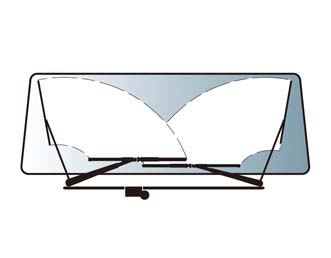
Wiper Assemblies
Under such harsh working conditions, choosing commercial vehicle wipers goes far beyond “good enough”—it directly affects driving safety and operational compliance. The industry’s core question remains: between OEM suppliers and aftermarket suppliers, which one suits you better?
II. Production quality and quality control system: standardization vs. flexibility
OEM Supplier
Advantages: Strictly following the original equipment manufacturer’s exclusive process standards, we maintain standardized production throughout every stage and incorporate multi-level quality inspection checkpoints. We procure all core raw materials uniformly through the OEM-reviewed and registered supplier channels, which guarantees batch-to-batch consistency. Take the wiper motor, for example: it must pass a full suite of validation tests—including the stall torque test, endurance cycling (typically 500,000 cycles or more), and salt spray testing—before it can meet the vehicle’s safety requirements.
Limitations: High production entry barriers prevent arbitrary simplification of the manufacturing process, which drives up mass-production costs. The product line focuses primarily on high-end and mid-range accessories, with no “basic economy models” at extremely low price points, making it ill-suited for pure low-cost replacement scenarios.
Aftermarket suppliers
Advantages: Not being bound by the OEM’s curing process allows for flexible simplification of non-core steps, which significantly lowers production costs. The pricing is budget-friendly, making it well-suited for basic replacement needs with limited funds, and it offers broad market coverage.
Limitations: The industry lacks unified mandatory quality inspection standards, and cost control often drives material selection throughout the supply chain, leading to significant batch-to-batch variation in raw materials. Quality control stability remains inconsistent, and after extended high-frequency use, issues such as rubber strip hardening, motor performance degradation, and increased connecting rod clearance frequently emerge, which fall short of the strict requirements for mass vehicle production.
Quality control comparison overview
| Dimension | OEM Supplier | Aftermarket suppliers |
|---|
| Quality inspection standard | Exclusive to original equipment manufacturers + IATF 16949 | There is no unified mandatory standard |
| Raw material control | Supply chain audit registration, batch unified | Focus on controlling costs, batch differences are large. |
| Durability | ≥500,000 cycles | No clear guarantee |
| Adapting to the scene | Whole vehicle accessories, long-term fleet operation | Basic replacement, temporary emergency |
III. Technology Research and Development and Product Iteration: Positive Development vs. Quick Follow-up
OEM Supplier
Advantage: With a full-fledged technical team, we possess both forward development and reverse optimization capabilities. Using the 3D model of the bus or commercial vehicle and the windshield surface parameters, we can tailor wiper layout solutions—covering wiper arm pressure curves, blade curvature matching, and motor speed and torque settings. At the same time, we have the ability to reproduce samples and iteratively optimize known pain points, effectively addressing common industry issues such as model-specific squeaking, blind spots, and juddering. This allows us to directly participate in OEM new vehicle development and model revision programs.
Limitation: The development cycle runs long—typically three to six months—and customized development incurs high costs. For standard replacement products targeting common older models, the iteration speed lags behind the aftermarket, and overall flexibility remains relatively limited.
Aftermarket suppliers
Advantages: Focusing on popular market-standard models, we quickly respond to shifting demand and push products to market rapidly. With broad coverage, we can swiftly adapt to general replacement needs across various older and niche models, effectively serving the basic maintenance scenarios of the general public.
Limitation: Lacking independent forward R&D capabilities, we can only replicate appearance and dimensions without optimizing structures for the heavy-duty, bumpy, and high-speed conditions typical of commercial vehicles. Customized development, new vehicle accessory programs, and special improvement requirements remain beyond reach, and the product line lacks any core technological differentiation.
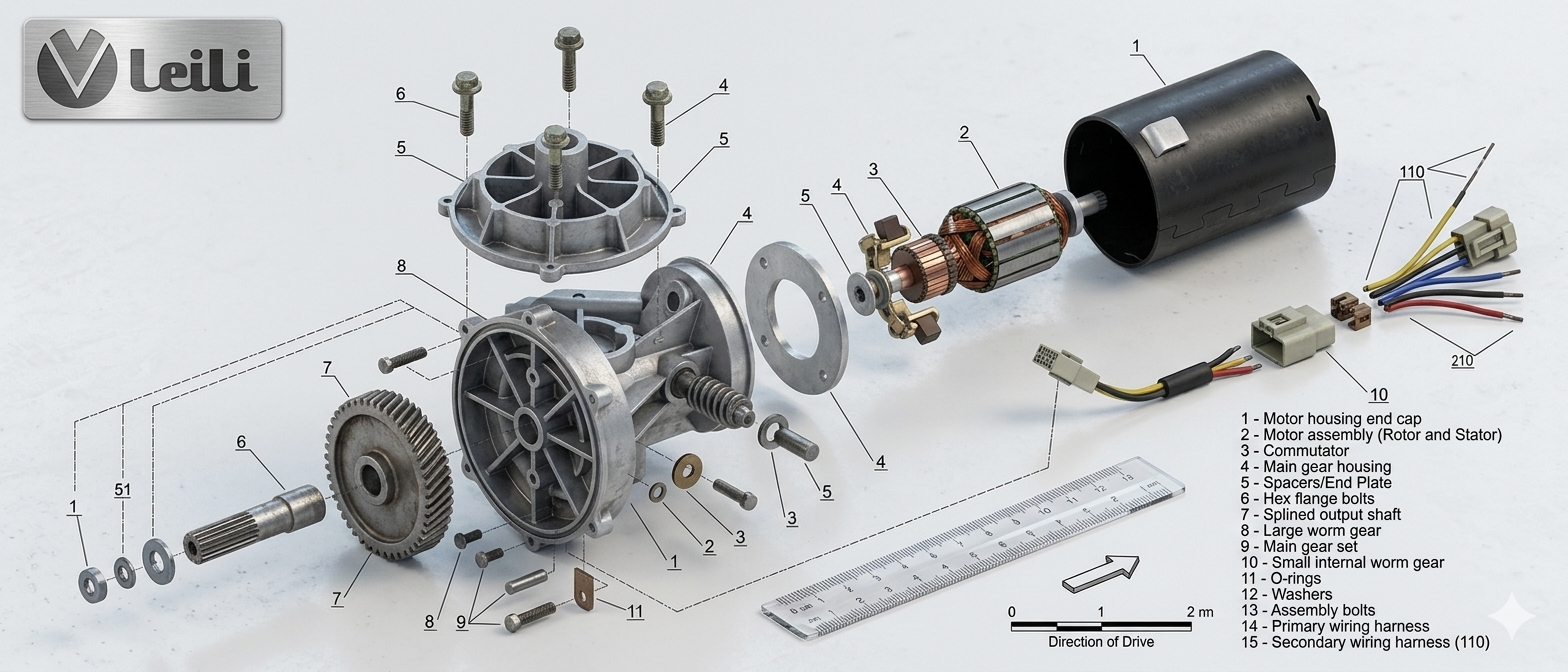
How a windshield wiper motor works diagram
IV. Product Adaptability and Scenario Implementation: Precise Matching vs. Broad Generic
OEM Supplier
Advantage: Achieving 1:1 matching with original vehicle parameters, we tailor the wiper arm pressure, blade curvature, and wiper arm trajectory precisely to the bus or commercial vehicle’s structure. This delivers exceptional stability under extreme conditions—high-speed driving (≥80 km/h), heavy rain, and rough roads—with precise, blind-spot-free wiping, making it ideal for OEM assembly lines and fleets requiring long-term regulatory compliance.
Limitation: As product-exclusive, vehicle-specific accessories, these components offer limited versatility. With a fixed inventory SKU that cannot be shared across different models, they prove unsuitable for urgent, on-demand situations or random replacements on older vehicles.
Aftermarket suppliers
Advantage: Focusing on a universal design approach, we offer products adaptable to several similar models. This ensures strong versatility and wide compatibility, perfectly suiting repair shop scenarios like scattered replacements, emergency fixes, and maintenance for older vehicles—significantly reducing the complexity of inventory management.
Limitation: Ignoring commercial-vehicle-specific operating parameters and relying solely on size matching, these products tend to develop issues like vibration, abnormal noise, and uneven wiping over prolonged use. As a result, they fail to meet the high standards required for full-vehicle production and fleet operations.
Comparison of fitting scenarios
| Application scenarios | Recommended plan | Reason |
|---|
| New model of the whole car factory | OEM Compatible | Positive development, parameter customization, batch consistency are required. |
| Long-term operation of large fleets | OEM Compatible | High frequency of use, high requirements for safety and compliance |
| Spare parts replacement at repair shops | After-sales market | Variety of models, small single quantity, priority of timeliness |
| Emergency replacement of old models | After-sales market | General applicability, sufficient stock, cost-sensitive |
| Customization requirements for special vehicles | OEM Compatible | Special development and special condition adaptation are required. |
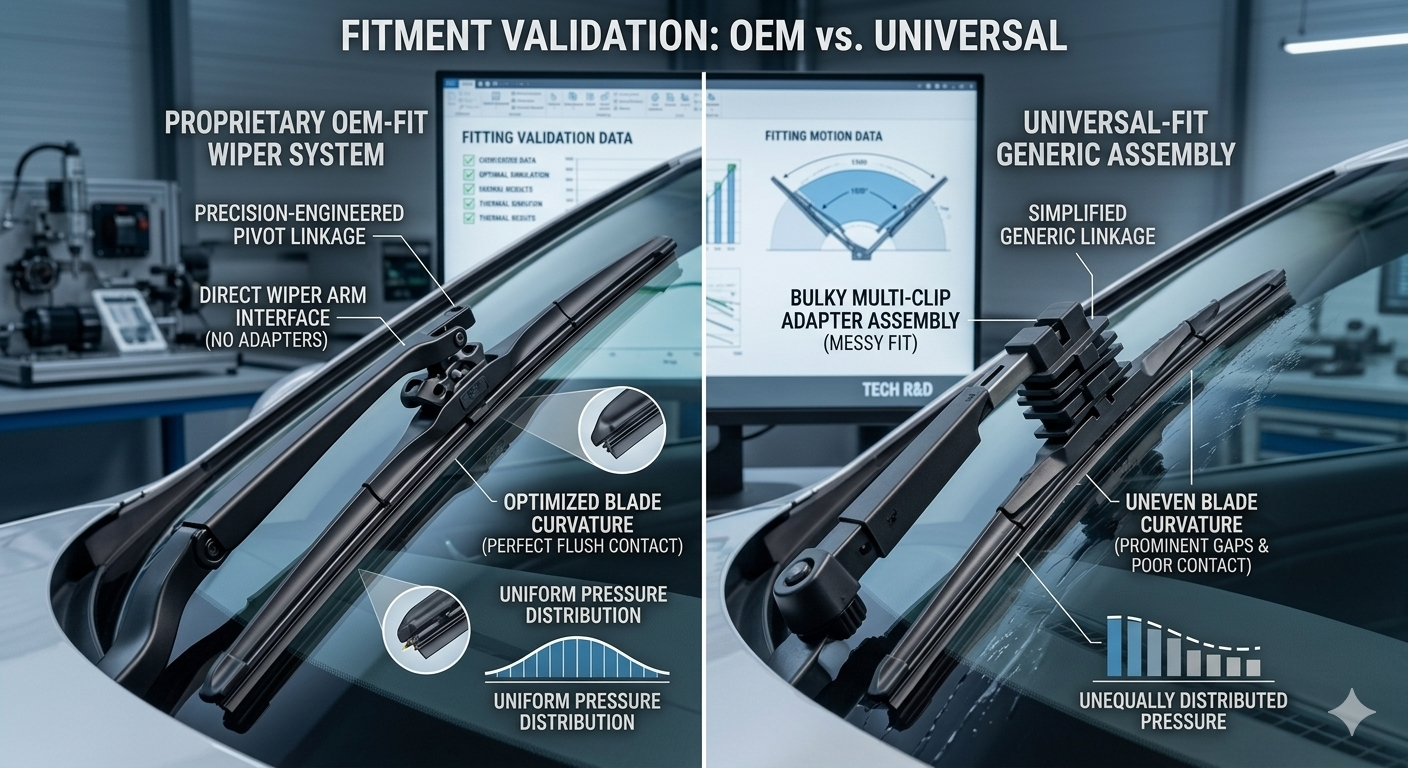
wiper
V. Cost-effectiveness and supply chain: long-term comprehensive cost vs. short-term procurement cost
OEM Supplier
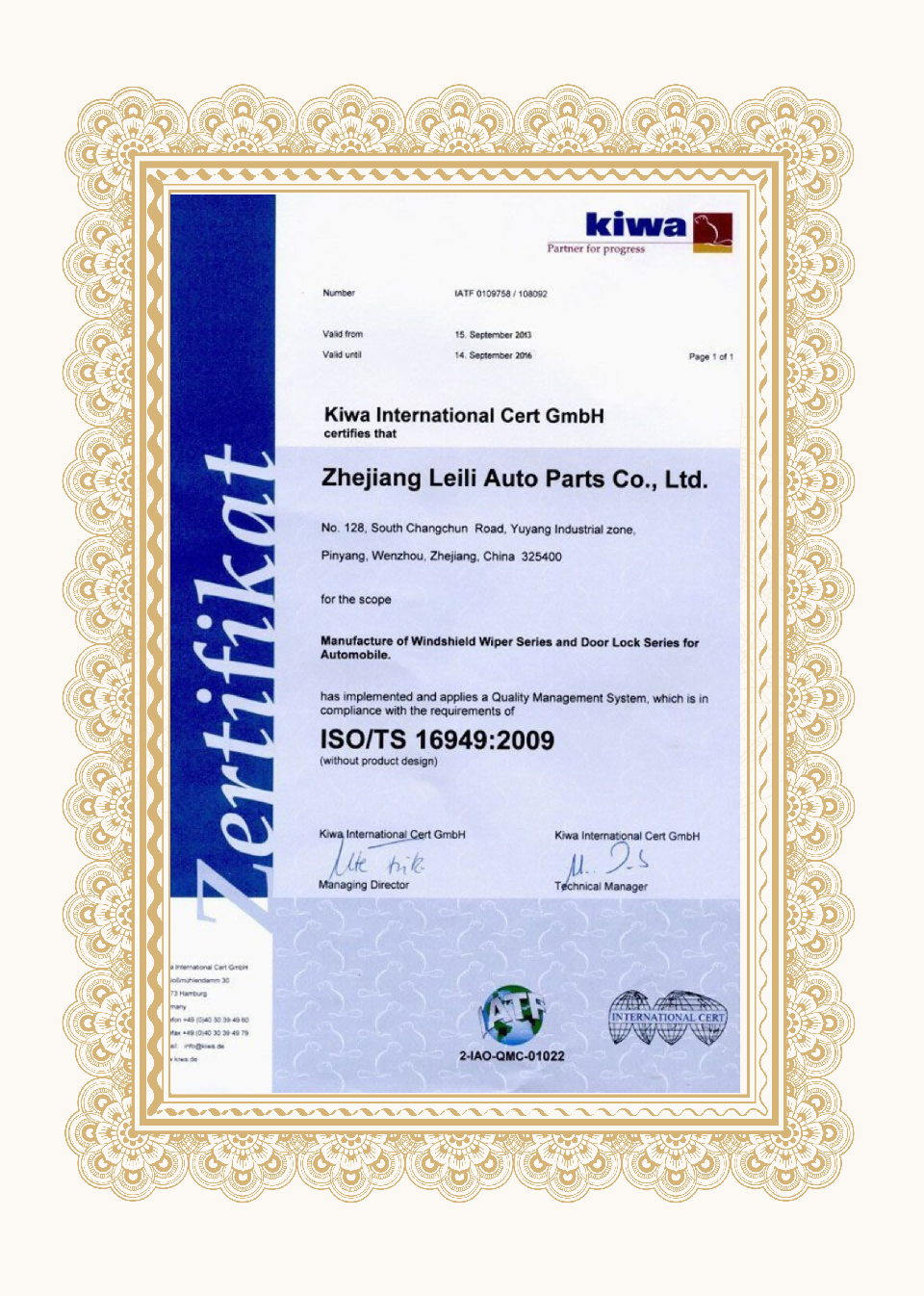
Advantages: With stable mass production capacity, full process traceability, and complete certifications (IATF 16949 and OEM qualifications), these products maintain a low failure rate over extended use and offer a replacement cycle of 18 to 24 months. In vehicle assembly and large-scale procurement contexts, the long-term total cost-effectiveness proves higher—despite a higher unit purchase price, the daily cost, when amortized over the service life, actually turns out lower.
Limitation: The minimum order quantity remains high, and delivery schedules follow a planned timeline. Adaptability for small-batch or scattered orders stays low, and the purchase price for short-term, single-item orders runs high.
Aftermarket suppliers
Advantage: With no minimum order quantity restrictions, we support small-batch and scattered purchases. Stock levels remain sufficient, ensuring fast delivery—typically next-day availability. Individual item prices stay low, making the cost-effectiveness exceptionally high for short-term emergency needs and small maintenance buys.
Limitation:These products suffer from weak durability and require frequent replacement—typically every three to six months. Over the long term, the cumulative costs of repeated purchases and labor for replacements drive overall maintenance cost-effectiveness down significantly.
Comparison of the whole life cycle cost (taking a 3-year cycle of a single bus as an example)
| Cost item | OEM Compatible Solutions | After-sales market plan |
|---|
| Single set purchase price | Higher | Lower |
| Replacement cycle | 18-24 months | 3-6 months |
| 3 times of replacement in 3 years | 1-2 times | 6-12 times |
| Cost of manual replacement | low | High (frequent replacement) |
| Downtime loss risk | Extremely low | Higher |
| 3-year total cost | Lower | The surface is low, but it is high after superposition. |
VI. Compliance and After-sales Guarantee: Systematic Service vs Flexible Response
OEM Supplier
Advantages: With full-process compliance and traceability, our products meet automotive and commercial vehicle industry safety standards. A comprehensive after-sales support system stands ready, and batch orders come with quality assurance and technical liaison services. These offerings align with the compliance acceptance requirements of OEMs and large fleets, and any product issue can be traced back to its specific batch and process node.
Limitations: The after-sales connection process follows a standardized and formalized procedure, which reduces the flexibility of after-sales responses for scattered, individual items.
Aftermarket suppliers
Advantage: We offer flexible after-sales support for individual buyers, with a simple and direct return and exchange process. This setup adapts well to the lightweight after-sales needs of individual car owners and small repair shops, keeping communication costs low.
Limitations:Most of these products lack exclusive industry compliance certifications and have no strict traceability chain in place. After-sales guarantees remain weak, and when quality issues arise in batch products, investigating and securing compensation proves difficult.
VII. Scenario-based selection guide: matching different needs
Based on the analysis of the above six dimensions, the following four typical customer selection suggestions are provided:
| Customer type | Core demands | Recommended plan | Key reasons |
|---|
| Bus / truck main factory | New car accessories, batch consistency, safety compliance | OEM Compatible | Positive development, exclusive customization, and full process quality control are required. |
| Large fleet / bus company | Long-term high-frequency use, low failure rate, compliance operation | OEM Compatible | The overall operation and maintenance cost is lower, and the security risk is controllable. |
| Individual repair shop / small fleet | Diverse models, small batch, fast delivery | After-sales market | Universal, no minimum order quantity limit |
| Emergency temporary replacement | Fast delivery, low cost, temporary use | After-sales market | There is plenty of stock, and the price is low per item. |
VIII. Summary: There is no best, only the most suitable
- Aftermarket products: Flexible, low-cost, universal, and fast-delivery options excel at adapting to older vehicle maintenance, temporary emergency replacements, and small-scale, low-cost repair scenarios. As such, they form an indispensable dynamic segment within the automotive parts ecosystem.
- OEM accessories: Superior in stability, safety, durability, and customization, their core value lies in reducing long-term safety risks and overall operational maintenance costs. This makes them well-suited for mass production of buses and commercial vehicles, long-term fleet maintenance, and high-standard compliance operation scenarios.
The key to selection is not to decide which model is better, but to assess which one fits your current use scenario, budget structure, and safety priorities more appropriately.
IX. About Us
Zhejiang Leili Auto Parts Co., Ltd. has long specialized in OEM wipers for buses and commercial vehicles, adhering to original equipment manufacturer standards and leveraging independent R&D capabilities. We acknowledge the practical value of aftermarket products, yet remain focused on delivering high-quality OEM accessory services, customized development, and precision manufacturing—providing highly stable and adaptable wiper system solutions for the commercial vehicle industry.
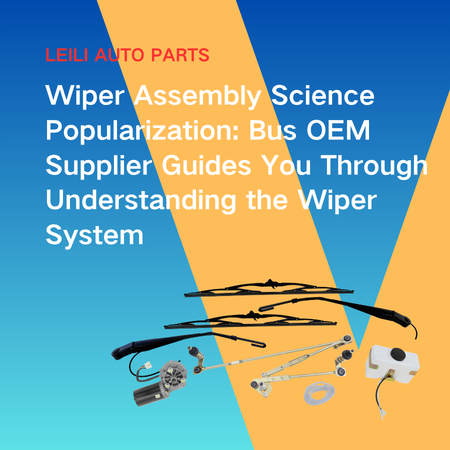
Core products: wiper motor | wiper arm | wiper blade | wiper link rod | washer | bus lock
.png)


