


Get a comprehensive understanding of this overlooked guardian of clear vision.
In this guide, we will delve into the definition, core functions, common types, and maintenance methods of the washer nozzle. Specifically, we will explain how a washer nozzle operates in different vehicle systems. Furthermore, this article covers practical maintenance and replacement techniques for the washer nozzle. Therefore, whether you are a DIY car owner or an automotive parts professional, this guide will provide you with comprehensive knowledge about the washer nozzle.
1. What is a wiper nozzle?
The windshield washer nozzle, also known as the glass water nozzle or cleaning nozzle, is a crucial component of a car’s windshield washing system. Specifically, it is mounted on the hood or wiper arm and is responsible for spraying the windshield washer fluid. For example, the washer nozzle directs fluid from the reservoir at a specific angle and in a misty form onto the windshield. As a result, it works in conjunction with the wiper to complete the cleaning process.
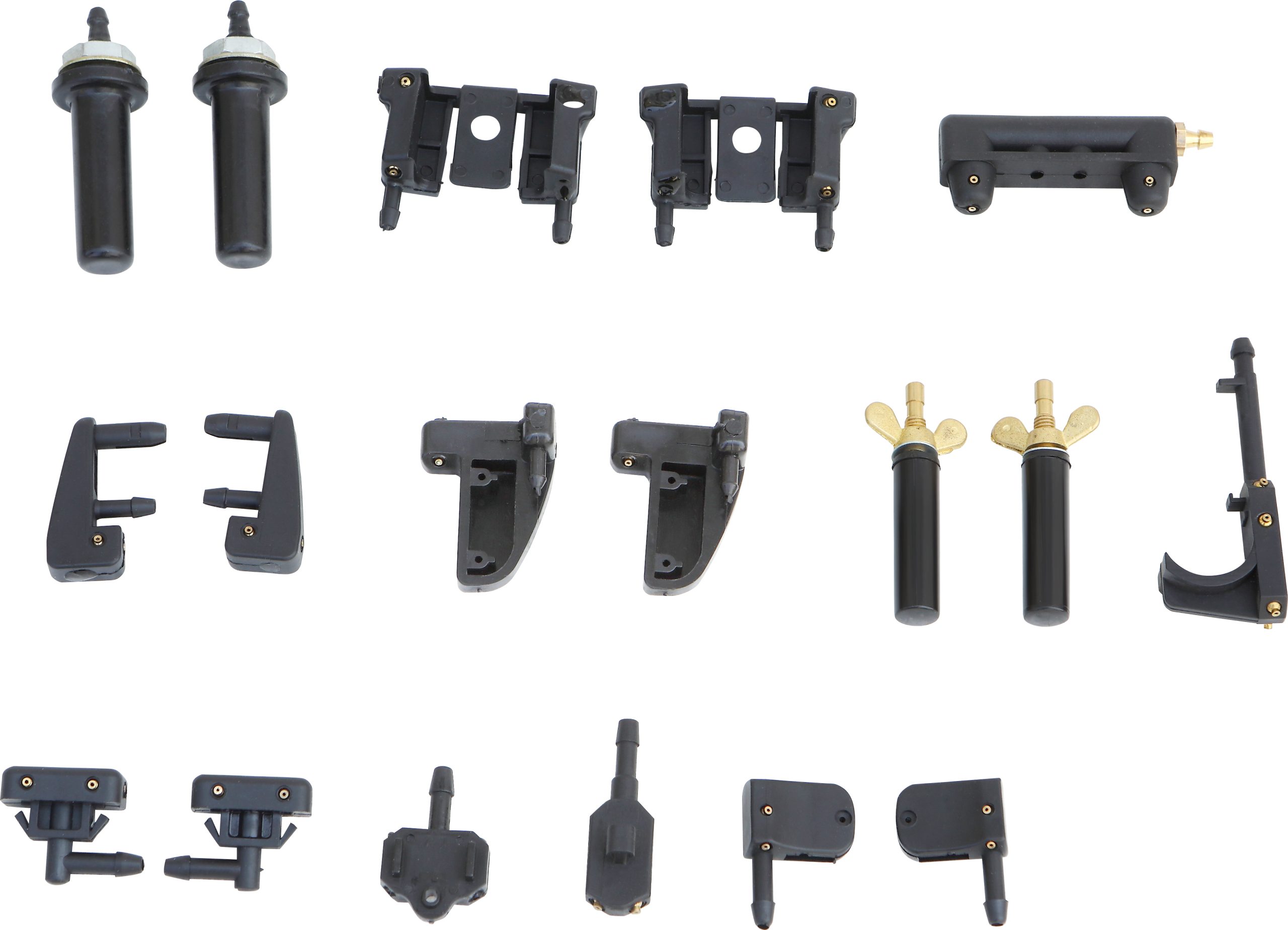
Washer Nozzle Structure – Inside the Windshield Wiper Nozzle & Spray Jet
A typical windshield wiper nozzle, though small in size, has a rather complex internal structure:
| Component | Functional Description |
|---|---|
| Nozzle body | Plastic or metal casing, fixes the position of the nozzle. |
| Jet hole | One or more precisely engineered small holes that determine the shape of the water jet or mist. |
| Spherical joint | a ball-shaped structure with adjustable angle, used for adjusting the spraying direction. |
| Internal flow channel | a passage that directs the flow of glass water. |
| Check Valve (certain models) | prevents backflow of windshield washer fluid in the pipeline, achieving the “on-demand spray” function. |
| Heating element (high-end model) | Prevents nozzle from freezing in winter. |
2.Washer Nozzle Function – How a Windshield Wiper Nozzle Sprays Fluid for Clear Vision.
This is the most basic function. Specifically, the washer nozzle sprays windshield fluid at a predetermined angle and direction onto the windshield. As a result, it ensures that the liquid covers the area within the wiper’s operational range.
Different designs of the washer nozzle can produce varying spray effects. For instance, columnar jetting is a traditional design that produces 2-4 streams of water with strong impact force, making it suitable for quickly wetting large areas. In contrast, fan-shaped atomization spray is a common feature in modern vehicles, which sprays out fan-shaped water mist for more uniform coverage and saves windshield washer fluid. Meanwhile, triple-jet spray is a method that combines elements of both, producing three separate streams of water from the washer nozzle.
The spherical joint design of most windshield washer nozzles allows for manual adjustment of the spray angle. Specifically, you can insert a thin needle into the spray hole of the washer nozzle and gently move it to adjust the direction. As a result, this ensures that the glass cleaner lands precisely on the wiper’s sweeping path.
The washer nozzle equipped with a check valve prevents the glass fluid in the pipe from flowing back into the reservoir after the spray function is turned off. As a result, when the vehicle is started again, the washer nozzle can immediately begin spraying water. Specifically, this eliminates the need to wait for the water pump to draw fluid from the reservoir up to the nozzle again.
In cold regions, standard washer nozzles are prone to becoming clogged due to the freezing of residual moisture. Heated washer nozzles, however, are equipped with built-in electric heating elements. Specifically, these heated washer nozzles automatically or manually activate in low-temperature environments to prevent freezing. As a result, they can function properly even in winter.
III.Washer Nozzle Types – Common Wiper Nozzle Designs:Fan Spray, Jet Stream & Adjustable
Type | Location of installation | Features | Common Models |
|---|---|---|---|
Hood Installation Type | Rear engine hood, close to the windshield | Traditional design, fixed spray path, adjustable angle | Most economy and mid-range models |
Wiper Arm InstallationType | Fixed on the wiper arm | Washer Nozzle Mounted on Wiper Arm – Better Spray Effect First, the washer nozzle is attached directly to the wiper arm and moves with it. | Mid-to-high-end models, Mercedes-Benz, BMW,etc |
Hidden type | Hidden under the hood or inside the rain gutter board | Clean appearance, does not damage body lines | Modern streamlined design models |
IV. Washer Nozzle Common Issues & Symptoms – Windshield Wiper Nozzle Fault Signs
| Fault Phenomenon | Possible Causes | Severity Level |
|---|---|---|
| No water spraying at all | Nozzle clogged, pump failure, hose detached, windshield washer fluid depleted | High |
| Jet angle deviation | Loose spherical joint, bent by external force | Low |
| Weak water spray / thin stream | Nozzle blockage, pipe kinking, pump aging | Medium |
| Abnormal Spray Pattern | Jet holes worn, clogged or deformed | Low-Medium |
| Long-term dripping after spraying water | Check valve failure | Low |
| Don't spray water in winter | Nozzle freezing, antifreeze freezing point insufficient | Medium |
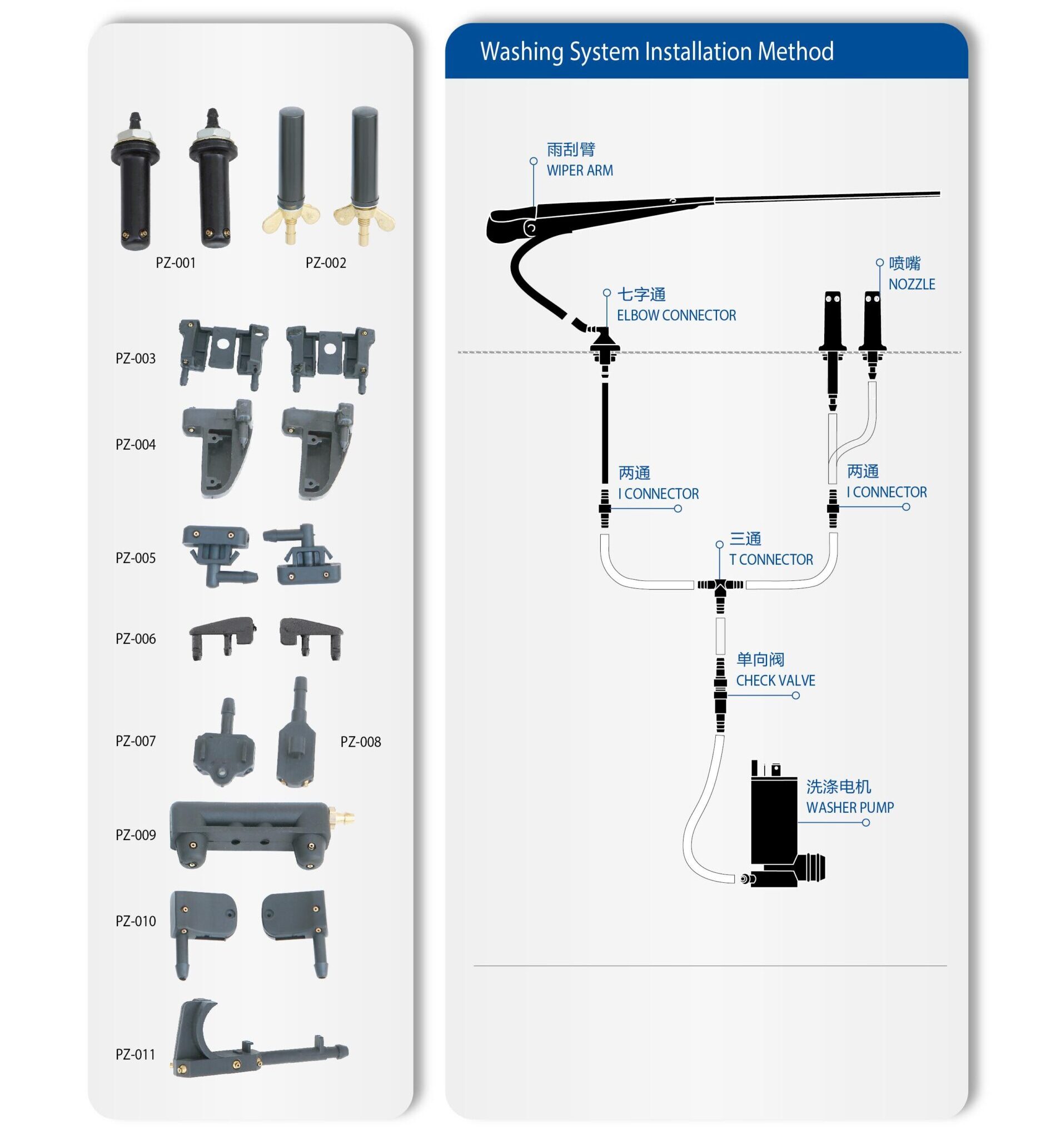
Washer Nozzle Fault Symptoms – Detailed Signs of a Failing Wiper Nozzle & Spray Jet
Step 1 – First, check the windshield washer fluid level.
Step 2 – Next, activate the spray and listen for the pump's buzzing sound.
Step 3 – If there's sound but no spray, then inspect the hose for detachment or clogging.
Step 4 – If there's no sound, however, check the fuse or the pump itself.
Diagnosis:
The issue is typically a partial blockage inside the washer nozzle. This is usually caused by impurities in the windshield washer fluid or dried residue that accumulates over time.
Solution:
To resolve this problem, use compressed air to blow in reverse through the washer nozzle. Alternatively, remove the nozzle and soak it in white vinegar to dissolve any scale or mineral deposits.
Diagnosis:
The washer fluid has an insufficient freezing point (e.g., summer fluid freezes in below-zero weather), or the heated washer nozzle has failed.
Solution:
Replace with winter-grade antifreeze rated for your local temperature (-25°C or -40°C), and verify that the washer nozzle is not cracked or damaged by ice.
V. Maintenance and Replacement of Windshield Wiper Nozzles
Recommended periodic maintenance.
Method One: Fine Needle Unclogging
Prepare a thin needle or paperclip.
Gently insert into the nozzle's spray hole.
Tap or wiggle to loosen debris inside.
Test spray effect and repeat if needed.
Method Two: Compressed Air Blowback
Disconnect the nozzle from the hose.
Blow compressed air backward through the nozzle outlet.
Clear out the blockage completely.
Method Three: Vinegar Soaking (for Removed Nozzles)
Remove the nozzle and soak in white vinegar for 2–4 hours.
Rinse thoroughly with clean water.
Reinstall and test spray function.
Change the criteria for judgment.
It is recommended to replace the windshield wiper nozzle directly when the following conditions occur:
- The nozzle casing is damaged or cracked.
- The nozzles are severely worn out, preventing the formation of a normal water column/mist.
- The spherical joint has broken, making it impossible to maintain a specific angle.
- The heating function of the heating nozzle has failed.
- Despite repeated attempts to clear it, the blockage remains severe.
VI. How to Choose High-Quality Rain Gauge Nozzles
When selecting a wiper nozzle, please pay attention to the following points:
1.Precise Matching:
The nozzle shape, latch structure, and pipe connection vary between different vehicle models. Please confirm its compatibility with your vehicle model.
2.Spray pattern:
Fan-shaped atomizing nozzles provide more uniform coverage than cylindrical nozzles; they are the preferred choice.
3.Material:
High-quality nozzles are typically made from weather-resistant engineering plastics (such as POM and PA66), which resist aging and do not easily crack.
4.Check Valve:
If the original vehicle does not have a check valve, you can opt for an upgraded version with a check valve for a better experience.
5.Brand Reputation:
Choose a brand with extensive experience in manufacturing to ensure precision and durability in spraying.

You might also enjoy
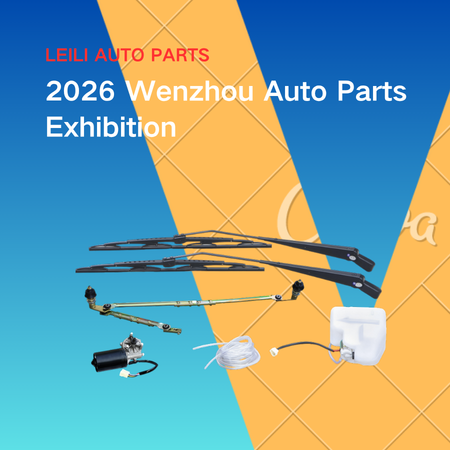
Zhejiang Lei Li will bring its full range of bus wipers to the 2026 Wenzhou Auto Parts Exhibition, booth 8D20, and sincerely invite global customers.

Optimal solution for bulk purchase of wiper system for urban buses: from TCO to whole life cycle management
.png)


