
Technical Analysis of the Spring Tension of the Bus Windshield Wiper Arm: The Game of Adhesion Under the Large Curvature of the Front Windshield and the Design Practice of Lei Li

wiper blade guide

I. The starting point of the problem: Why is the front windshield of the bus “difficult to serve”?

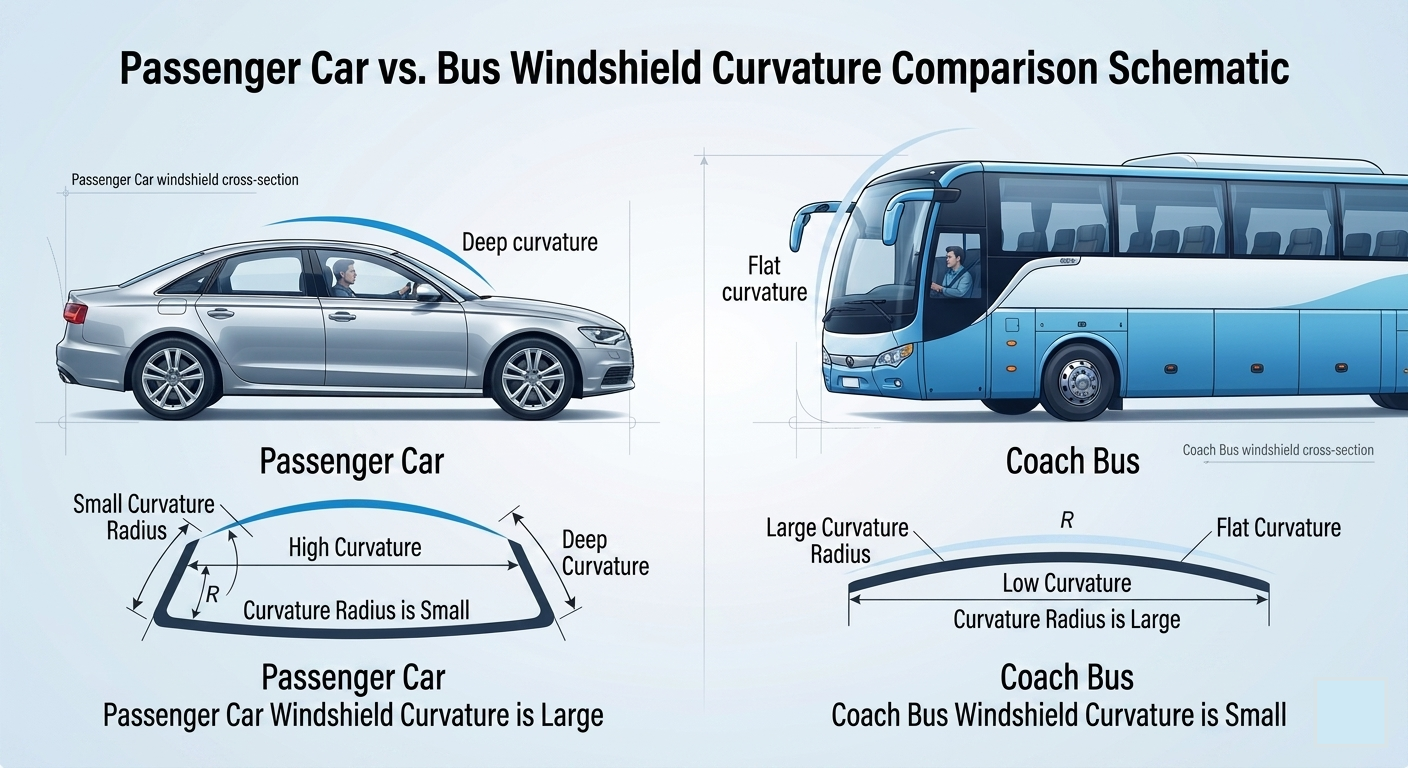
Curvature difference between passenger cars and buses

Passenger car wiper arms typically handle windshields with a relatively small curvature radius. However, a 12-meter city bus presents a far more complex challenge—its front windshield features a much larger curvature radius and a significantly larger glass area, several times that of a sedan.

Longer arm length and double curvature challenge

Larger glass areas demand longer wiper arms. Bus wiper arms are considerably longer than those found on cars. According to lever mechanics, as arm length increases, the required spring torque must increase accordingly. Moreover, bus windshields often feature compound curvature—varying in both vertical and horizontal directions simultaneously.

Two bad consequences of uneven pressure

On high-curvature surfaces, the wiper blade faces constantly changing contact angles throughout its stroke. If the spring tension design falls short, only two outcomes arise. In high-curvature zones, the blade’s middle section may lift off the glass. In low-curvature zones, excessive pressure accelerates rubber wear and generates noise. Both outcomes directly compromise driving safety in rainy conditions.

Core proposition

That defines the core challenge of bus wiper arm spring design. This goal isn’t simply to “choose a stiffer spring.” Rather, it demands uniform pressure distribution across the entire wiping stroke through precise mechanical analysis.
wiper

wiper

II. Three decisive variables of the spring tension force

Overview: Three Interdependent Variables

The wiper arm spring is essentially a tensile spring, and its design revolves around three interdependent variables.

Variable 1: Spring Rate (k-Value)

This is the core parameter of the spring, determining how much tensile force can be provided per unit deformation. If the k value is too low, the arm-end pressure is insufficient, and the rubber blade "floats" at the glass curvature turning point. If the k value is too high, the motor load increases, which may cause the motor to overheat or trigger protective shutdown, especially at low speed.

Variable 2: Initial Pre-Tension Length

The preload length determines the base pressure of the spring in the installed state. If the pre-tension is insufficient, the wiper arm will easily buckle at the starting position. If the preload is too large, the rubber blade will be compressed and deformed for a long time in the static state, forming a "memory curvature."

Variable 3: Effective Radius

This refers to the distance from the spring hanger to the rotation axis of the wiper arm. The greater the effective radius, the greater the torque produced under the same spring force. But a larger radius means the structural dimensions of the wiper arm increase, which may interfere with the gap between the hood or front apron. Therefore, trade-offs must be made between geometric space and mechanical output when designing.

The Mechanical Relationship

The relationship between the three variables can be expressed by a simplified mechanical chain. Spring force (F) = stiffness coefficient (k) × elongation (ΔL). Arm-end pressure (P) ≈ F × effective radius ÷ arm length. Any adjustment of one variable will affect the entire chain.

III. The problem of tension force decay on large-curvature glass

This is the most overlooked but most critical physical phenomenon in the design of bus wipers.

Comparison of curvature changes between passenger cars and buses

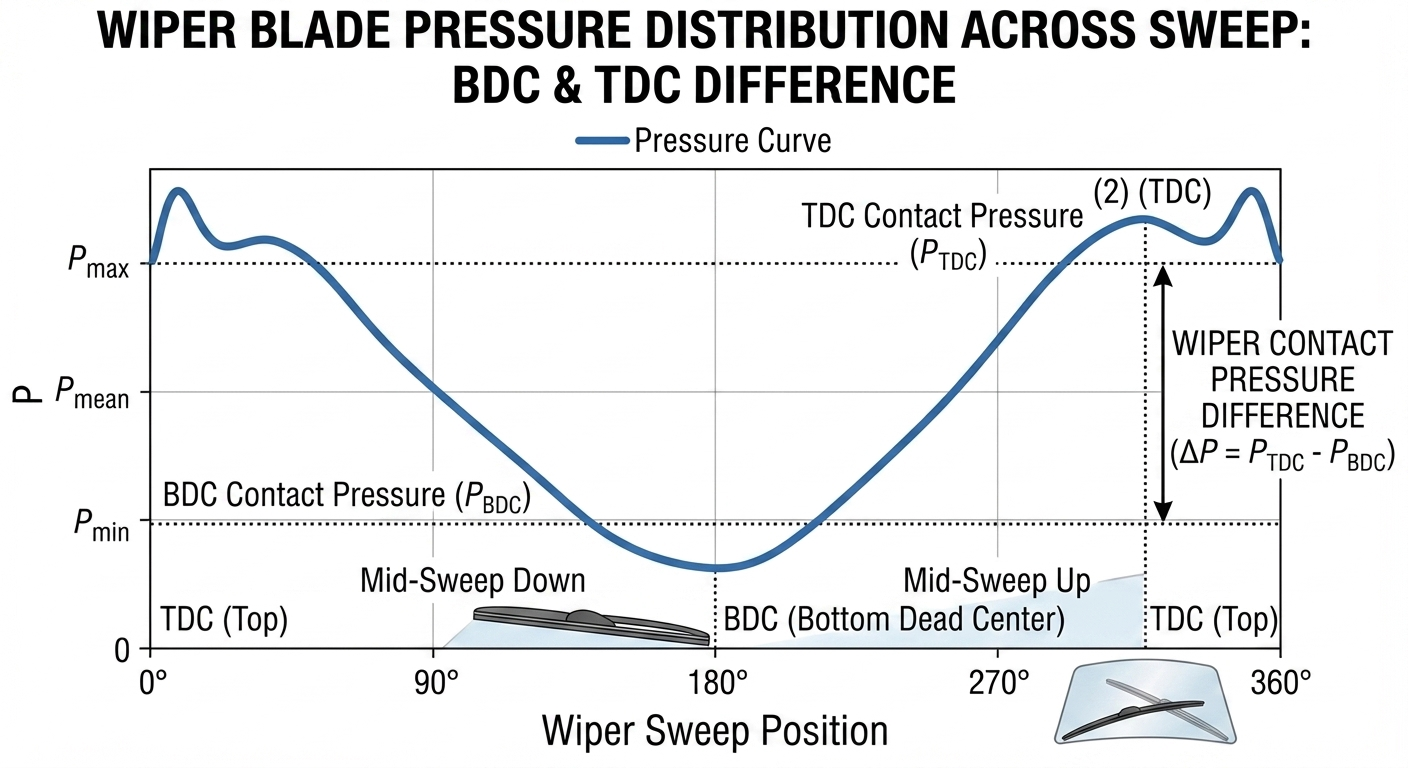
On the relatively flat windshield of a passenger car, the glass curvature changes only slightly from the starting position to the end position of the wiper blade, so the spring tension remains fairly stable throughout the stroke. However, on the double-curvature front windshield of a bus, the curvature changes dramatically across the stroke. This means that if a spring with a fixed stiffness coefficient is used, the arm-end pressure will fluctuate significantly from the starting point to the end point.
WIPER

WIPER

The root cause of the upper stop point not being scraped clean

Specifically, during the upward swing of the wiper arm from the lower stop point, the glass surface gradually “flattens”—the local radius of curvature increases. At this time, if the spring only provides a linear pull, the pressure at the end of the arm will decrease as the curvature of the glass decreases. This results in a significantly lower level of cleanliness in the upper dead point region compared to the lower dead point region. This is why many old buses have the situation of “the lower half is clean and the upper half is a mess.” This is usually not a problem with the blade, but rather a failure of the spring tension to match the glass surface.

Three engineering solutions

There are three engineering paths to solve this problem. 
  • The first is a variable-rate spring with unequal pitch design. It provides lower force early in the stretch and accelerates upward later.
  • As for the second uses a dynamic pivot design. The spring hang point shifts slightly during the swing, changing the effective lever arm.
  • For the third, it uses dual parallel springs for long arms. The main spring provides baseline pressure, while the auxiliary spring fills mid-to-late stage pressure gaps.

IV. Material selection: the invisible quality watershed

Material selection: the quality watershed that determines lifespan

The working environment of the bus wiper arm spring is far worse than that of the passenger car. City buses operate long hours daily and use wipers far more frequently than private cars, accumulating a large number of spring actuation cycles each year. Long-distance coaches, however, run fewer daily hours. Despite this, high-speed wind loads place extra stress on spring fatigue strength. Therefore, the choice of spring material directly determines the long-term reliability. Below are three materials with clear performance differences—the invisible quality watershed.

Comparison item

Carbon spring steel (SWP-B)

Silicon manganese spring steel (60Si2MN)

Chromium silicon alloy spring steel (55CrSi)

Applicable scenarios

passenger vehicle

Bus (general environment)

Bus (hot and humid/coastal/new energy)

tensile strength

Approximately 1600 MPa

1300MPa or more

1500MPa or more

Fatigue limit

600–800MPa

900–1000MPa

1000MPa以上

Corrosion resistance

general

general

excellent

Anti-relaxation performance

general

good

excellent

Relative cost

Low (1.0x)

Medium (1.5x)

Higher (2.0x)

Summary

These three materials show clear differences. Carbon spring steel offers the lowest cost, yet its relatively lower fatigue limit makes it less suitable for high-frequency bus operation. Silicon-manganese spring steel, in contrast, achieves higher tensile strength and better fatigue resistance. This makes it a cost-effective choice for non-coastal regions like the northwest and northeast.

Chromium-silicon alloy spring steel delivers superior fatigue and relaxation resistance.

V. Design Practice of Tension Force of Rain Wiper Arm of Lei Li Bus

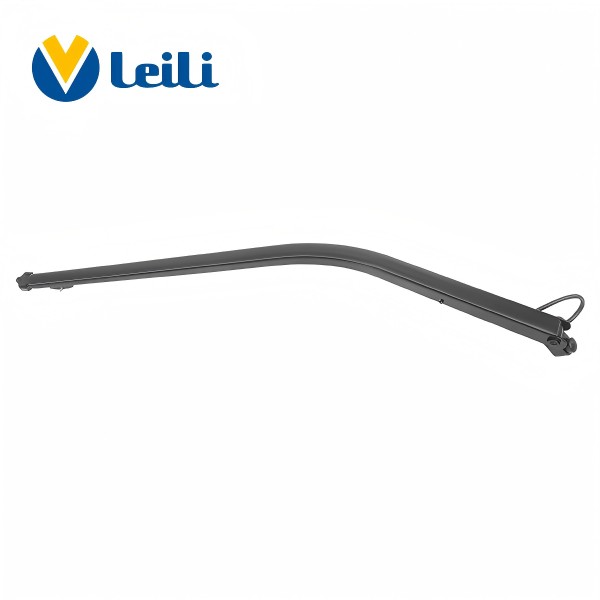
As a manufacturer founded in 1989 and specializing in bus wiper systems, Lei Li has accumulated experience in the design of wiper arm spring tension. The Leili SG15-A bus wiper arm is one of its products in this category.

SG15-A wiper arm

The spring design of SG15-A has three key features

Variable-Rate, Non-Uniform Pitch Structure

The front section uses a larger pitch for initial contact pressure. The middle section has a reduced pitch, increasing stiffness to compensate for curvature changes. The end section's smaller pitch maintains pressure at stroke completion. This design keeps the total pressure fluctuation within a controlled range.

Dual-Mount Adjustable Configuration

The spring has two mounting positions at the tail. The standard position is suitable for windshields with a moderate curvature range, while the reinforced position is suitable for high-curvature glass (such as the windshields of some BRT and airport shuttle buses). The mounting point can be selected according to the curvature test results of the actual vehicle during installation.

Alloy Spring Steel with Dacromet Coating

The spring body is made of 55CrSi alloy steel, and the surface is treated with Dacromet, providing effective anti-corrosion protection to meet the requirements of coastal city buses.

Fatigue Validation

Regarding pressure calibration, the Leili SG15-A wiper arm is calibrated to a specific arm-end pressure at the standard mounting point. This value is determined through actual vehicle testing—pressure below a certain threshold will cause incomplete wiping traces on the windscreen, while pressure above a higher threshold will cause the motor current to exceed its design margin at low speed.

Zhejiang Lei Li also invests in spring fatigue testing. The SG15-A spring was tested on a test bench according to industry standards. After extensive cycle testing, the permanent deformation rate of the spring and the pressure attenuation at the arm end are both controlled within acceptable limits.

VI. Selection Suggestions: How to Determine Whether the Wiper Arm Spring Needs to be Replaced

From the perspective of operation and maintenance, the operator can judge the health status of the bus wiper arm spring through three indicators.

Visual inspection

If the spring surface shows obvious rust, uneven pitch, or plastic deformation signs at the hooks on both ends of the spring, it should be replaced immediately.

Stress test

Hook the middle of the wiper arm with a spring tensiometer, lift it vertically in the direction of the glass, and read the tensile value when the rubber strip just separates from the glass. If the value has decreased significantly compared to the condition of the new car, it indicates that the spring has experienced fatigue decay, and continued use will result in a decrease in scraping quality.

Determine the scraping effect

Under medium rainfall conditions, if the upper stop area cannot be cleaned, but the problem still exists after replacing the new rubber strip, it is most likely that the spring tension is insufficient. If there are discontinuous stripes on the whole section of the scraping and accompanied by the jumping sound of the rubber strip, it may be that the spring pull is too large, and it is necessary to check whether a spring with a higher stiffness coefficient has been mistakenly installed.

VII. Conclusion

Spring tension of the bus wiper arm has never been a simple problem of “adjusting it a bit harder.” Instead, it is a technical node where material science, mechanical analysis, and vehicle model adaptation intersect. A dual-curvature windshield demands stable pressure output throughout the full stroke. Behind this requirement lies a systematic engineering effort—encompassing variable-rate design, material selection, and real-vehicle calibration.

As a manufacturer founded in 1989, Leili has accumulated experience in this field. For bus fleet and passenger transport maintenance teams, understanding this technology enables more informed decisions. Therefore, they can make better choices in both specification selection and ongoing maintenance.

About Us

Founded in 1989, Zhejiang Leili Auto Parts Co., Ltd. is located in Wenzhou’s Pingyang Yuyang Industrial Park. The company specializes in automotive electric windshield wipers and bus door locks.

Over the years, Leili has developed a comprehensive bus wiper system product line. This includes overlapping, upright, sequential integrated, sequential split, and single-arm wiper configurations. Key products range from 40W–180W (12V/24V) permanent magnet dual-speed motors to linkage mechanisms with 400–2,000mm center distances. They also produce wiper blades from 400–1,000mm in length and various wiper arms.

Moreover, Leili serves as an OEM supplier to major domestic and international bus manufacturers. Its brand coverage includes Yutong, Golden Dragon, King Long, Higer, Ankai, BYD, Zhongtong, and Youngman. These products are widely used in city buses, long-distance coaches, tourist buses, school buses, BRT, double-deckers, and new energy electric buses. Additionally, Leili exports to Southeast Asia, Europe, South America, North America, and other regions worldwide.

OEM合作对象
You might also enjoy
wiper

How to troubleshoot common faults of commercial vehicle wipers? 5 major issues explained in one go

background

Zhejiang Lei Li will bring its full range of bus wipers to the 2026 Wenzhou Auto Parts Exhibition, booth 8D20, and sincerely invite global customers.

Optimal solution for bulk purchase of wiper system for urban buses: from TCO to whole life cycle management