


The core logic of public transport procurement: why TCO is more important than unit price.
The biggest difference between bus group procurement and the retail market lies in the decision-making process. Individual car owners ask, “How much does this set cost?” In contrast, bus groups must measure the Total Cost of Ownership (TCO) over the entire vehicle lifecycle.
The TCO of a wiper system consists of four levels:
| Cost level | Constituent elements | Typical proportion |
|---|
| Initial purchase cost | Unit price of wiper assembly, wiper blade, washing component | 35%-45% |
|---|---|---|
| Replacement and maintenance costs | Service life, replacement frequency, labor hours | 30%-38% |
| Inventory holding cost | Spare parts warehousing, capital utilization, batch management | 10%-15% |
| Operating risk cost | Downtime caused by faults, complaints, and safety risks | 10%-20% |
An intuitive comparison: If a wiper assembly costs 30% less but lasts only half as long, its actual TCO will be about 22% higher. Over an 8-year bus operation cycle, this translates to nearly 1,000 yuan extra per vehicle on wiper replacement. Multiply that by the fleet size, and you get tens of thousands in additional costs. This is why fleet buyers are increasingly shifting their focus from “lowest unit price” to “best overall cycle value.”
TCO calculations only hold if the hardware lasts the contract period, which is why operators standardise on urban bus wiper systems built for high-frequency service.
Scenario 1: General procurement of regular urban buses (8 meters / 10 meters / 12 meters)
The regular urban bus is the main body of the bus group’s fleet, usually spanning three levels: 8-meter mini-branch buses, 10-meter standard buses, and 12-meter main line large buses. The first major problem faced by the centralized procurement is the fragmentation of spare parts caused by the mixed models.
The Modular Solution
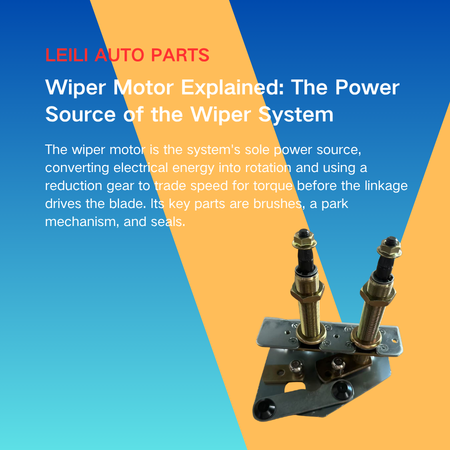
Rain Wiper’s solution promotes a modular product architecture. Take the wiper motor, for example. Through a unified mounting hole platform and an adjustable linkage mechanism, the same basic model covers all three vehicle lengths (8–12 meters). The built-in configurable module adapts the gear ratio and power to different front windshield areas.
For the bus group, this means:
Originally, it was necessary to reserve three motors for each of the three models, but after modularization, only one is needed.
General parts have a faster consumption rate and lower capital utilization.
The repairman does not need to be familiar with three different disassembly procedures.
Real-World Bidding Example
In a 2020 wiper part bidding procurement, the Nanjing Bus Group budget was 945,900 yuan. The technical requirements explicitly cited the national standard threshold: “In line with GB 15086-2013 Performance Requirements and Test Methods for Windshield Wiper and Washer.” This demonstrates that large-scale bus procurement enforces strict supplier qualifications, product certification, and warranty terms. For instance, a minimum 1-year warranty, free replacement during that period, and full compensation for related damage have become standard clauses in collective procurement contracts.
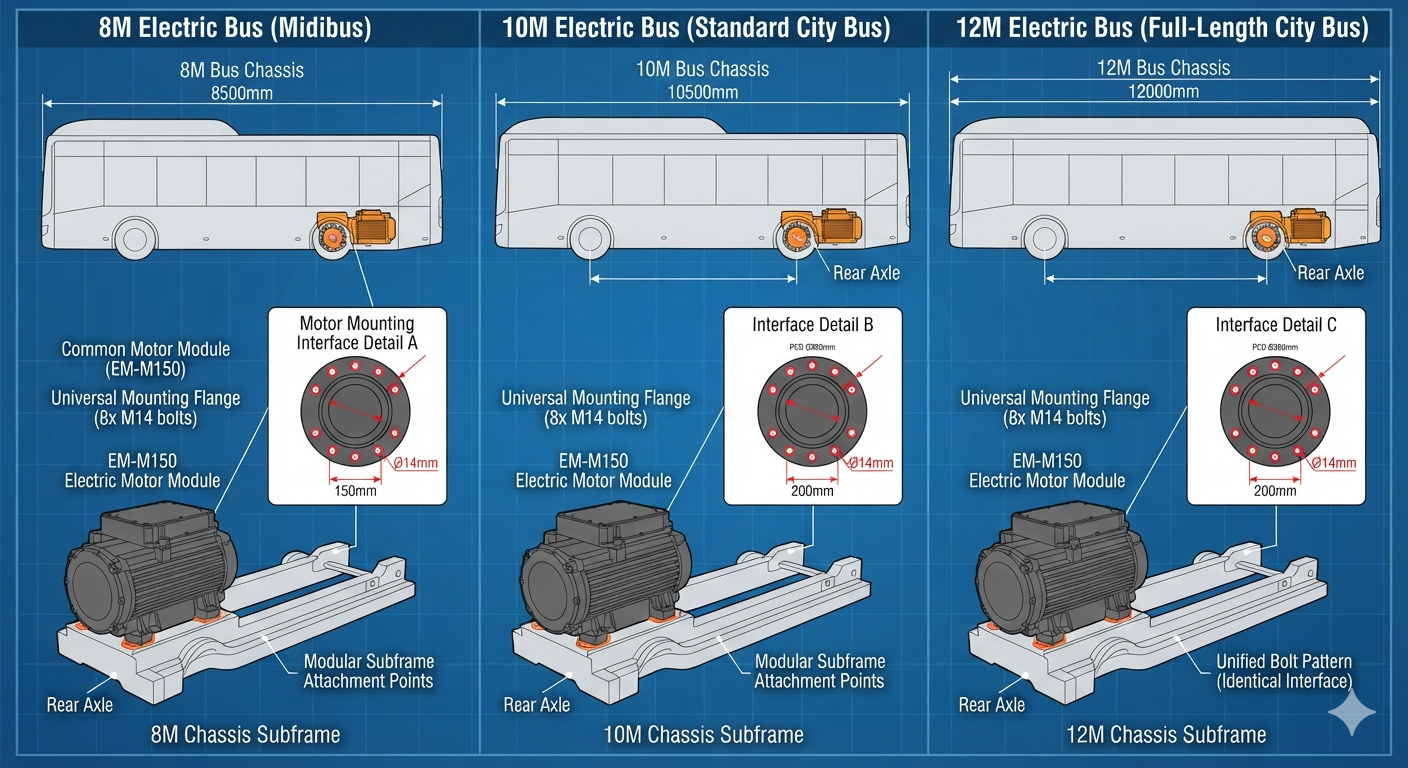
bus motor
Scenario 2: High-frequency operation challenges of BRT (Bus Rapid Transit)
BRT systems operate under a completely different logic than traditional buses. On a typical Chinese BRT line, peak-hour departure intervals shrink to just 2–3 minutes, and a single vehicle runs over 16 hours daily. Consequently, the wiper system faces near-continuous operating conditions.
When conducting centralized procurement for BRT, groups should pay special attention to three critical indicators:
BRT vehicles operate with wiper frequency 2-3 times higher than ordinary buses, which places greater demands on motor continuous-operation reliability. When selecting wiper motors for BRT fleets, operators should pay attention to motor durability ratings and choose products with adequate cycle life to avoid frequent replacements during the vehicle's service life.
BRT maintenance windows are extremely short—typically only 2-4 hours at night. This makes quick-replacement design an important consideration when selecting wiper systems: linkage joints and blade latches that allow fast, tool-free replacement can significantly reduce downtime losses.
BRT buses operate frequently and traverse dusty roads, consuming much more washer fluid than regular buses. Fleet operators therefore often opt for larger-capacity washer tanks and high-efficiency nozzles to reduce refill frequency and ensure adequate cleaning of the large windscreen.
Scenario 3: Low power consumption integration of new energy electric buses
The proportion of new energy buses in the national fleet continues to rise, with some first-tier cities already achieving 100% electrification. Electric buses have unique requirements for wiper systems that differ sharply from gasoline-powered vehicles.
On electric buses, every electrical device drains the battery and affects driving range, so wiper motor energy efficiency matters—unlike traditional gasoline buses where the generator supplies abundant power. When selecting wiper motors for new energy buses, operators should prioritize energy-efficient motor solutions that maintain adequate wiping torque while minimizing power consumption.
New energy buses are packed with sensitive electronic devices—battery management systems, motor controllers, CAN buses, and display screens. Electromagnetic interference from a wiper motor could potentially cause dashboard flickering or controller malfunctions. Therefore, fleet buyers should select wiper motors that comply with electromagnetic compatibility standards to ensure they do not interfere with the vehicle's electronic systems.
As buses electrify, the vehicle power supply is gradually transitioning from a mixed 12V/24V architecture to a pure 24V DC system. Operators should ensure the wiper assembly is compatible with the vehicle's 24V system and offers adequate tolerance to voltage fluctuations, preventing voltage spikes from stalling or damaging the motor.
After-sales response: the “last mile” of the success or failure of centralized procurement
Even the best product cannot save a procurement deal if after-sales service falls short. In fact, poor service severely undermines the value of centralized procurement. Consequently, bus group wiper accessory announcements almost always include strict service commitment clauses. For example, the Huangshi Bus Group bid documents clearly require suppliers to “reach the site within 4 hours and resolve the fault within 12 hours.” Similarly, Shanghai Pudong Bus procurement rules stipulate that “the contract will be terminated if there are two quality issues within six months.”
Zhejiang Lei Li has established a three-level after-sales response system for the bus group:
.png)
.png)
.png)
Suggestions for the implementation of the centralized procurement plan
Based on the analysis of the three scenarios above, we suggest constructing an evaluation framework from the following four dimensions when formulating a bulk procurement plan for the wiper system:
Hard indicators such as motor power, output torque, protection grade, and working temperature range must match the main model of the fleet.
Priority should be given to product lines with a high degree of generalization in order to reduce the number of spare parts and inventory costs.
The IATF 16 949 certification is the basic threshold for entering the host system, and at the same time, it pays attention to whether the supplier has its own production line and R&D team.
Write the response time, warranty period, and compensation clause into the contract and set up KPI assessment.
Conclusion: From "Buying Parts" to "Buying Solutions"
The procurement of windshield wipers may appear trivial among hundreds of accessory categories. Yet, when you multiply this expense across the entire fleet and over the full service life, the optimization potential becomes immense. Shifting from a bicycle-based unit-price mindset to a holistic TCO perspective—and evolving from "buying parts" to "buying solutions"—represents the true breakthrough in bulk procurement. We therefore urge all procurement professionals to embrace this comprehensive approach.
About Us
Zhejiang Lei Li Auto Parts Co., Ltd. has been engaged in the R&D and manufacturing of automotive wiper systems for over 30 years. Our product line covers overlapping wiper assembly, motors, arms, blades, linkage mechanisms, and washing system components. We have successfully passed the IATF 16949 quality management system certification. Moreover, our supporting brands cover Yutong, Jinlong, Jinli, Zhongtong, BYD, Ankai, and other mainstream domestic bus manufacturers. Furthermore, our new energy bus wiper system has achieved mass production and is now serving the bus groups of many cities across China. In addition, our applicable fields include urban public transport, long-distance passenger transport, tourist buses, school buses, BRT rapid buses, double-decker buses, and airport shuttle buses.
Related resources
Bulk purchasing comes down to three numbers — the assembly price, the cost per year, and the motor replacement cycle:
.png)


