
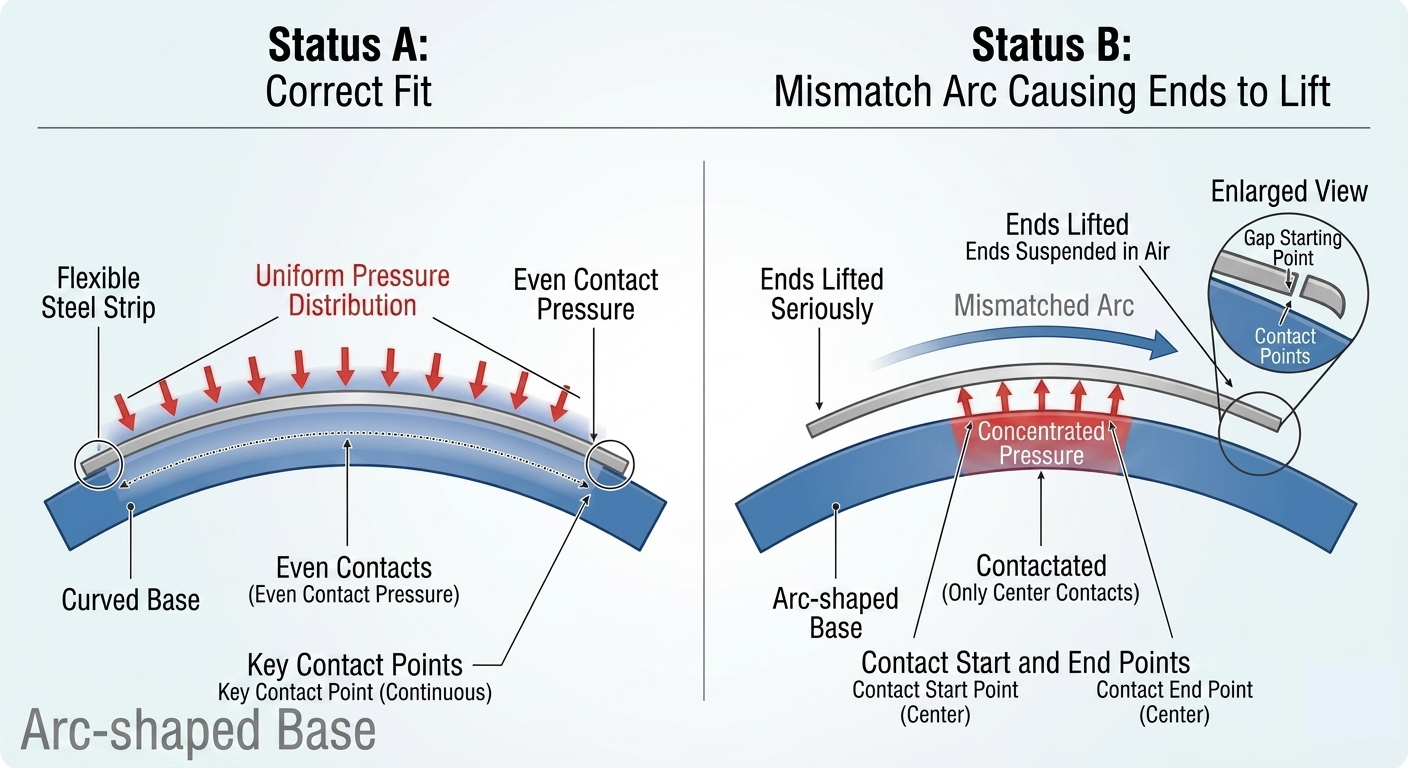
Fault 1: Scratching is not clean and high-speed floating
Scraping tops the complaint list for commercial vehicle wiper systems. Poor wiping, high-speed floating, vibrating noise, and rapid elasticity decay are the most common wiper blade complaints. Commercial vehicles often run long hours on highways and national roads. High-speed cleaning failures pose much higher safety risks than those in passenger cars.
Root cause analysis
| Symptoms of the fault | Possible causes | priority |
|---|
| The center of the glass can’t be cleaned. | The spring of the wiper arm is not strong enough | high |
| The two ends of the wiper blade are curled up. | The curvature of the steel sheet does not match the curvature of the glass | high |
| High-speed floating | The spoiler is missing or the angle of the guide vanes is incorrect | medium |
| Scrape off the residual water film | Wiper blade rubber strip edge aging or oil film attachment | medium |
| Intermittent leakage and scraping | The joint gap of the linkage rod is too large | low |
Troubleshooting steps
Use a spring scale to pull vertically at the wiper blade's center. If the reading is obviously below the standard pressure, replace the wiper arm spring or the entire wiper arm.
Wipe slowly on dry glass and observe whether the water film is uniform. Intermittent wiping or arc leakage means the steel sheet's curvature does not match the glass curvature. If so, replace the wiper blade to match the current glass curvature.
Activate the wiper at high vehicle speed. If the wiper blade visibly lifts off the glass, the spoiler design is insufficient. In this case, replace the wiper blade with one that features an aerodynamic spoiler structure.

blade
Fault 2: Noise and vibration
Commercial vehicle drivers spend long hours on the road every day. Wiper noise directly aggravates driving fatigue. Vibration and noise also affect driving and riding comfort. Moreover, they serve as an early warning that the blade is about to fail.
Checklist for quick identification of noise types
| Noise type | Voice characteristics | Common causes | Processing method |
|---|
| Vibration of the rubber strip | High-frequency “squeak” sound | The rubber strip hardens, the glass dries, and the coefficient of friction is too high. | Replace the blade or apply a lubricating coating |
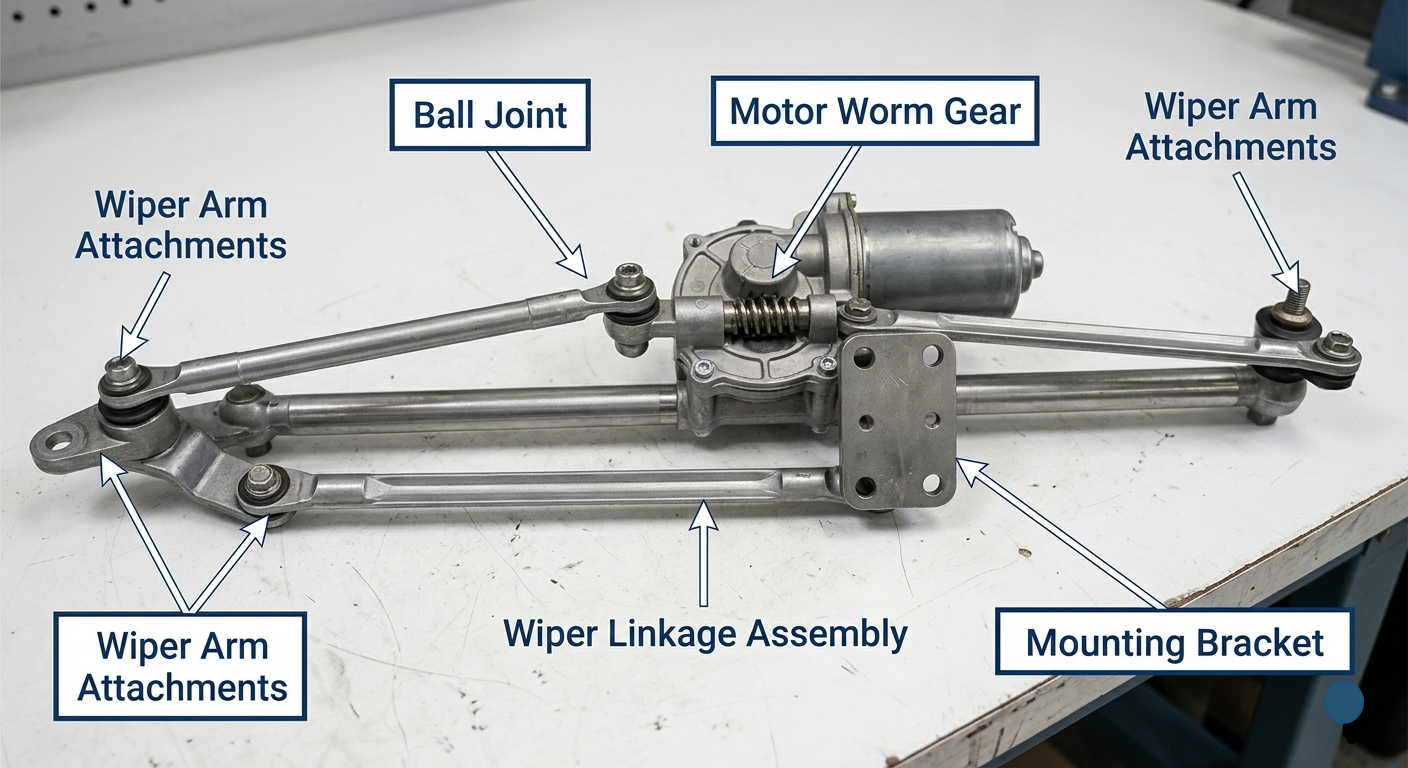
| Mechanical impact | “Click” sound | The ball head of the linkage rod is worn out, and the gear gap of the motor worm gear is too large. | Replace the linkage rod assembly |
| Low-frequency resonance | “Zzz” sound | The motor fixed bracket is loose, and the wiper arm installation angle is off. | Secure the bracket and adjust the installation angle. |
| Noise on return journey | It only appears on the return trip. | The rubber strip does not flip smoothly, and the blade direction is incorrect. | Check the installation direction of the rubber strip |
Key inspection indicators
- The hardness of the rubber strip: new rubber strips have a specific Shore hardness, and when the hardness rises significantly after long-term use, the probability of noise increases notably.
- Connecting rod ball head clearance:measure with a micrometer. The mechanical impact noise increases significantly when the clearance is excessive.
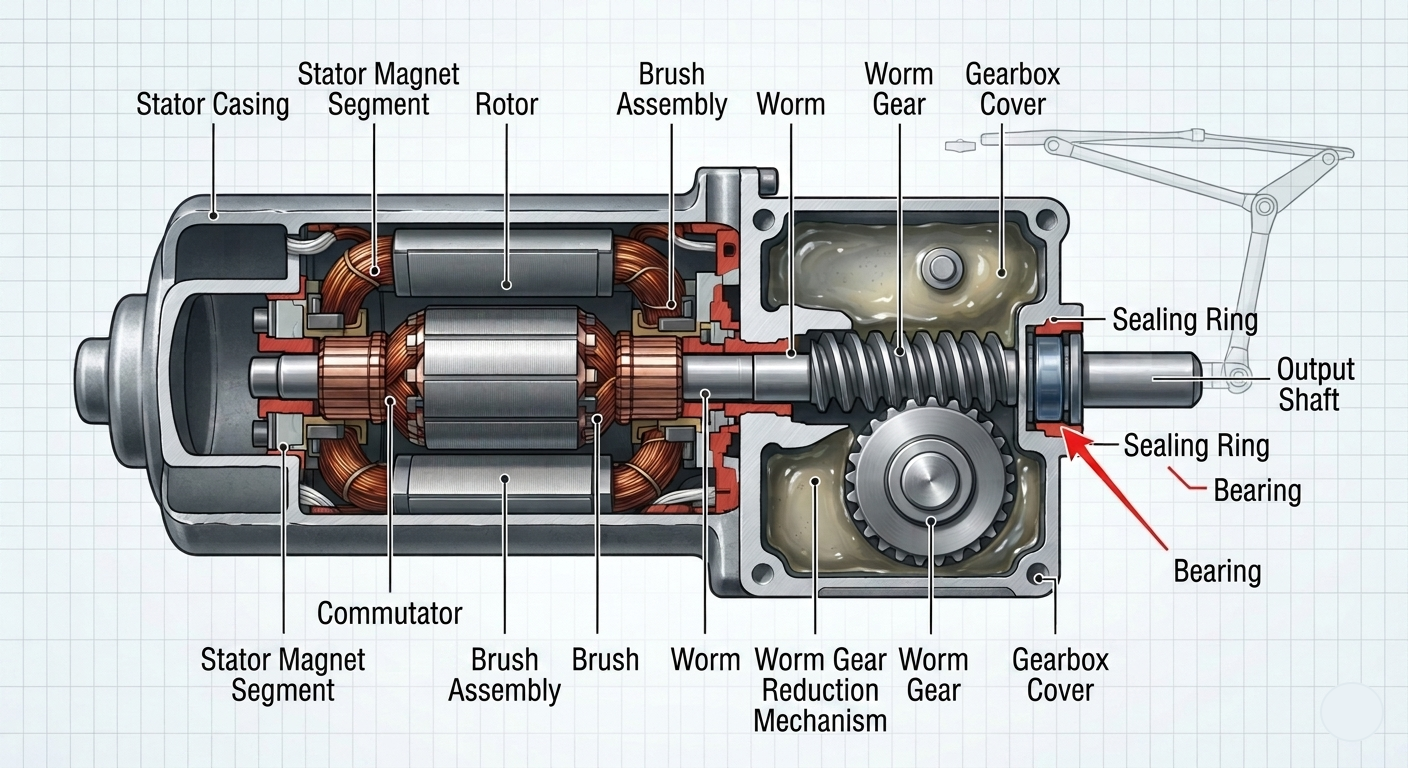
- Motor worm gear engagement: manually rotate the output shaft, there should be no obvious step feeling. The deceleration mechanism needs to be replaced when the jumping teeth feeling occurs.
First, rule out whether braking-induced intermittent vibration comes from motor power voltage fluctuations. Commercial vehicles use a 24V electrical system. When the supply voltage drops too low, torque decreases noticeably, which may cause low-speed vibration. To confirm, measure the actual working voltage at the motor wiring terminal with a multimeter.
linkage
Fault 3: The wiper motor does not turn or intermittently stops turning
Wiper motor failure ranks as the most serious functional failure in commercial vehicle wiper systems. Vision-obstructing wiper failures can significantly increase the risk of rainy-day accidents. Commercial vehicles operate at high speeds year-round. Their motor reliability directly affects driving safety.
Decision tree for motor failure
The wiper motor does not turn.
├─ Check the fuse → Circuit breaker → Replace the fuse and check the short circuit point.
├─ Check the power supply voltage (24V commercial system) → Abnormal → Check the lines/generators.
├─ Check the motor terminal → Oxidation / loosening → Clean and tighten .
├─ Manually rotate the output shaft → Jammed → The deceleration mechanism is damaged and needs to be replaced.
└─ Measure the resistance of the motor windings → Open circuit / short circuit → The motor burned out and needs to be replaced.
Core fault indicators
| Detection items | Normal range | Fault threshold | Detection tool |
|---|
| Working voltage | Close to the 24V rated value | Obviously below or above the rated range | multimeter |
| Unloaded current | Normal running level | Obviously high (risk of internal short circuit) | Multimeter (current mode) |
| High gear speed | Normal running level | Obviously low | Tachometer |
| Low gear speed | Normal running level | Obviously low | Tachometer |
| Winding insulation resistance | Normal level | Obviously low | Megohmmeter |
Motor temperature rise (continuous operation) | Normal level | Obviously high (overheat protection risk) | Infrared thermometer |
Typical Scenarios and Responses
The motor stops automatically after continuous use and resumes after cooling. This indicates an excessive motor load or poor heat dissipation. Check whether the linkage rod is stuck. Also verify that the motor installation position has sufficient ventilation.
Frequent switching between high and low gears usually burns out the relay or switch contacts. For commercial vehicle 24V systems, the relay contacts should be rated to handle the motor's starting current.
Water vapor enters when the motor seal fails. This causes an internal short circuit. Check the motor casing for cracks. Also check if the output shaft oil seal is worn.

wiper motor
Fault 4: Wiper arm elasticity attenuation and angle deviation
Wiper arm elasticity fades gradually. Drivers often notice it only when the wiping effect seriously drops. Commercial vehicles have larger wiper arms and wider wiping areas. As a result, the wiping blind spot caused by elasticity attenuation is far larger than that of passenger cars.
Quantitative judgment of elasticity attenuation
| Arm length range | New arm standard pressure | minimum value that needs to be replaced | attenuation rate exceeds |
|---|
| Short arms | Standard level | Obviously below standard | Significant |
| Medium arms | Standard level | Obviously below standard | Significant |
| Long arms | Standard level | Obviously below standard | Significant |
Measurement method: At the center of the wiper blade (perpendicular to the direction of the glass), slowly lift the wiper arm with a spring scale until the wiper blade is about to leave the glass, and read the maximum value. Compare it with the original factory rated value.
Angle offset troubleshooting
The installation angle deviation of the wiper arm and the glass surface should be kept within a proper range.
Cause of angle deviation:
- The bushing of the wiper arm shaft and the splined output shaft of the motor are worn (a typical problem after long-term use).
- The reference mark was not aligned during installation.
- External force impact (such as the washing machine brush arm accidentally hitting)
When the angle deviation is excessive, the contact angle between the rubber strip and the glass changes. Scraping efficiency drops noticeably, and single-side abrasion of the rubber strip accelerates.
Suggested replacement cycle
| Operating conditions | Recommended inspection cycle | Suggested replacement cycle |
|---|
| Long-distance freight (long hours daily) | Frequent | Shortest |
| Intercity passenger transport (moderate hours) | Regular | Regular |
| Coastal / High Humidity / Salt Fog Environment | Frequent | Shortest |
| Extreme cold in the north / frequent use of de-icing agents | Frequent | Shortest |
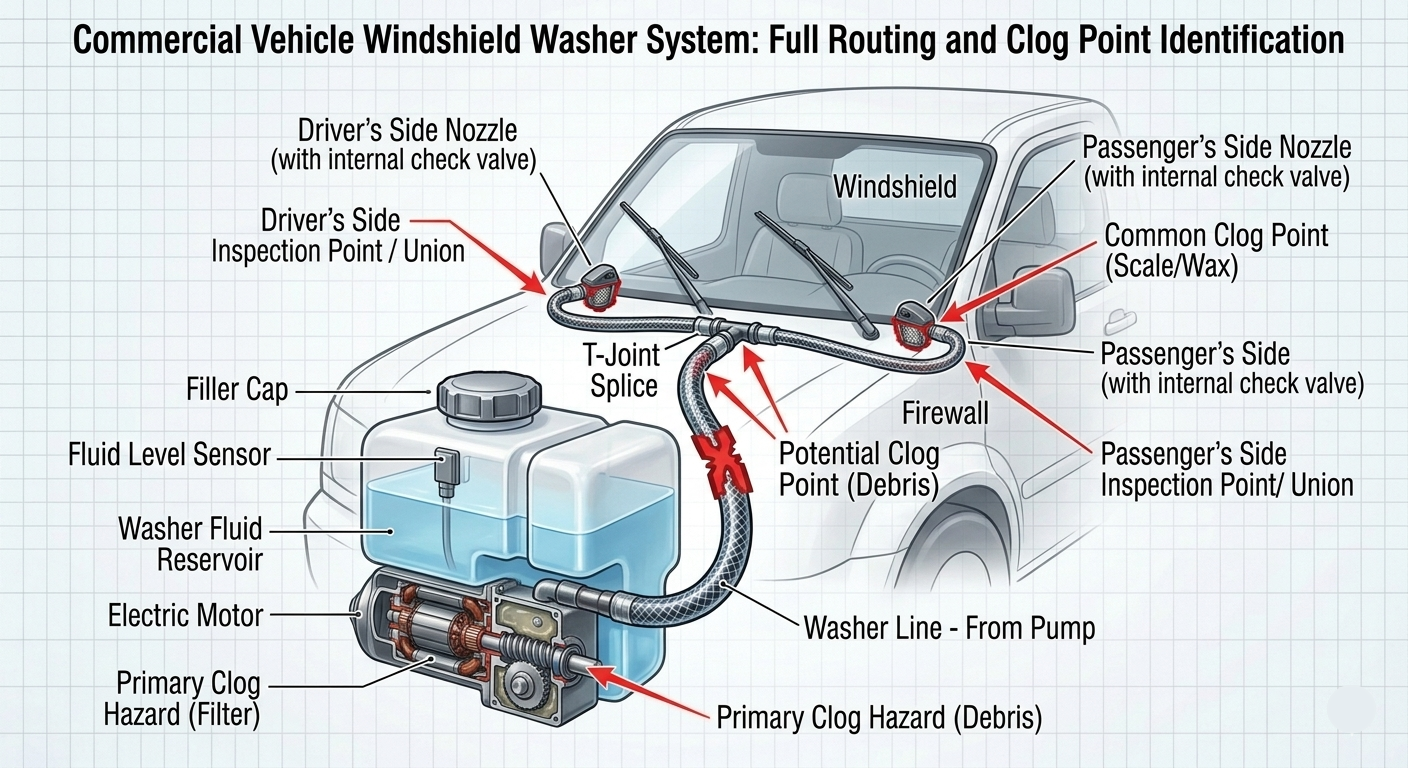
Fault 5:The washer does not produce water or the water spray is weak
Washer failure seems simple. But in practice, the washing function often fails because the washing fluid runs out or the pipeline clogs.
Common fault quick check
| Symptoms of the fault | Reason | Solutions |
|---|
| The motor makes noise but no water comes out. | Washing liquid is exhausted, pipe is detached, nozzle is blocked | Add washing liquid, check the pipeline, clean the nozzle with a needle |
| The motor is silent. | Fuse blows, motor burns out, switch contacts are not good | Replace fuses, measure motor resistance |
| The water spray is weak and the range is short. | Pipe bending, motor aging, improper viscosity of washing liquid | Smooth out the pipeline and replace the motor. |
| Spray only on one side | One-way valve blockage or three-way joint failure | Replace the one-way valve |
| Completely not working in winter | The washing liquid froze, and the pipeline cracked. | Replace with anti-freezing washing liquid suitable for the local low-temperature conditions |
Washing machine core parameters
- Motor working voltage: 24V (commercial vehicle)
- Motor rated power: match the original factory specification
- Injection pressure: should be sufficient for the large windshield area of commercial vehicles
- Washing liquid pot capacity:check the liquid level during routine maintenance
- Nozzle spray angle: calibrate it to cover the required wiping area before the rainy season
wiper

Frequently Asked Questions FAQ
Check commercial vehicle wiper blades every 3 months. Replace them every 12 months. Traditional EPDM rubber strips have an effective wiping life of about 6,000 kilometers. Replace them immediately if water spots remain, abnormal noise occurs, or visible cracks appear. Carbon fiber composite wiper blades offer three times the life of rubber ones.
The repair depends on the damage extent. Burned windings or a stuck rotor generally rule out DIY repairs. Restoring the factory-grade IP55 waterproof seal after repair is difficult. Repaired motors also have a high failure rate. For abnormal noise or excessive clearance from worm gear wear, replace the parts separately. The wiper motor supports modular maintenance. You can replace the deceleration mechanism and the motor body independently. This approach reduces fleet maintenance costs.
First, check if there is a mechanical noise - after turning off the wiper, push the wiper arm with your hand. If there is still a "click" sound, the problem is in the link rod ball head or motor worm gear, not related to the wiper blade. For abnormal sounds only when scraping, check whether the glass is dry (it should be lubricated with water first) and whether the rubber strip installation direction is correct (the edge should face the scraping direction). Should problems persist, consider whether the rubber strip hardness matches the current temperature.
We do not recommend this practice. Commercial vehicles have large windshields (typically 1.5–2.5 m²) with widely varying curvature. Their wiper arm sizes and interface specifications also differ from passenger cars. Passenger car wiper blades cannot provide sufficient wiping coverage or pressure. Their interfaces are incompatible. When installed on commercial vehicles, passenger car wiper blades show about a 60% higher probability of high-speed floating. They also create significantly larger wiping blind spots.
Do not forcibly open the wiper switch. Otherwise, the motor may burn out. The blocking current of a 24V system can exceed 20A. The correct method involves three steps: first, after starting the vehicle, turn on the windshield defrost function. Then, wait for the ice layer to melt before using the wiper. Before winter, replace the washing fluid with antifreeze type (freezing point ≤ -25°C). When parking, lift the wiper arm to prevent the rubber strip from freezing onto the glass.
Watch for three warning signals. First, the wiper blade's movement trajectory deviates from normal by over 2cm. This indicates excessive joint gap. Second, manually shake the wiper arm. A loose feel or metal impact sound at the connecting rod joint means trouble. Third, check the connecting rod surface for rust or visible deformation. The linkage rod is a safety component. We do not recommend welding repairs. Replace the entire assembly instead.
Recommendations for full life cycle maintenance
| Maintenance items | Inspection cycle | Replacement cycle | Maintenance tips |
|---|
| Wiper blade rubber strip | Regular | When worn | Clean the cutting edge, check for cracks. |
| Wiper arm elasticity | Regular | When significantly weakened | Measure the pressure with a spring scale. |
| Wiper motor | Regular | Depending on operating conditions | Listen to the noise, measure the current |
| Connecting rod | Regular | When excessive wear | Check the ball head clearance. |
| washing appliance | During routine maintenance | When degraded | Replenish fluid, clean the nozzle, check the pipeline |
| Electrical circuit | Periodic | — | Check the oxidation of terminal connectors and the status of fuses. |
About us: Zhejiang Lei Li Auto Parts Co., Ltd. The company focuses on the commercial vehicle wiper system, namely the R&D and manufacturing of wiper motors, wiper arms, wiper blades, wiper linkage rods, and washers.The products are suitable for buses, trucks, engineering vehicles, ships, aircraft, and other commercial/special vehicles, and are compatible with main manufacturers such as Jinlong, BYD, Yutong, XCMG, Chongqing Heavy Industry, and Higer. Through IATF 1 6949 certification, undertake OEM / ODM, provide full life cycle technical solutions.
You might also enjoy

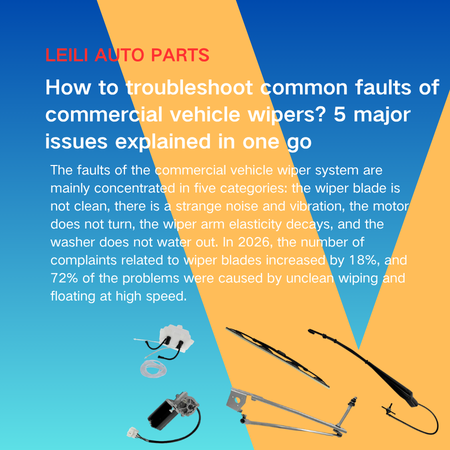
How to troubleshoot common faults of commercial vehicle wipers? 5 major issues explained in one go

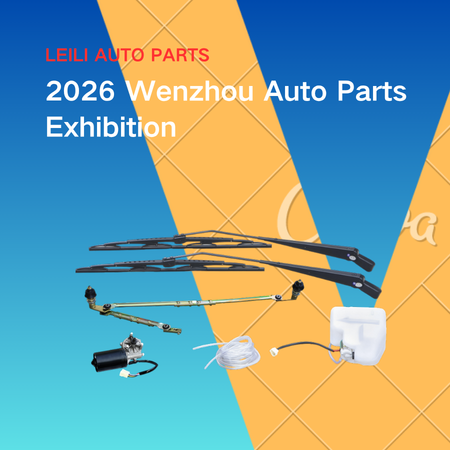
Zhejiang Lei Li will bring its full range of bus wipers to the 2026 Wenzhou Auto Parts Exhibition, booth 8D20, and sincerely invite global customers.


.png)