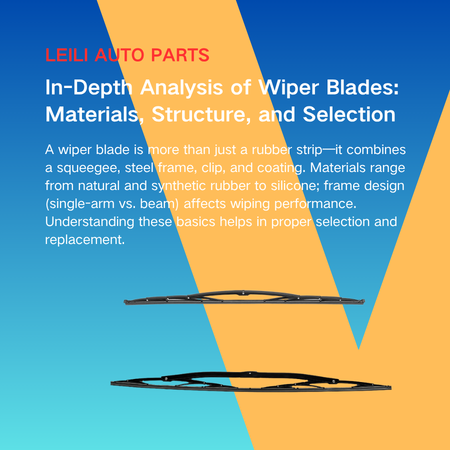



I. Wiper Blades: The Science Behind a Piece of Rubber
Wiper blades are the most wear-prone and most frequently replaced component in the wiper assembly, and the only part that comes into direct contact with the windshield. Many people assume a wiper blade is just a strip of rubber, but the materials science and structural design behind it determine how well it clears water.
II. Structural Composition of Wiper Blades
A complete wiper blade is not just a piece of rubber; it consists of multiple parts:
Components | Function |
|---|
| Rubber squeegee strip | Directly contacts the glass and wipes away the water film |
| Skeleton / Steel strip | Provides support force to keep the rubber pressed against the glass |
| Clip / Connector | Secures the wiper blade to the wiper arm |
| Waterproof film | Covers the rubber surface to reduce friction |
Wiper blades at different price points vary greatly in the materials and craftsmanship of these components.
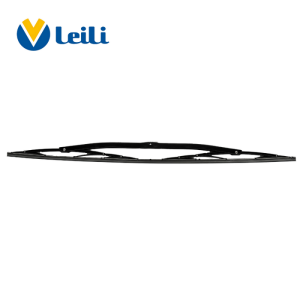
P1300-A wiper blade
III. Selection of Rubber Materials
Natural Rubber vs. Synthetic Rubber
Natural rubber is soft, has good elasticity, and conforms well to the glass, but its weather resistance is average and it tends to age under strong UV exposure. Synthetic rubber (such as nitrile rubber and EPDM) performs better in oil resistance, wear resistance, and weather resistance, but is slightly less soft.
Currently, synthetic rubber is the dominant material for wiper blades on the market, while some high-end products use a blended formula of natural and synthetic rubber to balance conformity and durability.
Silicone Rubber: A New Generation Choice
Silicone rubber wiper blades have become increasingly popular in recent years. Compared with traditional rubber, silicone rubber offers the following advantages:
- Better high- and low-temperature resistance, and less likely to harden in extremely cold regions.
- Smoother surface with a lower coefficient of friction against the glass, resulting in cleaner wiping.
- Stronger aging resistance and a longer service life.
Of course, silicone rubber also costs more than traditional rubber and is currently mainly used in mid-to-high-end vehicles.
Materials That Can Cause Defects in Rubber
A small amount of additives such as carbon black is usually added to wiper blade rubber to improve wear resistance. However, if the proportion of these additives is improper, it can instead affect how well the rubber conforms to the glass.
IV. Frame Design: Conventional (Single-Arm) vs. Beam (Bracketless)
Conventional wiper blade
The conventional wiper blade has the simplest structure, with only a single steel strip inside, pressing the rubber against the glass through a single-point force. Its advantages are low cost and simple construction, while its disadvantage is uneven pressure distribution, which can easily leave the edge areas not wiped clean.
Beam wiper blade (bracketless wiper blade)
A beam wiper blade contains multiple flexible steel strips inside, distributing pressure evenly along the length of the rubber strip for better conformity and more uniform wiping. Beam wiper blades are currently the mainstream choice for mid-to-high-end vehicles.
Hybrid design
Some products adopt a hybrid design, using rigid steel strips in the main load-bearing areas to provide support and flexible steel strips in the edge areas to improve conformity.
V. Shape Design of the Rubber Squeegee Strip
The cross-sectional shape of the rubber squeegee strip directly affects wiping performance:
- Trapezoidal cross-section: the most common shape, with parallel upper and lower surfaces, suitable for most vehicle models.
- Curved cross-section: the surface is curved, providing better conformity to curved glass.
- Composite cross-section: combines trapezoidal and curved designs, balancing both conformity and wiping efficiency.
Before installation, wiper blades need to undergo a bending test according to the curvature of the windshield to ensure that the rubber strip conforms evenly.
VI. Installation and Clips of Wiper Blades
There are several standard types of connector clips between the wiper blade and the wiper arm, and different vehicle models use different clip structures. Common clip types include:
- U-shaped clip
- Hook-type clip
- Push-in / plug-in clip
The clip design must simultaneously meet three requirements: easy installation, reliable locking, and resistance to loosening. Inferior clips tend to loosen during use, causing the wiper blade to detach from the wiper arm and affecting operation.
VII. Replacement Cycle of Wiper Blades
There is no fixed standard for the replacement cycle of wiper blades; it mainly depends on the usage environment and frequency:
- Under normal use, it is recommended to check the condition of the wiper blades every 6–12 months.
- If streaking, abnormal noise, or water marks occur during wiping, the blades should be replaced promptly.
- Wiper blades in rainy, dusty, or extremely cold regions need to be replaced more frequently.
When replacing wiper blades, pay attention to whether the clip type matches and whether the size of the wiper blade matches the windshield.
VIII. The Relationship Between Wiper Blades and the Wiper Assembly
The wiper blade is the lowest-cost component in the wiper assembly but the one that requires the most regular replacement. The replacement frequency of wiper blades on a vehicle may be several times that of the motor. For suppliers of original equipment to bus manufacturers, although the wiper blade is part of the wiper assembly, they often need to provide separate alternative options to accommodate vehicle owners’ different replacement cycles and budget requirements.
IX. Conclusion
The wiper blade may appear simple, but from the selection of rubber materials to the design of the frame structure and the standardization of the mounting clips, every step affects the final user experience. Choosing the right wiper blade is an important part of ensuring a clean windshield and safe driving.
As a supplier of wiper assemblies specializing in supporting bus manufacturers, we have an in-depth understanding of the entire process of wiper blades, from material selection to manufacturing, and are able to provide matching solutions based on customers’ specific vehicle models and operating environments.