

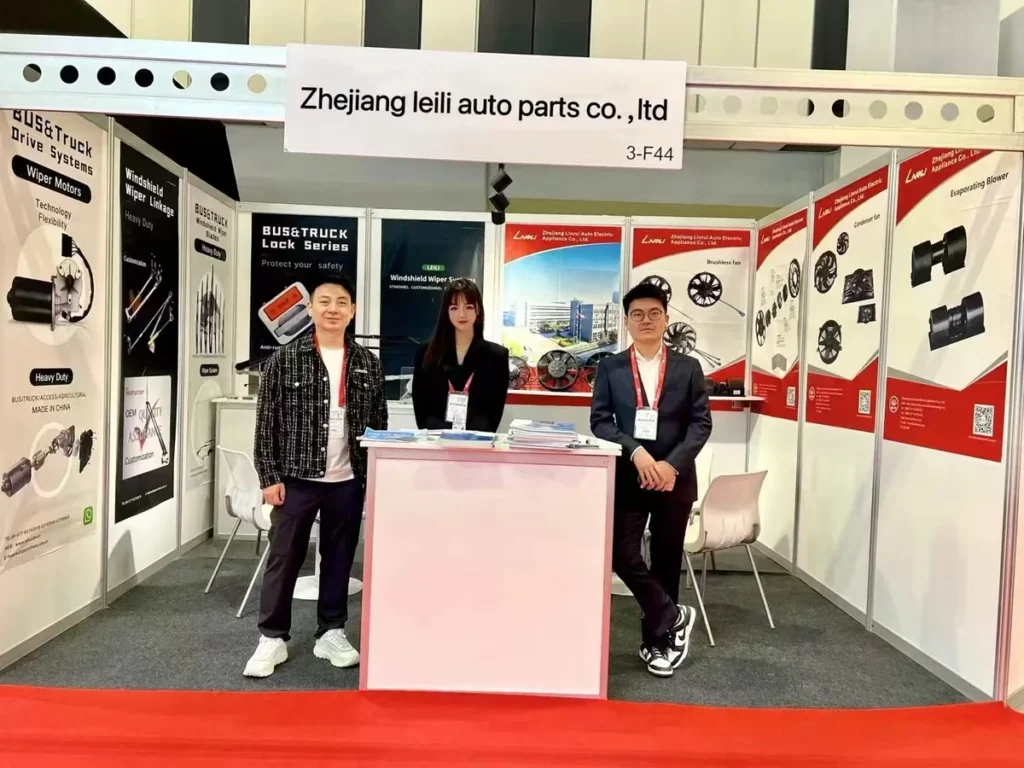
İstanbul, Türkiye — Zhejiang Leili Auto Parts Co., Ltd. (“LEILI”), a manufacturer of automotive windshield wiper systems and bus door locks since 1989, exhibited at Busworld Türkiye 2024, held from 29 to 31 May 2024 at the İstanbul Expo Center (İstanbul Fuar Merkezi). The company showed bus and coach wiper systems, 24 V wiper motors and linkage mechanisms at Booth 3-F44.
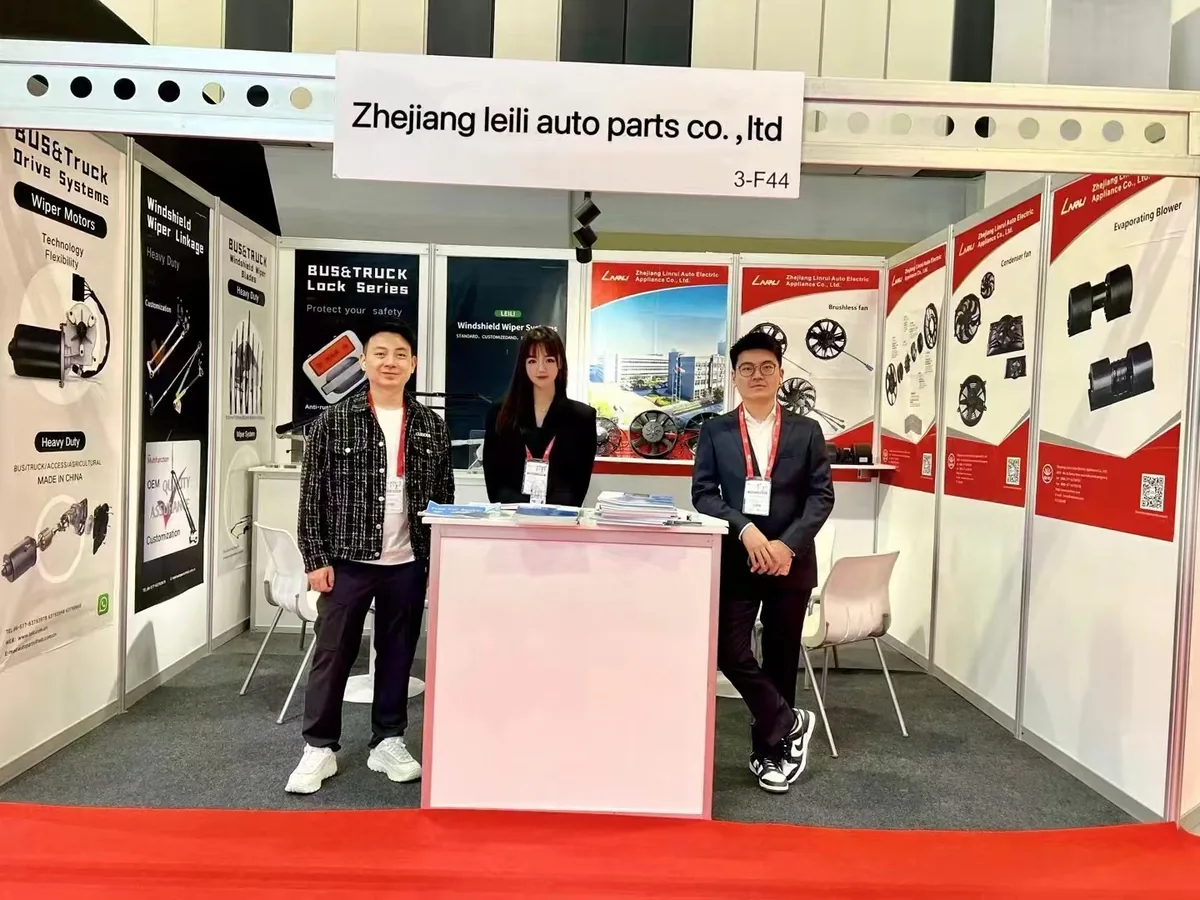
A coach-only floor, and buyers who arrive knowing the part
Busworld Türkiye is run by Busworld International together with HKF Fuarcılık A.Ş., and 2024 was its tenth edition. It is a coach industry fair rather than a general automotive parts fair, which changes who walks through the door: bus and coach manufacturers, their component suppliers, and purchasing people from inside that chain.
That concentration is why conversations move. Visitors arrive knowing which part they need and against which body they need it, so discussions start from fitment rather than from introductions, and where terms align, they move forward without much ceremony.
Getting onto a Turkish vehicle manufacturer’s supplier list tends to open more than that one list. Türkiye is a large production base for buses and midibuses, exporting into Europe, the Middle East, North Africa and neighbouring markets.
Domestic manufacturers there carry full body development and final assembly capability, the supply chain is settled, and it remains open to Chinese suppliers — so an approval made in İstanbul can travel further than the order that comes with it.
Midibuses are the segment Türkiye builds strongest, and they bring their own constraints: smaller cabs, tighter electrical budgets, and body variants that change faster than coach platforms do. Suppliers working there learn to size for the smallest body and validate against the busiest variant.
For Chinese component makers this fair works as a channel rather than a marketplace. Bus programmes are a closed circle: high entry barriers, long validation cycles, and recognition earned slowly. Being here begins the slower job of establishing that Chinese parts are acceptable on coaches.
Exhibition facts
Three days at the İstanbul Expo Center: buses, coaches and midibuses, plus the parts, components and aftermarket that go with them.
- Official name: Busworld Türkiye 2024 (10th edition)
- Dates: 29–31 May 2024
- Venue: İstanbul Expo Center (İstanbul Fuar Merkezi), İstanbul, Türkiye
- Organisers: Busworld International; HKF Fuarcılık A.Ş.
- Scope: buses, coaches and midibuses, plus their parts, components and aftermarket services
- Scale: 9,975 sqm; 159 exhibitors from 16 countries; 56 complete buses displayed
- Visitors: 12,366 professional visitors, including 1,881 from outside Türkiye across 96 countries
- LEILI stand: Booth 3-F44
Every stand sold out ahead of opening. Overseas visitors accounted for a high share of attendance — a record level of international participation for the fair — and many arrived carrying specific model lists and replacement requirements, which let discussions go straight to technical detail.
Source: Busworld Türkiye official closing report (10th edition)
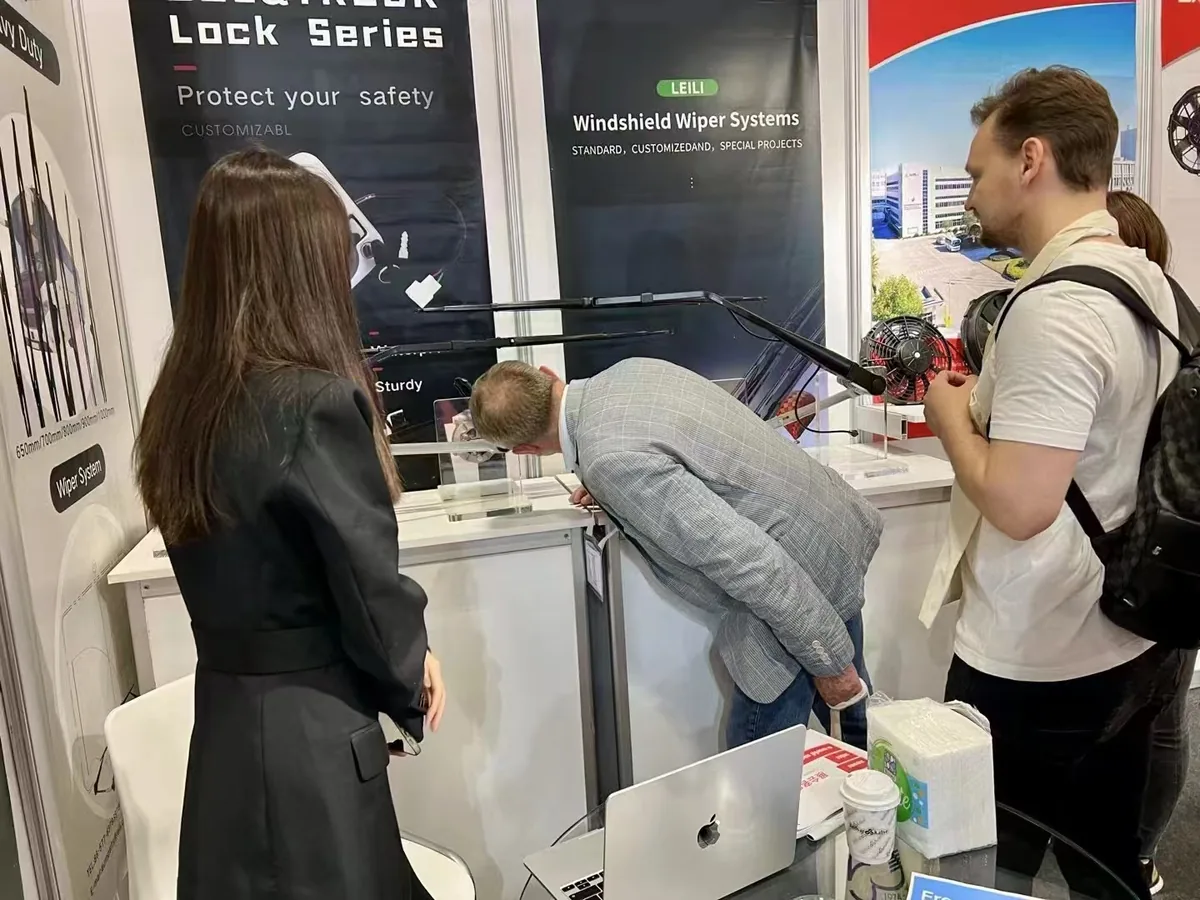
LEILI at Booth 3-F44
The aim was specific: reach bus manufacturers and Tier 1 suppliers in Türkiye and neighbouring markets, and put 24 V wiper system capability for full-size coaches in front of them.
Arranged in coach build order
Show parts to a coach audience in the sequence they install them and they tend to find their own way around the stand:
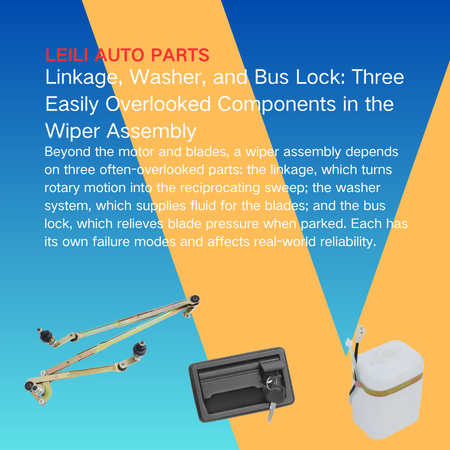
- Coach wiper assemblies: opposed overlapping, opposed upright, tandem integral, tandem split and single-arm layouts, covering windshield arrangements on 8 m to 14 m buses
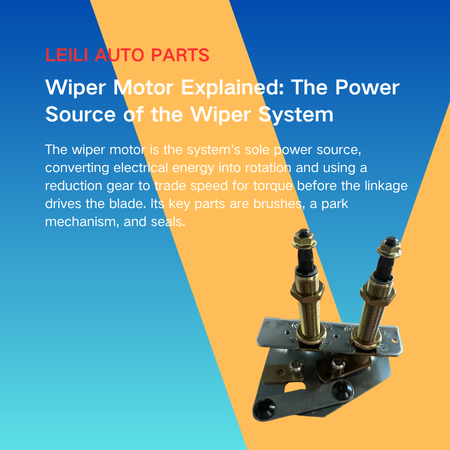
- 24 V wiper motors: permanent-magnet two-speed DC units from 30 W to 180 W, made in 12 V and 24 V versions, with 24 V carrying most coach work
- Linkage built to the output shaft position: centre distances from 400 mm to 2,000 mm, built to measured pivot positions rather than a fixed pattern
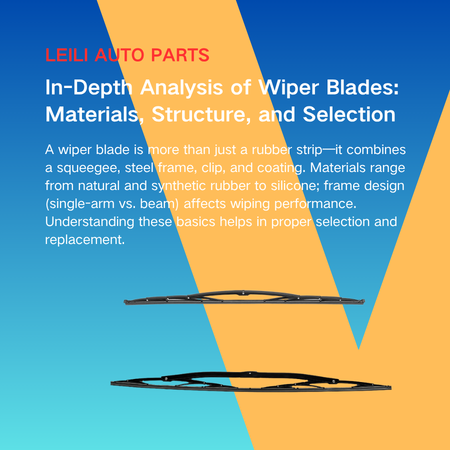
- Blades from 400 mm to 1,000 mm
- Washer tanks, wiper arms and coach door locks
Technical staff stayed on the stand to answer fitment and installation questions, which is what the second and third items above usually attract. Linkage built to measured pivot positions rather than to a standard pattern is often the difference between a part that fits and one that almost fits.
What Türkiye asks for is not uniform, and the split is worth recording. A vehicle maker’s engineering department wants the assembly to drop into an existing body dimension and electrical platform, so the first things requested are interface parameters and validation reports.
A distributor selling replacement parts into Europe and the Middle East asks something else entirely: how much of the common part range you cover, how you pack it, and whether supply stays steady. Those are two different conversations over the same samples.
LEILI arrived with ISO 9001 and IATF 16949 in hand and OE programmes running for Yaxing, Youngman, King Long, Dongfeng Xiangyang and FAW Bus Dalian — none of which is a name a Turkish engineering department would know. Standing here is how that changes.
What visitors asked
Over three days, talk at Booth 3-F44 did not linger on quotations. The most visible change was the share of new-energy vehicles: battery-electric and hydrogen-powered coaches were plainly more numerous than at comparable shows two years earlier, and their manufacturers arrived with firmer requirements on power draw, weight and noise from low-voltage components.
Requests for documentation have become systematic. A conversation that once started from a product sample now needs a parameter sheet, endurance and salt-spray verification reports, and the certificates to go with them. One vehicle-maker engineer asked on the spot whether process records could be shipped alongside each batch — a question that used to come months later, if at all.
The value of İstanbul was direction rather than volume. Adaptation priorities for 24 V systems in Middle Eastern and North African markets came back sharper than they were before the trip, and the sequence was re-ordered: interface dimensions and validation data first, money afterwards.
In overall terms the fair went well. Visitors were concentrated and technical, discussions advanced quickly, and the leads it produced were of better quality than those from general trade fairs of comparable size.
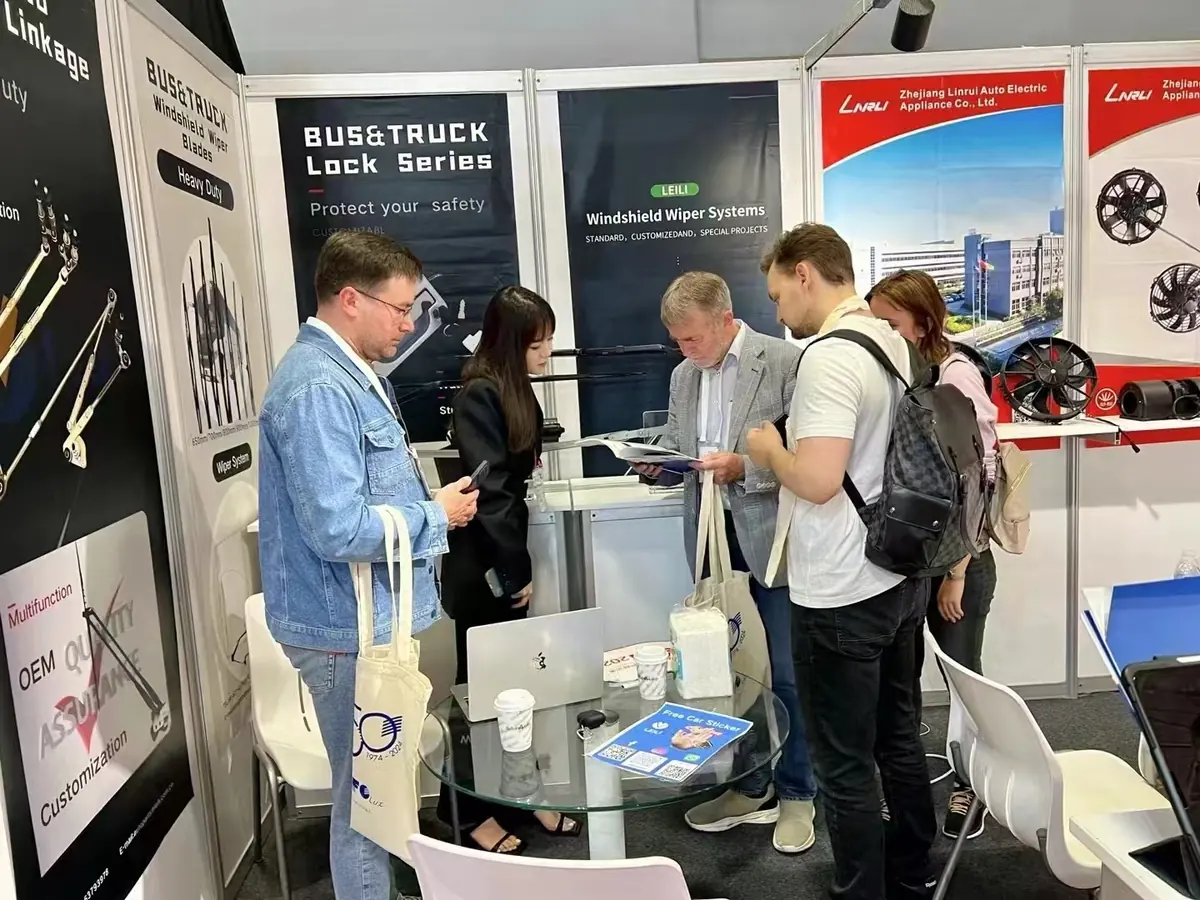
Reach of the expo
All stands sold out before the doors opened. Of 12,366 visitors, 1,881 came from outside Türkiye, across 96 countries, setting a high-water mark for international participation at this fair. Fifty-six complete buses were displayed together, which let component suppliers check installation conditions against real bodies rather than drawings.
The visitor composition is the part worth dwelling on. As a coach-only fair, it draws a high proportion of people from bus manufacturing and bus component purchasing, and they bring body parameters, mounting interfaces and replacement plans rather than vague enquiries.
That is why negotiation moves faster here than at a general fair — often reaching samples and terms inside three days — and it is why LEILI rates the conversion efficiency of this show highly.
International trade press turned up in numbers, with the organiser assembling a press delegation of its own, so exhibitors continued to see their peers in European trade publications afterwards.
Later the same year LEILI’s calendar moved to IAA Transportation later that year and then ComTrans later that year; Automechanika Shanghai the following year came afterwards. Read together, the four show their order of questions: Europe asks for process files, the Russian market asks for low-temperature figures, Turkish buyers open with interface dimensions.
Closing
Samples go out first, with the parameter sheets matched to them. What happens after depends on the project: the ones that get serious are being invited to Pingyang to see the line.
Yang Hao, spokesperson for Zhejiang Leili Auto Parts Co., Ltd., said: “Turkish buyers ask in detail. They do not read promotional material — they read interface dimensions and validation figures, which suits us. Spread the drawing out and go through it line by line: where it fits, it fits, and where it does not, we say so there and then. A fair number of the manufacturers and distributors we met were learning that LEILI existed for the first time, and being known is already something gained.”
About Zhejiang Leili Auto Parts Co., Ltd.
Founded in 1989 as Pingyang Automobile Wiper Factory and based in the Yuyang Industrial Zone of Pingyang, Zhejiang, LEILI operates a 13,000 sqm facility and has spent more than three decades on two product lines: electrical windshield wiper systems and bus door locks. The company is certified to ISO 9001 and IATF 16949 and supplies both OE and aftermarket customers. Website: leiliautoparts.com. Further reading: bus brand matching matrix.