
不同气候带的公交车雨刷配置方案:从-40℃到盐雾沿海地区,仅靠一种方案是不够的

wiper blade guide

不同气候带的公交车雨刷配置方案:从-40℃到盐雾沿海地区,仅靠一种方案是不够的

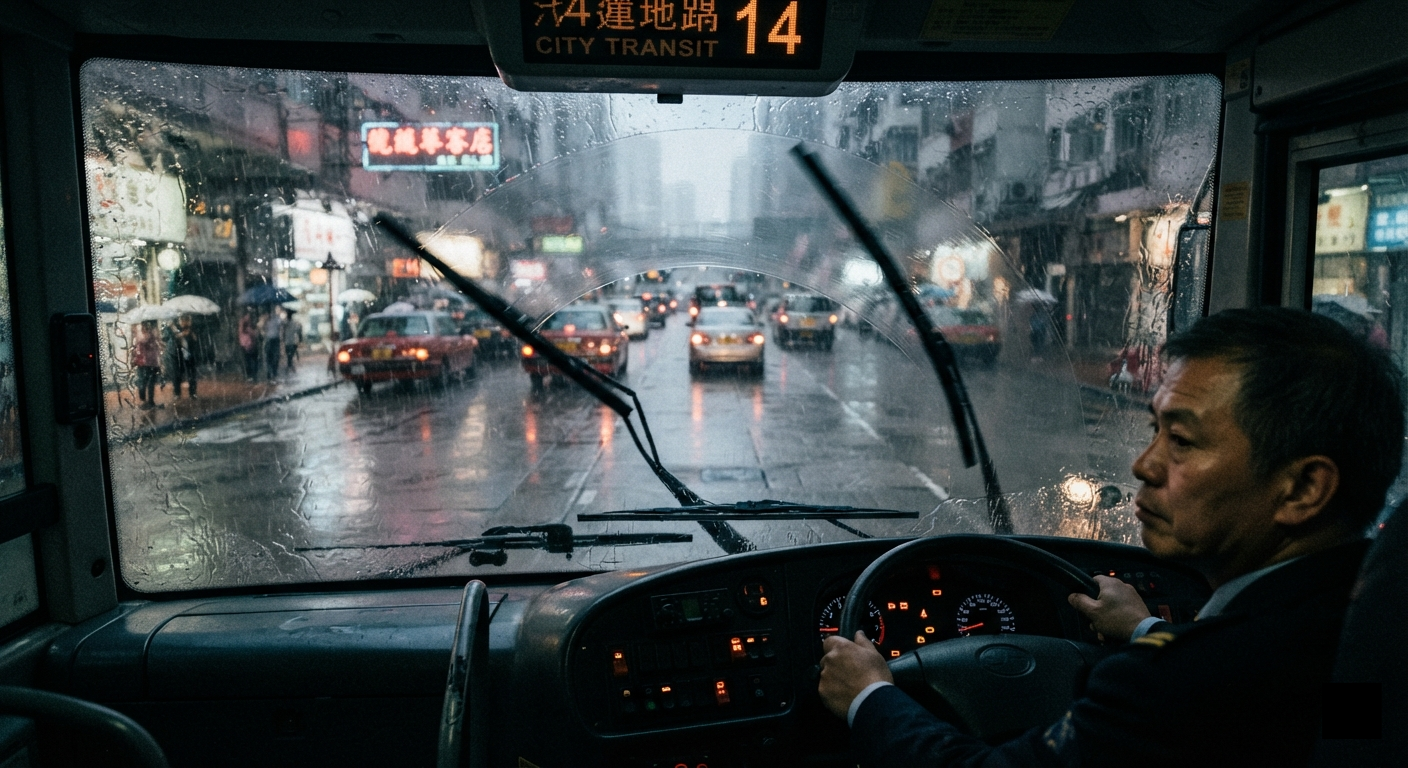
City buses navigate diverse climates daily. Wipers—though seemingly minor—are critical to safety. After all, China spans extreme conditions: -40°C northeast winters, 80%+ southern humidity, sudden Gobi sandstorms, and persistent coastal salt fog. Consequently, the same wiper performs unevenly across these zones.
Nevertheless, a one-size-fits-all approach raises costs and risks safety. Therefore, Zhejiang Leili offers climate-specific bus wiper solutions. Here’s how they work.

wiper systems

雨刷系统

Arctic region: low-temperature start-up and anti-freezing durability 

Winter lasts long in Northeast China and northern Inner Mongolia. Cities like Harbin and Qiqihar face severe low temperatures in winter, with extreme cases plummeting below -40°C. Consequently, this environment poses the harshest test for any bus wiper system.

The core challenges facing the region are:

The failure of rubber strips ranks as the top issue in cold regions. Ordinary natural rubber gradually hardens at low temperatures and eventually loses its elasticity in extreme cold. Forcibly starting the wiper at this point can tear the strip or even scratch the glass. Even more dangerous situations occur in the early morning—the blade often freezes to the glass overnight. If the driver starts the wiper directly, the motor current will surge instantly. A mild surge may blow the fuse; a severe one can burn out the motor entirely.

In addition, the wiper washing system also faces severe challenges. Conventional washing liquid freezes at low temperatures, so nozzle clogging and pipe freezing are very common in northern winters.

wiper

雨刮器

Moisture-heat area: anti-aging, anti-mildew, and durable solutions for high-frequency use

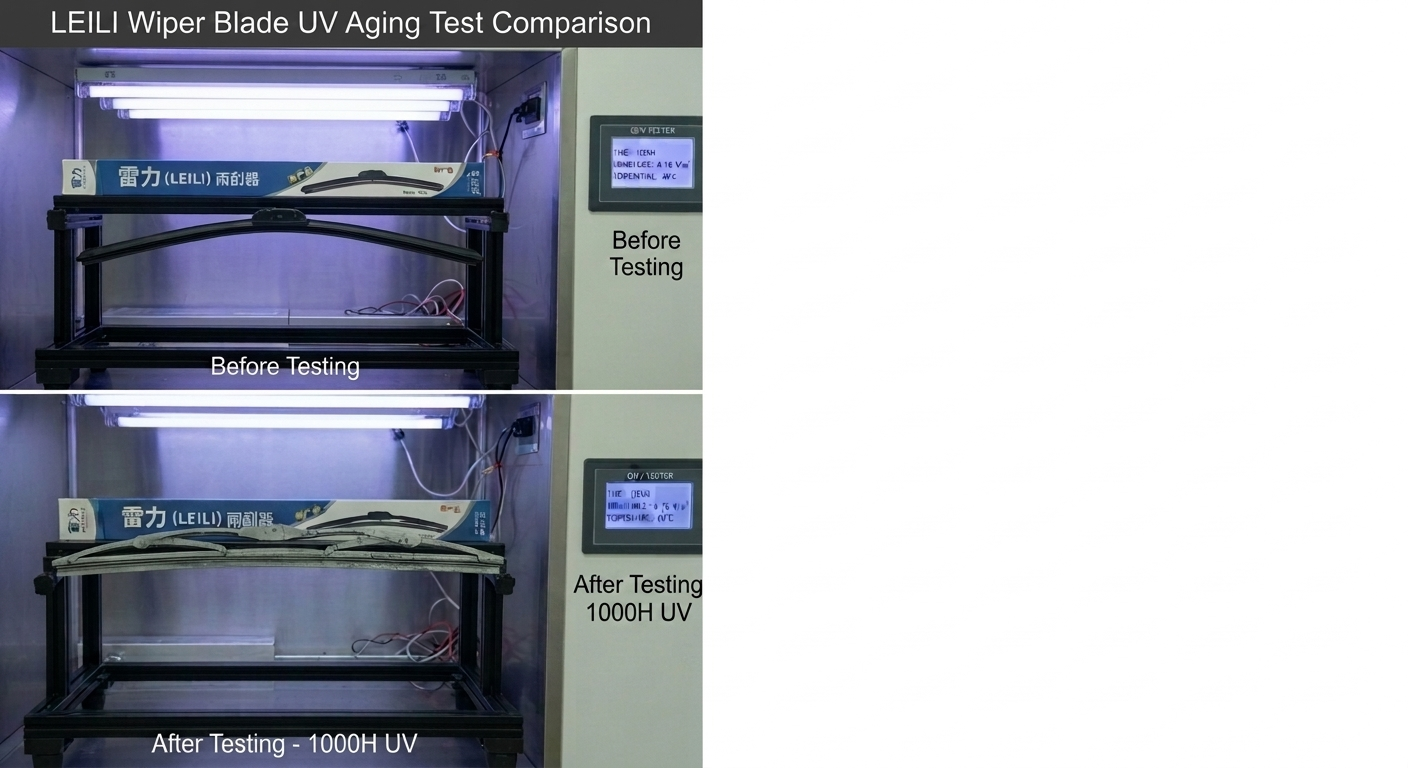
Summer brings heat and heavy rain to South China, East China, and Southwest China. After sun exposure, the bus windshield surface temperature rises sharply. Frequent short-term downpours also keep wipers working almost year-round. High UV, high humidity, and high usage frequency form a triple pressure. As a result, the hot and humid region becomes an “accelerator” for wiper rubber aging.

wiper

雨刮器

The core challenges facing the region are:

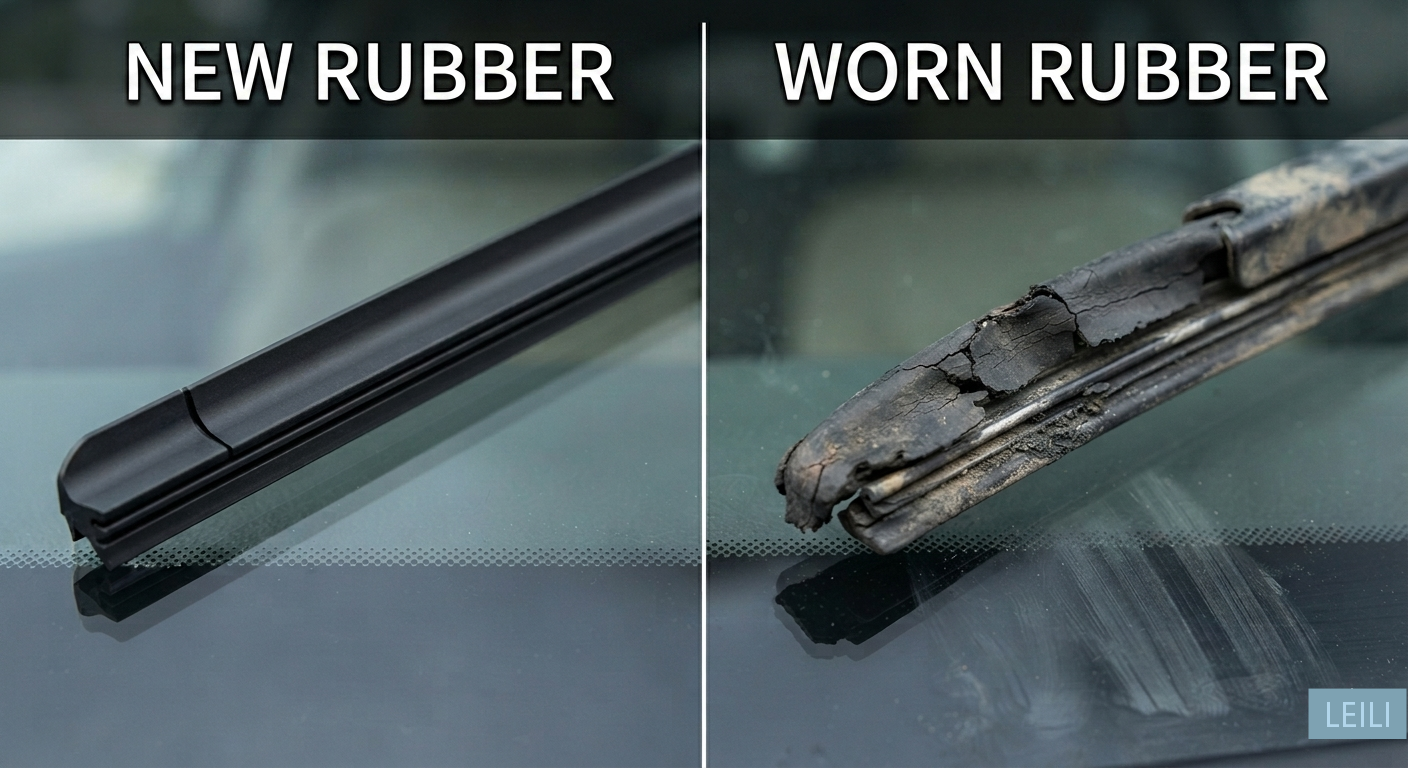
Ultraviolet rays damage rubber molecular chains severely in the south. Rubber strips in southern regions like Hainan and Guangdong have a notably shorter lifespan than in the north. Long-term humidity also accelerates electrochemical corrosion on metal skeletons and riveting parts. Corrosion can lock the connection, preventing the wiper arm from returning to position. Moreover, high humidity encourages mold growth on the rubber surface. Micro-pores then form and worsen scraping residue.

Southern bus lines often operate long hours daily, so wipers work far more frequently than on ordinary vehicles. This heavy use speeds up wear on the linkage and motor carbon brushes.

Engineering solutions

Lei Li's wiper solution for southern hot-humid regions centers on durability and long service life.

The rubber strip uses an EPDM formula with added antioxidants and light stabilizers to resist UV aging. The skeleton and riveting parts use stainless steel to resist corrosion. The motor carbon brushes use wear-resistant electric graphite material suitable for high-frequency use.

Dusty area: high abrasion resistance and sand sealing solution

In Gansu, Xinjiang, Ningxia, and western Inner Mongolia, the bus environment is dry and dusty. Spring and autumn bring frequent sandstorms, during which airborne PM10 concentrations rise sharply. Fine sand particles ride the airflow between the wiper blade and glass. Consequently, they create a terrible “abrasive” effect.

The core challenges facing the region are:

Dry scraping poses the most fatal problem. In the northwest, precipitation remains scarce. During sandstorms, bus drivers often activate wipers to clear dust from the windshield. At this point, the glass surface is nearly dry and lacks water lubrication. Sand particles then directly abrade the rubber edge. Under these conditions, ordinary rubber strips wear out very quickly. Consequently, they leave water lines behind on the glass.Dust intrusion into the rod ball joint is equally concerning. Fine Gobi dust can enter the joint, accelerating wear on the nylon bushing and steel ball. This wear leads to increased clearance, abnormal noise, and even wiper angle deviation. Moreover, motor cooling ducts often clog with dust. As a result, thermal protection shutdowns trigger easily during summer heat.

Engineering solutions

For the northwest sand environment, the wiper blade should use a high wear-resistant rubber strip to reduce dry friction and extend service life in dusty conditions.For the linkage mechanism, a dust seal at the ball joint effectively blocks fine sand intrusion and reduces wear on the bushing and steel ball.The motor end cover should incorporate a dust-proof structure, and the cooling duct layout should be optimized to prevent overheating during continuous operation in hot, dusty conditions.
点击此处
wiper

Salt spray area: Build a comprehensive metal anti-corrosion system

Buses in coastal cities (e.g., Dalian, Xiamen, Shenzhen) face persistent salt fog. Airborne sodium chloride settles on metal parts, forming an electrolyte film that speeds corrosion. Depots near the coast experience notably higher salt concentrations than inland.

The core challenges facing the region are:

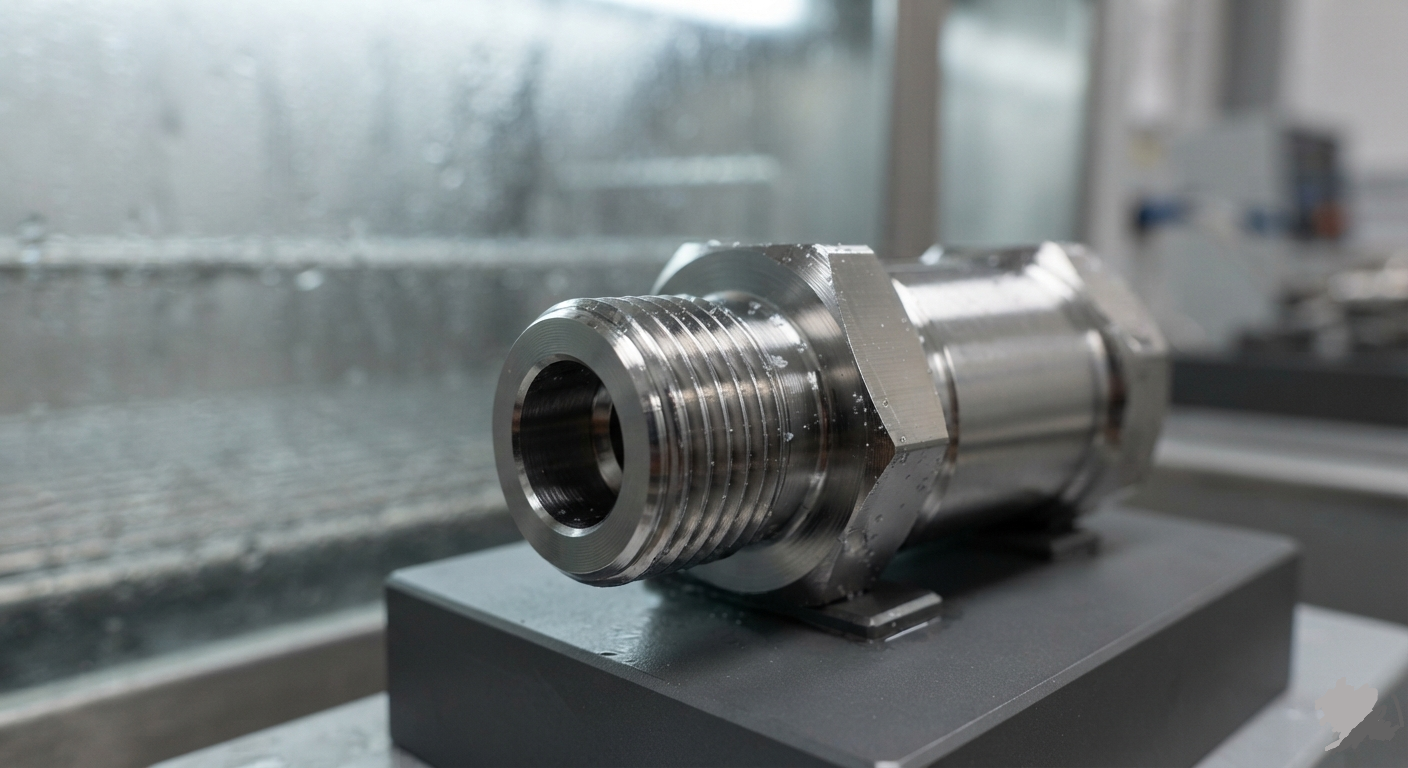
Coastal bus wiper systems face systematic corrosion. It appears everywhere—blistering coatings on the wiper arm surface, crevice corrosion at linkage rivet points, and rust on the motor casing and mounting bracket. Corrosion does more than spoil the appearance; it directly causes functional failures. For example, wiper arm spring tension decays, reducing wiping pressure. Linkage rivets loosen, causing unstable oscillation. Motor casings rust through, letting moisture enter and burn the coil.

Standard galvanizing or electroplating often fails to meet the long-term anti-corrosion demands of coastal bus operation, and wiper metal parts on coastal buses often show visible rust within just a few years.

Engineering solutions:

A coastal wiper scheme should combine material selection, surface treatment, and structural design. For metal substrates, key parts like the wiper arm and linkage plate should use stainless steel with higher molybdenum content, which offers better resistance to pitting corrosion in chloride environments. For surface treatment, the wiper arm and bracket should undergo a zinc-nickel alloy electroplating process, and the motor casing should feature an anti-corrosion coating. For structural design, closed designs at rivet and bolt connections help eliminate crevice corrosion risks, and cable connectors should be waterproof with corrosion-resistant terminals to prevent poor contact.

wiper

Hybrid operating conditions and selection suggestions

Many cities face mixed climate challenges. For example, Zhengzhou combines dry and hot conditions. Xi’an deals with cold winters and spring sandstorms. Chengdu has high humidity but low salt exposure. For these varied environments, operators can match rubber, sealing, and corrosion specifications to local conditions, balancing cost and reliability.

Selection checklist:

  • Low-temperature climates → focus on rubber cold resistance, motor stall protection & antifreeze fluid.
  • Hot & humid climates → focus on rubber UV/aging resistance & metal rust-proofing.
  • Sandy & dusty climates → focus on rubber wear resistance, joint sealing & motor dust protection.
  • Salt spray climates → focus on metal grade, coating specs & gap sealing.

About Zhejiang Lei Li Auto Parts Co., Ltd.

浙江雷利汽车零部件有限公司. specializes in the research and development and manufacturing of bus wiper systems. Its product line spans wiper motors, arms, blades, linkages, and washing systems. We serve Yutong, Jinlong, Zhongtong, BYD, Foton—city, tourist, school, BRT, double-decker & electric buses.

您可能还会喜欢
wiper

如何排查商用车雨刷的常见故障?一次性解释5大问题

background

浙江雷利公司将携全系列公交车雨刷产品亮相2026年温州汽车零部件展览会(展位号:8D20),并诚挚邀请全球客户莅临参观。.

城市公交车雨刮器系统批量采购的最佳解决方案:从总拥有成本(TCO)到全生命周期管理