
I. Why is summer the “exam season” for commercial vehicle wiper systems?
Commercial vehicles and passenger vehicles have fundamentally different use scenarios for wiper systems. A long-distance bus or heavy truck may log five to ten times the daily mileage of a household car, so the wear rate on the wiper motor and wiper blade runs much higher than on ordinary vehicles. In the summer season, three main forces compound the pressure on the system:
- High temperature exposure: The temperature of the windshield of the cockpit can reach more than 70 ℃, and the rubber of the wiper blade will accelerate aging, resulting in problems such as hardening, cracking, and not being able to clean the windshield.
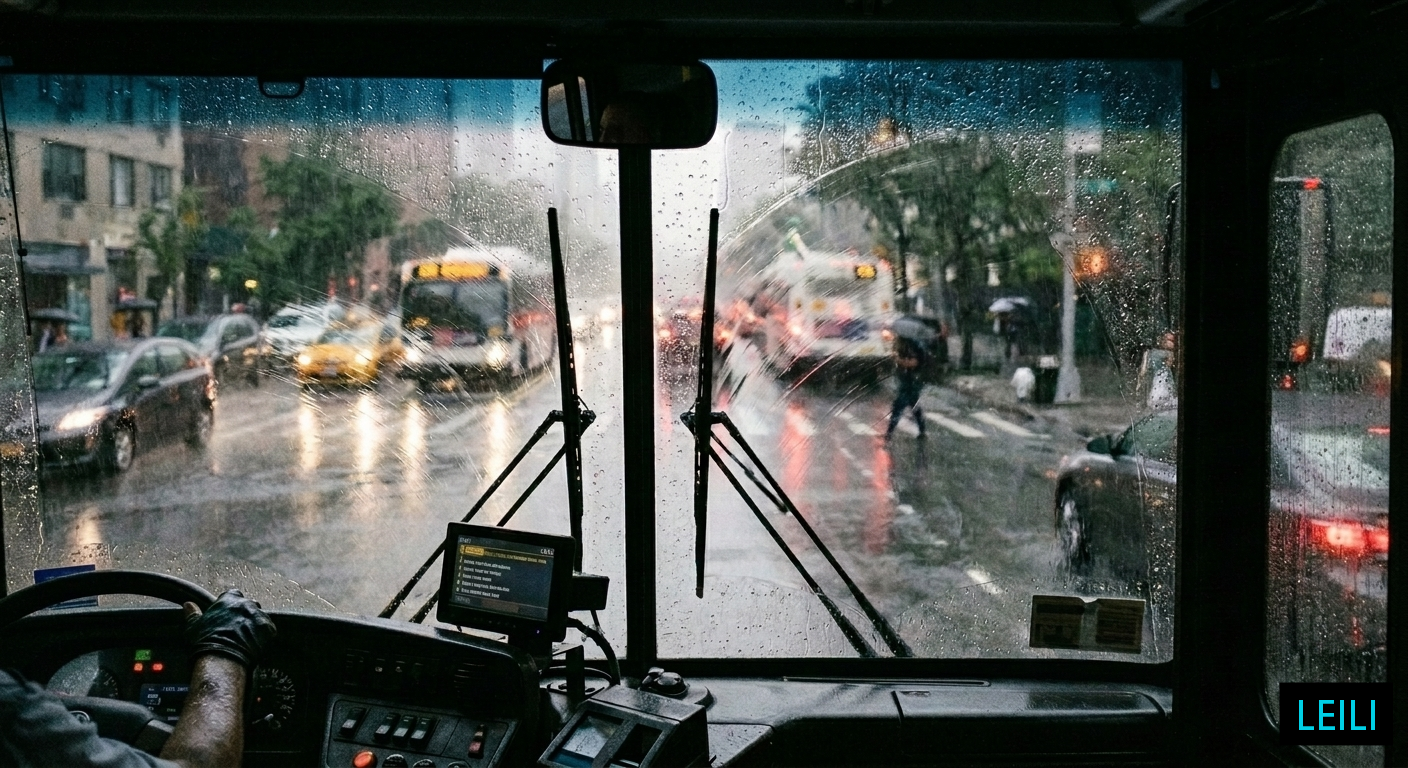
- Torrential rain: In a short period of time, extremely large precipitation requires the continuous high-frequency operation of the commercial vehicle wiper system, which is a hard test for the heat dissipation ability of the wiper motor and the mechanical strength of the connecting rod.
- Mud insect glue: In summer, road dust and insect collisions increase, and the pollutants attached to the windshield will aggravate the wear of the windshield wiper, and ordinary clean water is difficult to effectively remove it.

WIPER BLADE
Therefore, summer maintenance is not “fix it when it breaks,” but “check it in advance and replace it regularly.” The following will be explained one by one according to the core components.
II. Detailed inspection of key components during summer maintenance
2.1 Wiper Blade: The Most Easily Damaged “First Line of Defense”
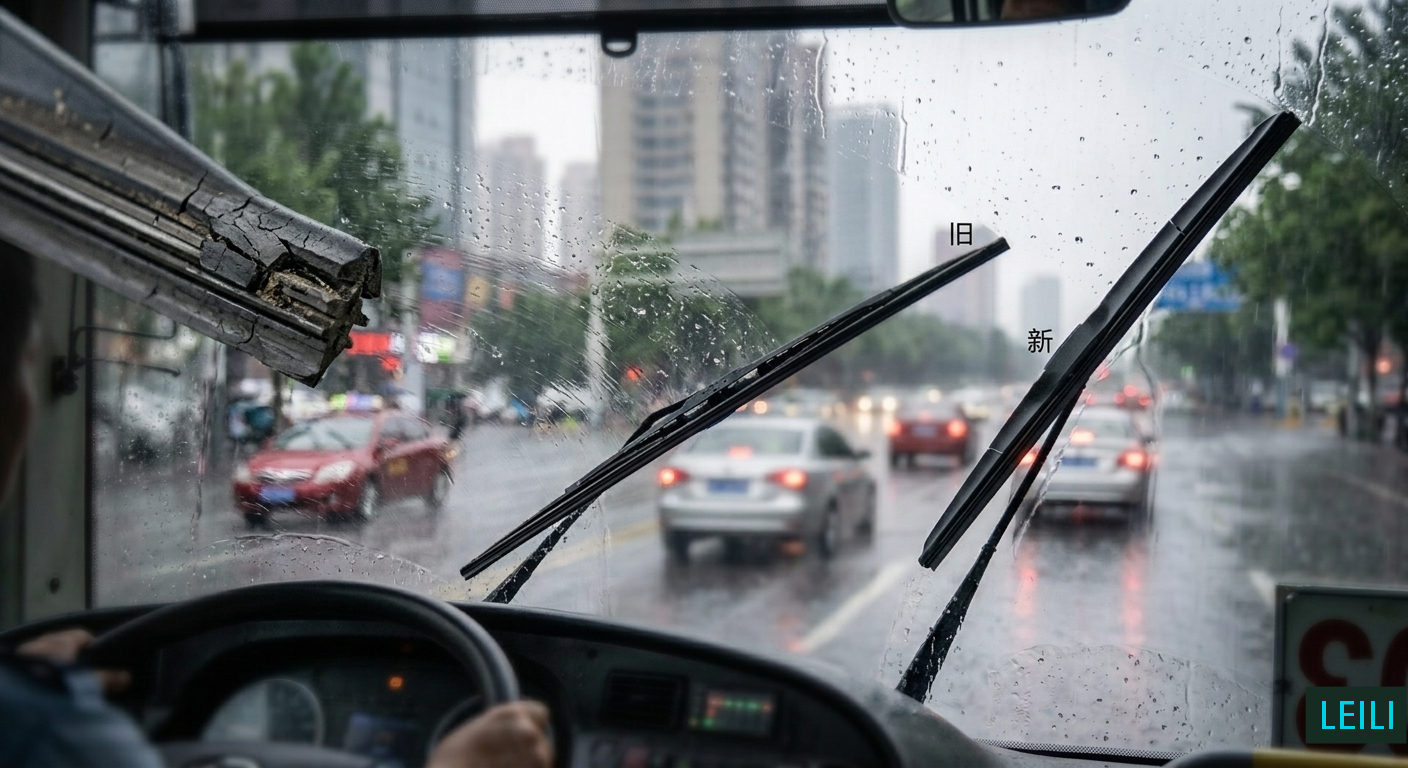
The wiper blade makes direct contact with the glass, making it the most problem-prone component within the wiper system and the one that requires frequent replacement. During summer, we recommend checking the **wiper blade** every two to three months, and replacing it if any of the following conditions occur:
| Inspection items | Abnormal performance | It is recommended to handle it. |
|---|
| Scraping effect | There are streaks of water stains and foggy residues. | Clean the rubber strip or replace it. |
| Appearance of the rubber strip | Hardening, cracks, local deformation | Replace immediately. |
| Running noise | Noise, vibration, squeaking | Check the installation angle or replace it. |
| Duration of use | Not replaced for more than 6 months | Preventive replacement |
Practical tips: After highway driving, wiping the wiper blade rubber strip with a damp cloth removes insect residue and oil film, which can extend service life by over 30%.
For high-frequency needs such as replacing windshield wipers on BYD commercial vehicles, we recommend that fleets establish a scheduled replacement log rather than waiting for drivers to report poor wiping performance. For a 12-meter bus operating in southern regions with heavy rainfall, the front windshield wipers should be replaced no less frequently than every four months.

WIPER BLADE
2.2 Wiper motor: the “heart” of the system
The power level of a commercial vehicle wiper motor differs markedly from that of a passenger car motor. Commercial vehicle motors drive longer, heavier arms. Power ranges from 100W to 300W. Heavy-duty units need more. In summer, motor overheating ranks as the number one hazard.
Summer wiper motor self-check list:
- Smell: Is there a burnt smell when the motor is running? This is a dangerous sign of overheating of the windings.
- Listen to the sound: Is there an abnormal buzzing or metal rubbing sound? This may indicate a lack of lubrication in the bearings or worn-out gears.
- Measure speed: Compare whether the scraping frequency of high-speed and low-speed gears is significantly lower than the nominal value.
- Check the connector: Is the power connector oxidized, loose, or corroded? In the summer, high humidity can cause poor contact, leading to under-voltage operation of the motor and accelerating its burning out.
For fleet managers, we recommend conducting a centralized inspection of wiper motors on all active vehicles every quarter. When choosing wipers for a Golden Dragon bus, the priority during matching is to confirm the motor’s protection rating (IP55 or higher is recommended) to ensure that dust and water resistance align with the actual operating environment.
2.3 Connecting rod and wiper arm: the “skeleton” of the transmission system
The linkage rod and wiper arm are metal structural components, and the main problem faced in summer is:
- Ball head looseness: After long-term high-frequency operation, the ball head clearance of the linkage rod increases, resulting in the wiper arm not swinging properly or making noise.
- Corrosion and sticking: In the rainy season in the south and the coastal salt fog environment, the drive shaft and ball head are prone to rust.
- Spring fatigue: The spring pressure of the wiper arm decays, causing the wiper blade to not adhere tightly to the glass, resulting in a leakage area when wiping.
For a practical troubleshooting method, lift the wiper arm and gently lower it to see if it clings tightly to the glass. If adhesion feels weak or visible gaps appear, the spring has likely worn out, and you will need to replace the wiper arm assembly.
2.4 Washers: Underappreciated Safety Configurations
Commercial vehicles use washer fluid far more frequently than passenger vehicles—a long-haul truck may consume several liters in a single day. For summer maintenance, the key points are to check fluid levels regularly, use a detergent suitable for removing insect residue and oil film, and ensure the spray nozzles remain clear and properly aimed:
- Washing liquid selection: In summer, using a specialized washer fluid with insect remover delivers far better oil-film removal than plain water mixed with dish soap.
- Nozzle angle calibration: Ensure that the washer fluid spray covers the wiper blade’s effective wiping area, and avoid aiming it at the roof or the edge of the glass.
- Pipeline anti-blockage: In summer, mosquito remains and dust can easily clog the nozzle filter, so we recommend cleaning it once a month.
- Motor pressure test: After turning off the water spray, the pipeline should maintain pressure. If it drips within a short time, the check valve may be faulty.
.png)
KG-003 Overlapped Wiper Assembly
III. Differences in summer maintenance for different commercial vehicle models
3.1 City buses / long-distance buses
City and long-distance buses, like Yutong and Haier, often have windshields over 3.5 sqm. Meanwhile, some models use three-arm wiper systems:
- The three-arm system demands precise rod synchronization. Therefore, any unsynchronized arm will leave a central unwiped area.
- Buses idle often, so motor cooling suffers versus highway trucks. Thus, watch motor temperatures closely in summer.
- Most bus wipers are custom parts. Therefore, match the OEM model carefully. Avoid using passenger-car generic substitutes.
3.2 Heavy trucks and engineering vehicles
Engineering vehicles face harsher dust than highway trucks. Consequently, fine particles wear wiper systems several times faster.
- Use PTFE-coated wiper blades with mud-resistant rubber. Although costlier, they can more than double the service life.
- Therefore, upgrade the truck’s washer tank to over 5L. This reduces mid-route refill frequency significantly.
- Engineering vehicles vibrate heavily on unpaved roads. Thus, regularly tighten all linkage rod bolts.
3.3 Airport shuttle buses and port vehicles
Airports and ports demand special wiper solutions. Seaport vehicles face salt fog corrosion, while airport ones need high reliability. Therefore, use stainless steel arms, treated linkages, and motors with IP56 or higher protection.
IV. Quick Troubleshooting Table for Common Problems in Summer
| Fault phenomenon | Possible causes | Priority check items | Recommendation for handling |
|---|
| The wiper does not move. | Motor burned out/fuse blown/switch failure | Check the fuse → motor power supply | Replace the corresponding parts |
| The scraper is weak/slow | Motor under-voltage / linkage rod sticking | Measure motor terminal voltage → lubricate linkage rod | Exclude the line fault or replace the motor |
| Can’t clean it off | Worn-out wiper blade / weak arm spring | Replace the wiper blade first, then check the spring if it doesn’t work. | Gradual replacement and exclusion |
| Noise/jump | Rubber strip hardening/incorrect installation angle | Clean the glass → Adjust the angle of the wiper arm | Adjust or replace |
| The water spray is weak. | Pump failure / pipe blockage | Clear the nozzle → Check the pump body | Clean or replace the washer pump |
Fleet managers should keep a “one vehicle, one file” wiper log. Tracking dates and mileage helps predict part replacement, cutting downtime losses.
V. Recommendations for Selection and Procurement
When picking a commercial wiper supplier, focus on these key points for assembly or fleet buying:
Summer’s heat and rain test wiper systems well. Proven extreme-condition products beat minor price differences long-term.
Our firm(ZHEJIANG LEILI AUTO PARTS CO.,LTD) develops and makes commercial wiper systems. Full parts range, fits top bus brands. IATF 16949 certified. Accepts OEM/ODM orders.
whether it has passed the IATF 1 6949 automotive industry quality management system certification, which is the basic threshold to measure whether the supplier has the ability to supply to the original equipment manufacturer.
Do you provide original equipment for mainstream commercial vehicle brands such as Jinlong Bus, BYD, and Yutong Bus?
Can customize the wiper motor, wiper arm, and linkage assembly according to the vehicle model, rather than just providing generic parts?
whether it has the full chain production capacity of wiper motor, wiper arm, wiper blade, linkage rod, and washer, one-stop procurement can reduce matching risk and management costs.
whether it has a complete set of test equipment such as high temperature, high humidity, salt spray, durability, etc.

Core product line: 雨刷电机 / wiper arm / wiper blade / wiper link rod / Washing machine / Bus lock, suitable for Jinlong, BYD, XCMG, Chongqing Heavy Industry, Yutong, Haier and other original equipment manufacturers, covers buses, trucks, commercial vehicles, engineering vehicles, ships, aircraft, ships and other fields, holds IATF 16 949 certification, undertake OEM / ODM customization.
您可能还会喜欢

Summer Commercial Vehicle Wiper System Maintenance Guide: A Must-Read for Bus and Truck Safety in the Rainy Season

How to choose the material of commercial vehicle wiper blade? In-depth analysis of three technologies: natural rubber, silicone, and graphene coating


.png)