

Wiper Systems FAQs
Got questions about your windshield wipers? Our Wiper Systems FAQ covers everything from choosing the right blade size to troubleshooting common motor issues. Ensure maximum visibility and safety on the road—read our expert guide today!
Contact us
fill in the fields to contact us
Wiper Systems FAQs
Leili wiper systems are widely compatible with various scenarios, including buses, commercial trucks, rail transit vehicles, construction machinery (such as excavators, cranes, road rollers, etc.), yachts, ships, and agricultural machinery. They cover core components like wiper motors, wiper arms, wiper linkages, and washer fluid reservoirs, and can provide customized compatibility solutions based on customers' vehicle parameters.
You can provide the equipment model, year, specific application scenario (e.g., construction machinery/yacht), and required part specifications (e.g., motor power, wiper arm length). Leili's technical team will assist in verifying compatibility. Meanwhile, product samples can be provided for actual testing to ensure precise matching of parts.
Common causes include improper installation (e.g., loose fixing bolts), gaps at the connection between parts and equipment, and deviations in the wiper arm angle. Solutions: Recheck and tighten the bolts, adjust the installation angle of the wiper arm. If the noise persists, contact Leili after-sales service to check for part compatibility issues or installation deviations.
First, check if the power connection is stable and if there is poor contact in the circuit. Secondly, inspect whether the wiper linkage is stuck (e.g., foreign object entanglement, rust) and clean or lubricate it in a timely manner. If the above are not the issues, it may be an internal motor failure; contact Leili after-sales service for inspection, repair, or replacement.
First, contact Leili's sales contact or after-sales team, providing product purchase certificates, photos/videos of defective parts, and a detailed description of the fault. Leili may require the defective product to be returned to the company or an authorized distributor for analysis. Once confirmed to be within the warranty scope, free repair, replacement of parts/complete units, or corresponding compensation will be provided. Shipping costs shall be borne by the customer in advance; if the defect is confirmed to be a product quality issue, Leili will reimburse the shipping costs.
The warranty period for core components such as wiper motors, wiper arms, wiper linkages, and washer fluid reservoirs is uniformly one year (subject to supplementary conditions for specific application scenarios): For construction machinery (excavators, cranes, etc.), the warranty period is one year or 2,000 operating hours, whichever comes first. For other scenarios (buses, trucks, yachts, etc.), the warranty period is one year. Wiper blades are consumables and no warranty is provided once sold and confirmed free of defects.
The following situations are not covered by the warranty: Part damage caused by normal wear, improper use, or abuse; unauthorized repair or modification of parts by non-authorized parties of Leili; failure to provide purchase certificates or products exceeding the warranty period; damage caused by force majeure (e.g., natural disasters, collisions).
First, contact Leili's sales contact or after-sales team, providing product purchase certificates, photos/videos of defective parts, and a detailed description of the fault. Leili may require the defective product to be returned to the company or an authorized distributor for analysis. Once confirmed to be within the warranty scope, free repair, replacement of parts/complete units, or corresponding compensation will be provided. Shipping costs shall be borne by the customer in advance; if the defect is confirmed to be a product quality issue, Leili will reimburse the shipping costs.
Regularly clean the connections of wiper arms and linkages, and apply grease to prevent rust and jamming. Avoid dry wiping the glass with wiper blades and replenish windshield washer fluid in a timely manner. After use in scenarios such as construction machinery and yachts, clean dust, sediment, and corrosive substances on the surface of parts. Regularly inspect circuits and interfaces to ensure stable connections and avoid overload operation.
There is no fixed replacement cycle; it depends on usage frequency and scenarios. If jamming, noise, abnormal swing angle occur, or if the connection is severely rusted and the rubber sleeve is aging, replacement is required. Under normal scenarios, it is recommended to inspect every six months; for harsh working conditions (e.g., mining, coastal areas), the inspection cycle should be shortened.
Common issues include: Mismatch between wiper motor power and vehicle requirements (resulting in insufficient power or overload burnout), inconsistency between wiper arm installation interface (bolt-type/J-hook) and motor output end, improper linkage length matching with windshield size (affecting wiping range), and deviation of reservoir capacity and mounting holes from the reserved position on the vehicle body. It is recommended to provide detailed vehicle/equipment model, original part number, and installation dimension drawing before procurement, request the supplier to provide samples for trial installation, or issue a parameter compatibility confirmation form to avoid mismatch problems after bulk procurement.
Core pain points include: ① Wiper motors: Poor hidden insulation performance and easy wear of internal bearings (cannot be detected on-site during procurement, leading to jamming in a short period after use); ② Wiper blades: Inferior rubber strip material (easy to age and leave water marks during wiping) and insufficient skeleton toughness (easy to break at low temperatures); ③ Wiper arms: Insufficient steel thickness (deformation under long-term stress) and perfunctory surface anti-rust treatment (easy to rust); ④ Wiper linkages: Ball head wear and rubber sleeve aging (difficult to distinguish from appearance during procurement, frequent noise after assembly); ⑤ Washer fluid reservoirs: Made of recycled plastic (poor impact resistance, easy to crack and leak). It is recommended to choose qualified suppliers, request material inspection reports and weather resistance test data, conduct random inspections on samples before bulk procurement, and verify compliance with industry standards (e.g., IATF 16949).
It mainly includes three points: ① Unstable delivery cycle: Delays in the delivery of customized parts (e.g., motors with special interfaces, irregular reservoirs) affecting production progress; ② Confusion between original and auxiliary parts: Suppliers passing off auxiliary parts as original ones, with inflated prices and no after-sales guarantee; ③ Transportation damage: Insufficient packaging protection for easily damaged parts such as reservoirs and wiper arms leading to deformation and damage during transportation, with ambiguous liability definition. It is recommended to specify liquidated damages for delivery delays, part quality standards, transportation protection requirements, and loss liability in the procurement contract, and prioritize suppliers with stable inventory and mature logistics systems.
Common issues include: ① Price fluctuations: Suppliers raising unit prices on the grounds of raw material price increases after signing bulk procurement agreements; ② Disputes over additional costs: Transportation fees, tariffs, and inspection fees not clearly defined in advance, with additional charges during settlement; ③ Lack of supporting services: Finding that suppliers do not provide technical support (e.g., installation guidance) after procurement and shirking responsibility when compatibility issues arise; ④ Difficulty in return and exchange: Vague agreements on the time limit and inspection standards for returning and exchanging unqualified parts, resulting in backlogged inventory that cannot be handled. It is recommended to clarify the validity period of unit prices, the bearer of various fees, the scope of technical support, and the return and exchange process in the contract in advance to avoid subsequent disputes.
The core points are twofold: ① Shelf life issue: Wiper blade rubber strips have an aging cycle (usually 1-2 years), and the production date is easily overlooked during procurement, leading to performance degradation after inventory backlog; ② Scenario compatibility deviation: Different scenarios have different requirements for rubber strip materials (e.g., low-temperature resistant rubber strips for cold areas, corrosion-resistant rubber strips for coastal areas). Blindly choosing universal models during procurement shortens the service life. It is recommended to purchase in batches on demand to avoid large-scale stockpiling, clearly state scenario requirements, and request suppliers to provide wiper blades of corresponding materials (e.g., silicone rubber strips, natural rubber strips).
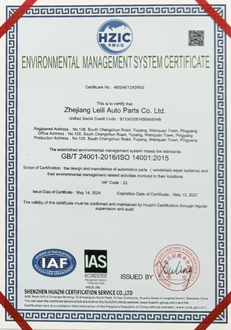
ISO 14001
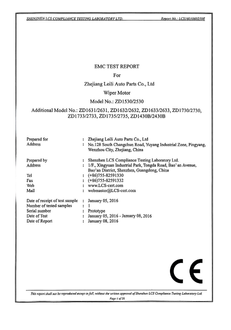
EMC/EC
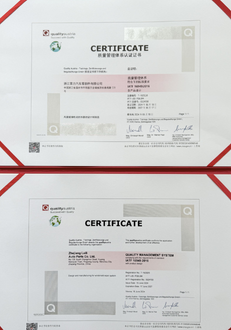
IATF 16949
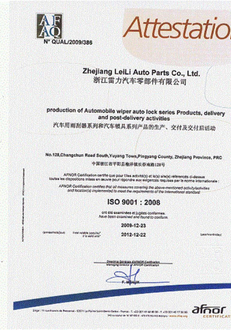
.png)


