

II. Linkage: Turning Rotation into Reciprocation
What Does It Do?
The motor outputs rotary motion, while the wiper blade needs to swing back and forth within a fan-shaped area. The linkage mechanism performs the conversion between the two.
Specifically, the motor output shaft connects to a crank, and the end of the crank is ball-jointed to the linkage. As the crank rotates, the linkage is pushed and pulled back and forth; the linkage then drives the wiper arm to swing through its pivot points. Multiple linkages connected in series enable the left and right wiper arms to work together at the designed angle and phase.
Key Design Points
Sealing and lubrication of the ball joints: this is the most vulnerable point of the linkage. The ball joints need to stay flexible through long-term reciprocating motion while keeping rain and dust out. Once the seal fails and water enters and causes corrosion, the rotational resistance of the ball joint increases, and the wipers will show uneven wiping speed and jerky swinging, and in severe cases may even seize up.
Rod rigidity: the linkage bears alternating loads during pushing and pulling. If the rod lacks sufficient rigidity, it will deform elastically, causing the actual sweep angle of the wiper blade to deviate from the design value and leaving some areas unwiped.
Installation positioning: the mounting position of the linkage determines the sweep range and parking position of the wiper blade. An angular deviation during assembly directly shows up as the wiper blade not reaching its intended position or sweeping beyond the edge of the glass.
Common Fault Symptoms
- Uneven wiper speed during the swing, or pauses midway.
- Left and right wipers out of sync, causing overlap or collision.
- Reduced sweep range, with the edges not wiped.
- A “clunking” abnormal noise during wiper operation.

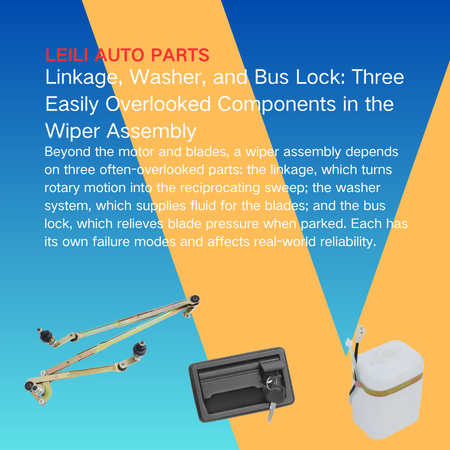
wiper linkage assembly for commercial vehicles
III. Washer: Making Wiping Truly Effective
What Does It Do?
The washer’s job is simple: spray cleaning fluid onto the windshield before wiping.
This step is easily underestimated. When the wiper blade wipes across glass without liquid, it not only fails to clean off oil film and insect remains, but friction also increases significantly, accelerating blade wear and increasing the load on the motor. In actual use, therefore, the washer and the wipers work as a matched pair rather than as two independent systems.
Components and Working Principle
The washer generally consists of a reservoir, a washer pump, tubing, and nozzles. When the driver presses the washer switch, the pump starts, draws cleaning fluid from the reservoir, and sends it through the tubing to the nozzles, which spray it onto designated areas of the glass.
Key Design Points
Spray position and angle: the nozzle mounting position and spray angle need to match the sweep area of the wiper blade. If the spray is too high, the cleaning fluid is carried away by airflow; if too low, the upper part of the glass never gets liquid during wiping. Windshield curvature and wiper layout differ across vehicle models, so the nozzle angle needs to be adjusted accordingly.
Anti-freeze performance: in cold regions, residual fluid in the tubing and nozzles easily freezes, causing blockage and even cracking. This requires corresponding consideration in the cleaning fluid formula and tubing layout.
Filtration and anti-clogging: nozzle orifices are very small, and impurities or scale in the cleaning fluid easily cause clogging, showing up as reduced spray volume or no spray on one side. The reservoir inlet usually has a filter screen, which is an easily overlooked maintenance point.
Common Fault Symptoms
- Reduced spray volume or weak spray.
- One nozzle not spraying or spraying off-target.
- No response when the switch is pressed, usually a pump failure or wiring issue.
- Nozzle freeze blockage in winter.
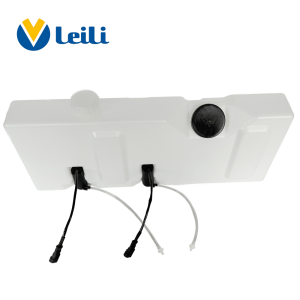
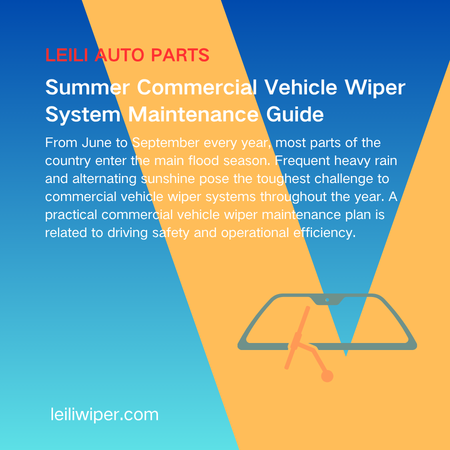
XD-B10L Wiper Washer
IV. Bus Lock: Protection in the Parked State
What Does It Do?
The bus lock is a wiper arm locking mechanism designed for bus models. Buses stay parked for long periods, and if the wiper blade remains pressed against the glass at operating pressure for an extended time, the rubber strip will develop permanent deformation from the sustained pressure, reducing conformity and causing poor wiping when the wipers are used again.
The purpose of the bus lock is to lift the wiper arm off the glass and secure it when the vehicle is parked, relieving the pressure on the wiper blade.
Key Design Points
Locking reliability: once locked, the mechanism must resist driving vibration and wind force without coming loose on its own. This involves the self-locking design of the latch structure and the strength of the materials.
Ease of operation: in daily bus operations, drivers or maintenance personnel need to operate it frequently. An overly complex structure discourages use, and a simple, reliable mechanism is actually more important.
Adaptation to cold regions: some bus locks integrate a heating function to melt ice between the wiper blade and the glass, preventing the wipers from freezing to the windshield. This type of structure places additional requirements on electrical safety and temperature control design.
Common Fault Symptoms
- Loose latch, causing the wiper arm to drop on its own while driving.
- Corrosion or seizing of the locking mechanism, making it hard to lift or unable to lock.
- Failure of the heating function.
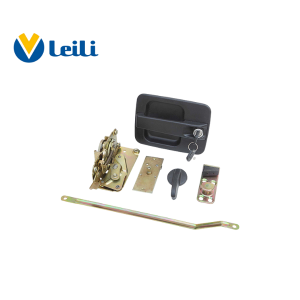
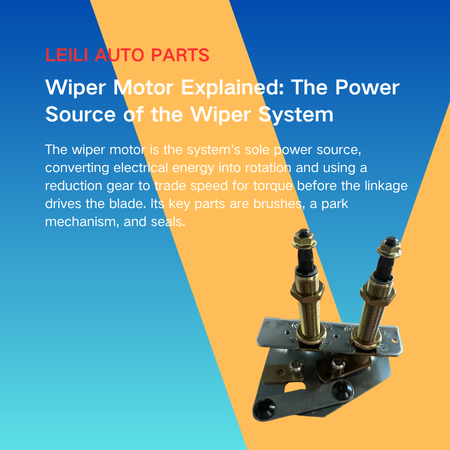
LL-115 Driver Door Lock