
Lifecycle Management Guide for Commercial Vehicle Windshield Wiper Systems: Practical Manual for Selection, Maintenance, and Replacement

wiper linkage

I. Undervalued safety line: Why do commercial vehicle wipers need to be more professional?

Statistics show that up to 83% of traffic accidents on rainy days directly relate to blurred vision. For commercial vehicles that can carry dozens of passengers and weigh more than ten tons, an unqualified wiper puts the safety of every passenger at risk—especially in extreme conditions like heavy rain and snow, where you are essentially betting on a single rubber strip.

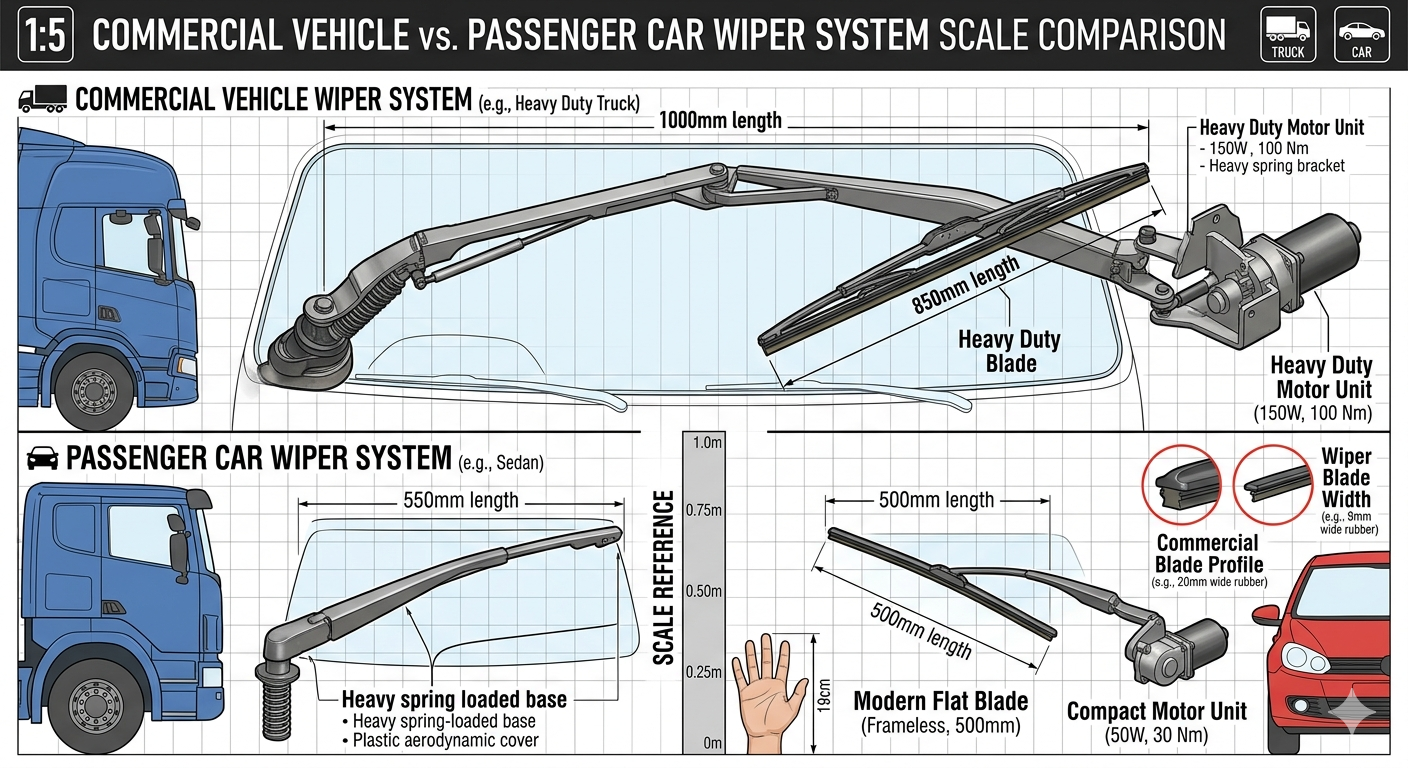
There are fundamental differences between the windshield wiper requirements of commercial vehicles and passenger vehicles:

Comparison dimensionPassenger carCommercial vehicle (bus / truck)
Windshield areaSmaller, with a radius of about 1.2mUltra-large, radius up to 1.8m+
The length of the scraper450-650mm800-1100mm
power supply system12V24V DC
Wiper motor power30-50W50-100W
Average daily running mileage50-100km300-800km
Operating environmentMainly urban roadsHigh-speed, mining areas, mountainous areas, ports and other extreme environments
Comparison of size of commercial vehicle and passenger car wiper systems

Comparison of size of commercial vehicle and passenger car wiper systems

II. Analysis of the five core components of the wiper system

A complete commercial vehicle wiper system relies on the following components working together, and a problem in any single part will cause the entire wiper to fail.

2.1 Wiper motor

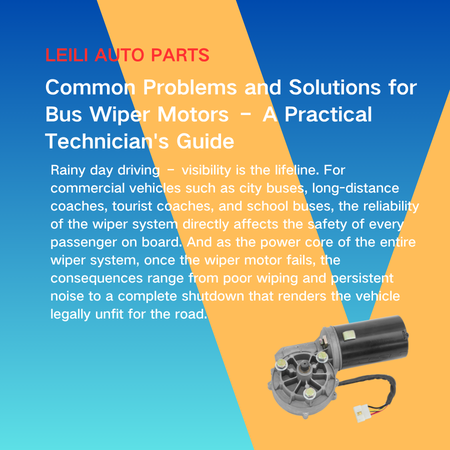
The wiper motor powers the entire system. Commercial vehicles typically use 24V permanent magnet DC motors with power ratings from 50W to 100W, and these motors must feature dual low-speed/high-speed gears and intermittent wiping functions.
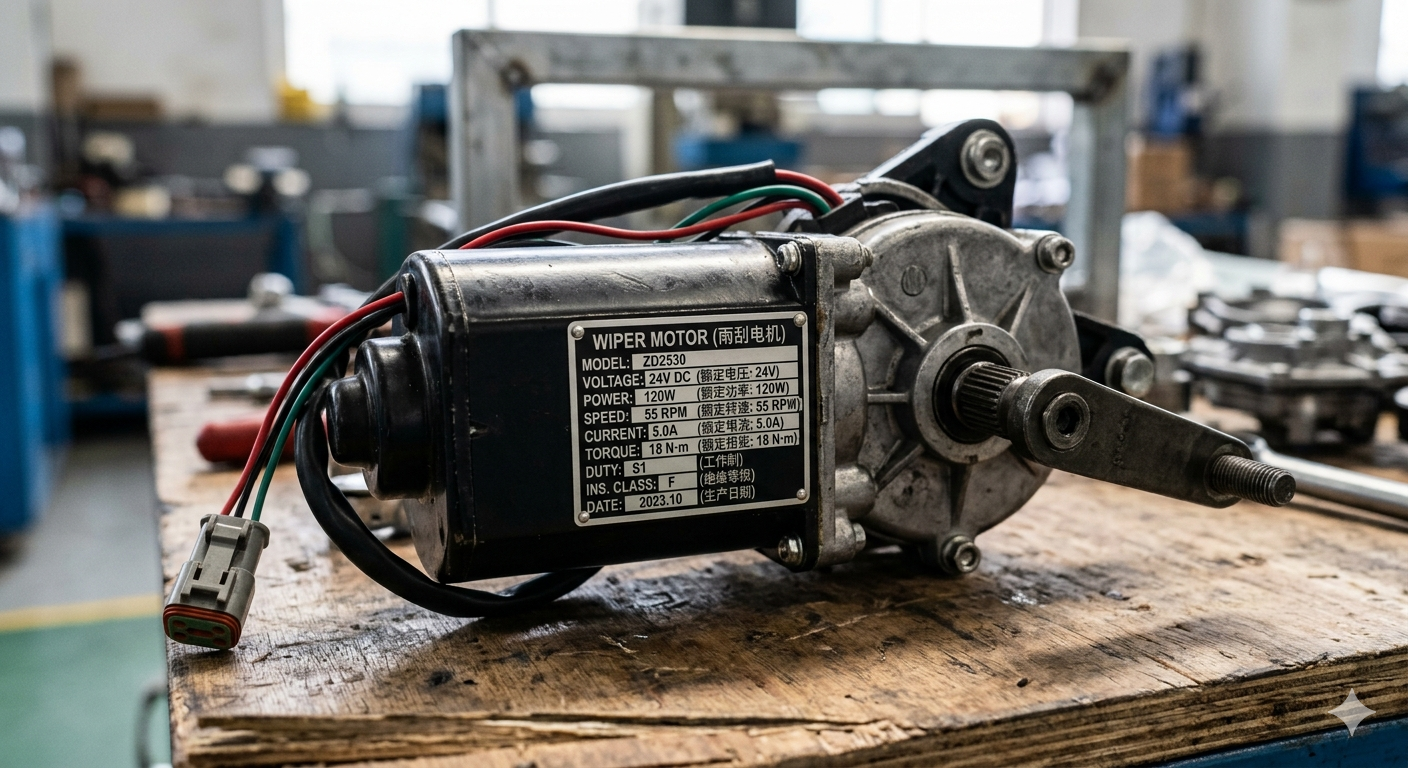
wiper motor

雨刷电机

Key parameters for selection:

  • Rated voltage (24V / 12V)
  • Rated power (50W / 70W / 100W)
  • Unloaded speed (low speed 45-55 rpm, high speed 65-80 rpm)
  • Blocking torque (≥12N· m)
  • Protection class (IP54 or higher)

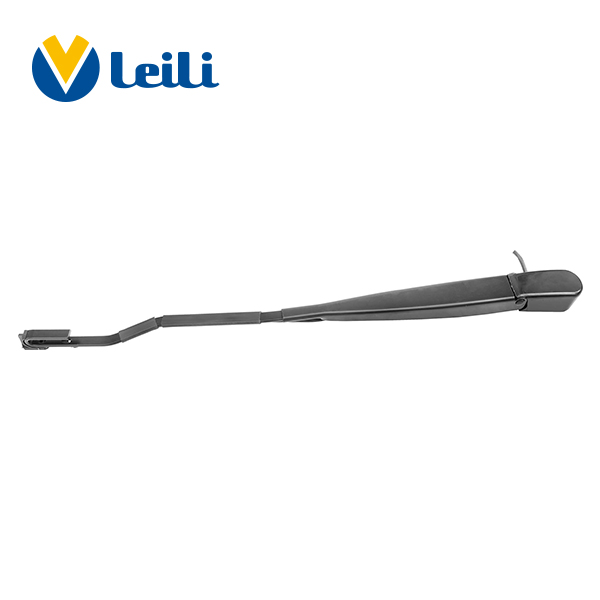
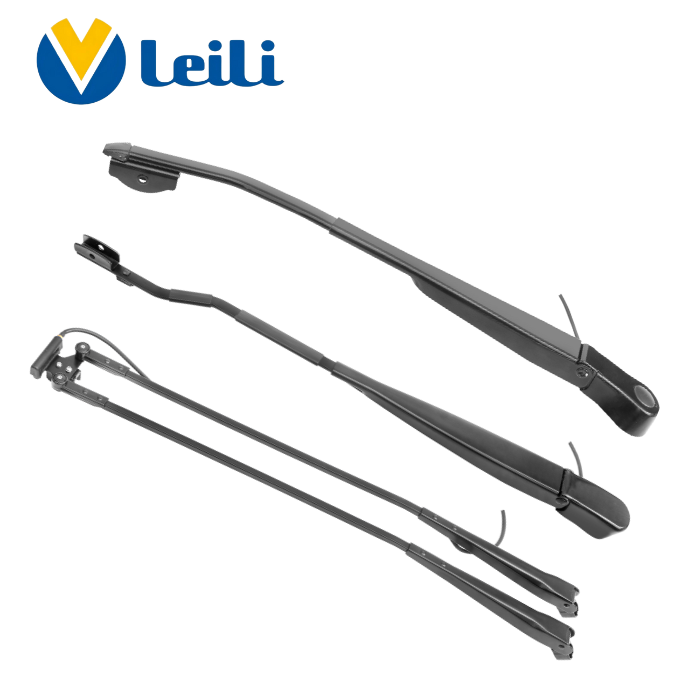
2.2 Wiper arm

The wiper arm converts the motor‘s rotary force into the wiper blade’s reciprocating motion, and its spring pressure keeps the wiper blade in firm contact with the glass.

SG01-A wiper arm

SG01-A 雨刷臂

Wiper Arm

雨刮臂

Common types of wiper arm connectors for commercial vehicles:

  • Clip-type (latch fixing): convenient installation, mainstream configuration of domestic buses
  • Bolted type: more stable, commonly used in imported brands and heavy trucks
  • Special interface: BYD and other new energy models may adopt special design

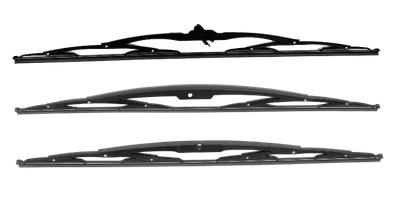
2.3 Wiper blade

The windshield wiper blade directly contacts the glass, and its material and process determine both wiping quality and service life. We recommend using silicone wiper blades over traditional EPDM rubber for the following reasons:

Performance indicatorsEPDM rubbersilica gel
Maximum temperature resistance60℃80℃+
UV resistancegeneralexcellent
Service life6-12 months12-18 months
Water film residue after scrapingIt may be possible.very little
Windshield Wiper Blades

挡风玻璃雨刮片

2.4 Wiper linkage rod

The linkage mechanism transmits the motor’s rotary motion to the left and right arms, and this part is most prone to increased clearance in the mechanical transmission.

Key maintenance points:

  • Ball head pin clearance inspection (allowable value <0.8mm)
  • The condition of the bushing wear
  • Lubrication status of each connection point

2.5 Washer

The washing system includes a liquid storage tank, a spray pump, and a spray nozzle. For large windshields, commercial vehicle nozzles require precise angle adjustments to ensure full coverage.
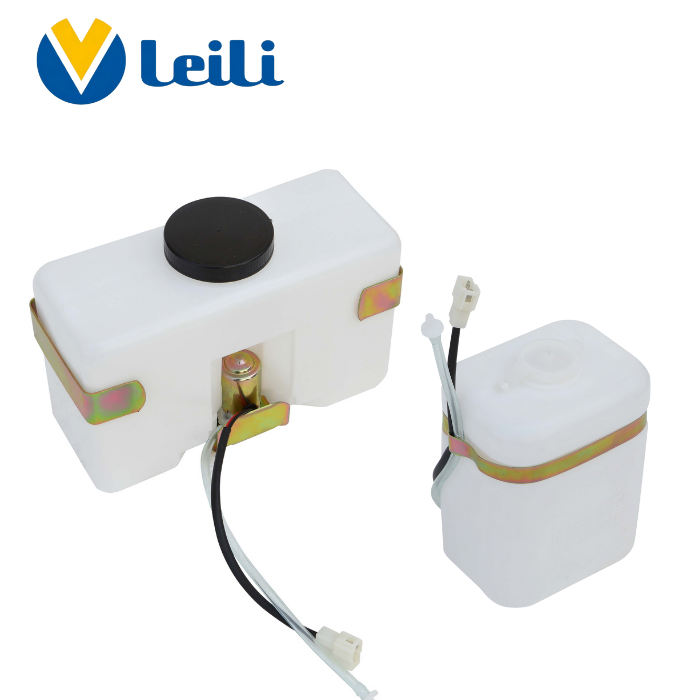
Washer Tank

III. Precision fitting solutions for mainstream commercial vehicle brands

Drawing on many years of experience in the automotive industry, we have compiled windshield wiper references for mainstream brands such as Jinlong, BYD, Yutong, and XCMG:

Brand NameRepresentative modelRecommended blade sizeInterface typeMotor voltage / powerSpecial notes
Jinlong busXMQ6129G / XMQ61251000-1100mmClamp type24V/70WArm-type structure, the length may be different from left to right.
BYD busesK9 / C9900-1000mmDedicated interface24V/50WIt needs to match the whole vehicle’s electronic system and pay attention to voltage parameters.
Yutong BusZK6125 / ZK6858800-1000mmClamp type24V/70WSome models are equipped with rain sensor, replacement should pay attention to compatibility.
XCMG AutomobileHeavy truck series900-1100mmBolted fixed type24V/100WThe working condition of the mine area requires enhanced motor protection.
Chongqing Heavy IndustryEngineering self-unloading series800-1000mmClamp / bolt24V/100WThe condition of the road needs to be checked regularly to ensure that the connecting rod is tightened.
Higer BusKLQ6125 / KLQ6895800-900mmClamp type24V/70WPay attention to the anti-rust coating and the curvature of the fit.

We provide OEM/ODM services for the above brands, and all products carry IATF 16949 quality management system certification.

IV. the four-step method for professional selection

Step 1: Confirm the model and size

Accurately measure the original wiper blade length (in millimeters or inches), or directly consult the original factory accessory manual for your specific model. Different front windshield curvatures impose strict requirements on the wiper blade curvature, so you cannot simply match length alone.

Step 2: Identify the interface type

Take a photo of the wiper arm end interface from the original vehicle, and confirm whether it uses a clamp-type, bolt-fixed, or brand-specific interface. An incompatible interface will directly prevent installation.

Step 3: Pay attention to materials and craftsmanship

  • Silicone material scraper is preferred
  • The skeleton is recommended to be made of high-quality alloy/stainless steel, which is rust-proof and corrosion-resistant.
  • The motor should be selected with a full copper winding and overheat protection function.

Step 4: Verify authentication and source

Prioritize manufacturers with IATF 16949 certification. Suppliers qualified to supply original equipment manufacturers have fully considered the synergy of mechanics, materials science, and aerodynamics during their product design phase.

V. Daily maintenance and maintenance for the wiper system

Daily pre-trip inspection (3-minute quick checklist)

  • Visual inspection of the scraper blade to check for tearing, hardening, or foreign objects.
  • Check if the spray nozzle is aligned and if the spray is uniform.
  • Run the wiper for one cycle and listen for any unusual sounds.

Periodic deep maintenance (quarterly or 20,000 km)

  1. Clean the edge of the scraper blade: wipe the rubber strip with a neutral cleaning agent to remove the oil film and sand particles.
  2. Check the pressure of the arm: measure with a spring scale, the standard pressure is 4.5± 0.5N.
  3. Clear the nozzle pipe: Use a 0.8mm cleaning needle to ensure that the spray is not scattered.
  4. Linkage lubrication: add special lubricant to the ball head pin.

Seasonal special reminder

SeasonKey action
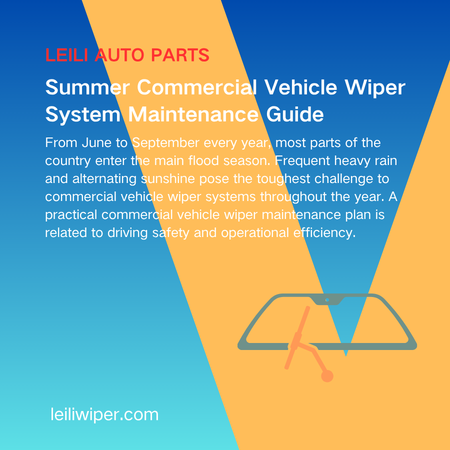
SummerAvoid direct sunlight, raise the wiper arm when parking, and check if the rubber strip has hardened.
WinterTurn on the heater before defrosting, and do not forcibly start the frozen motor.
Before the rainy seasonPerform a comprehensive inspection, replace the worn-out scraper in advance, and fill the storage tank with liquid.

VI. Common Fault Diagnosis Table

Fault phenomenonPossible causesTroubleshooting steps
Leave stripes after scrapingThe rubber strip has foreign matter/aging/the glass has a film of oil.Clean the glass → Clean the rubber strip → Replace the scraper
Scraping and jumping noiseArm pressure is insufficient/rubber is hardening/glass has invisible damageMeasuring arm pressure → Checking the hardness of the rubber strip → Checking the flatness of the glass
Leakage areaWiper blade bending deformation / uneven arm bar pressureCheck the arc of the scraper → Measure the pressure value at all locations
The wiper runs weakly/slowlyMotor aging / carbon brush wear / poor line contactMeasure the motor current → Check the power supply line
Completely failed to workFuse blows/motor damage/poor groundingFirst check the fuse → Then check the ground → Finally test the motor
The washer is not spraying water.Nozzle blockage/pipe damage/water pump failureClean the nozzle with a needle → Check the pipeline → Test the water pump

VII. Expanding Applications: Beyond Roads

Our wiper system product line not only covers buses, trucks, construction machinery and other road vehicles, but also extends to:

  • In the field of ships, marine wipers need a higher level of protection (IP66+) and salt spray corrosion resistance.
  • Airline ground handling vehicles: special vehicles such as airport shuttle buses and luggage tractors
  • Railway locomotive: front window wiper system of diesel/electric locomotive
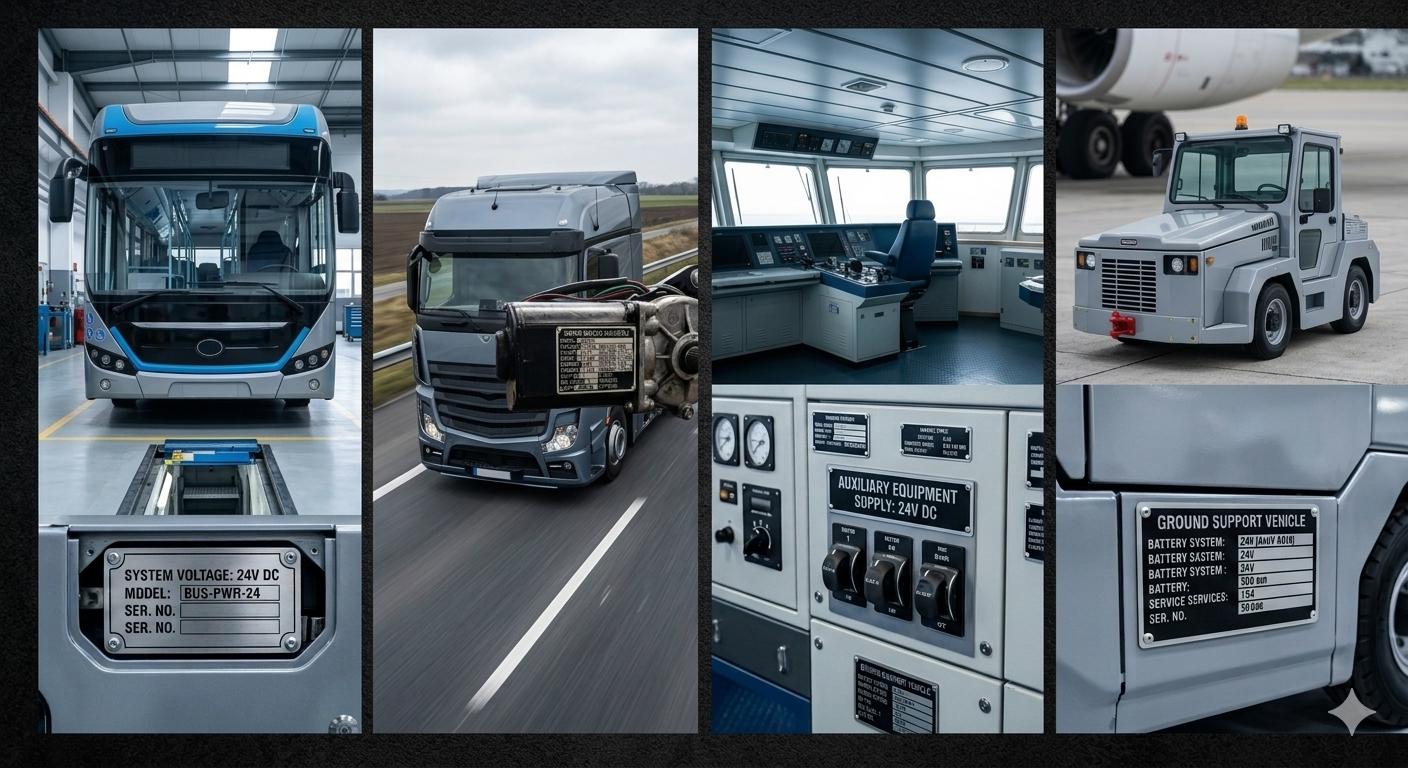
wiper assembly
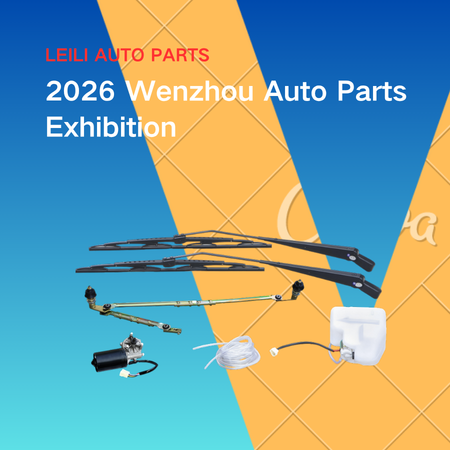
wiper assembly

VIII. Summary

A high-quality commercial vehicle wiper system connects every component—from motor to blade, from linkage to washer—and each link directly affects driving safety. As a manufacturer with many years of experience in the wiper system field, we are committed to providing OEM-quality, precision-matched wiper solutions for OEMs such as King Long, BYD, Yutong, Xugong, and Chongqing Zhongqi, as well as for the after-sales market.

Core Product Lines: Wiper motor | Wiper arm | Wiper blade | Wiper linkage rod | Washer | Bus lock

Compatible Brands: King Long | BYD | Yutong | Xugong | Chongqing Zhongqi | Haige | Zhongtong | Foton, etc.

Applicable Fields: Passenger buses | Trucks | Engineering vehicles | Commercial vehicles | Ships | Aviation ground support | Railway locomotives

您可能还会喜欢
wiper linkage

Guide to selecting commercial vehicle wiper systems

wiper linkage

Bus / commercial vehicle wiper OEM vs aftermarket: Six-dimensional deep comparison to help you choose the right supplier

wiper linkage

Lifecycle Management Guide for Commercial Vehicle Windshield Wiper Systems: Practical Manual for Selection, Maintenance, and Replacement